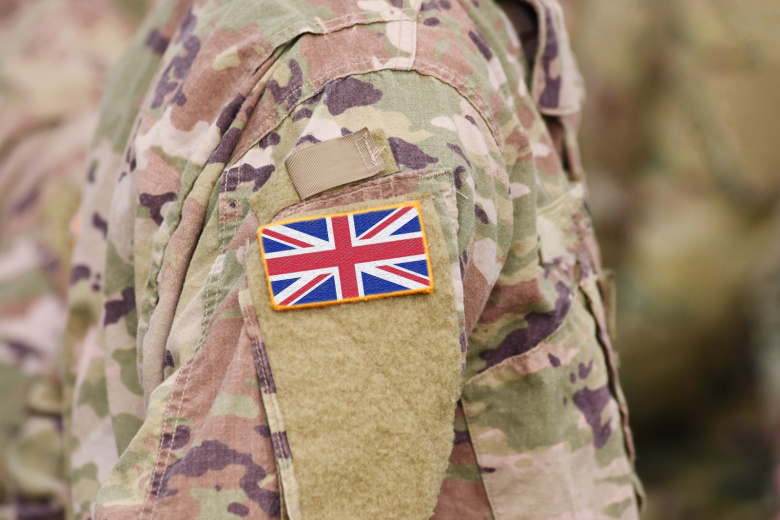
UK and France Advance Troop Deployment Plans for Ukraine Amidst Ceasefire Contingency
Paris and London are moving forward with plans to establish a military presence in Ukraine, contingent upon a ceasefire agreement with Russia. The initiative, formalized through a “Declaration of Intent” signed on Tuesday, aims to bolster Ukraine’s defensive capabilities and signal continued Western support. This development comes as concerns mount over the potential for escalation and the complexities surrounding the legal and strategic implications of foreign troops operating within a conflict zone. The agreement reflects a growing European desire to take greater responsibility for its own security, even as the role of the United States remains crucial.
The commitment from the United Kingdom and France centers around the creation of “military hubs” across Ukraine, designed to house weapons, equipment, and personnel. British Prime Minister Keir Starmer emphasized that these facilities would serve to reassure Ukraine and deter future Russian aggression. The plan also includes provisions for monitoring the Russia-Ukraine border and providing training to Ukrainian forces. Turkey has offered to contribute maritime support to the effort, further expanding the international coalition involved. This coordinated approach signals a shift towards a more proactive stance among key Western allies, though the success of the plan hinges on achieving a lasting ceasefire.
A European-Led Initiative with US Support
The structure of the operation is designed to be European-led, with the United States providing support but not deploying combat troops on the ground. This arrangement appears to be a deliberate effort to accommodate the preferences of former US President Donald Trump, who has consistently questioned the level of financial and military commitment from European nations. Representatives from the Trump administration were present at the Paris summit where the agreement was signed, alongside officials from roughly 30 Western countries, Turkey, Australia, Japan, and New Zealand. Jared Kushner, President Trump’s advisor and son-in-law, attended the summit, signaling continued US engagement, albeit in a supporting role.
The agreement between France and the UK commits both countries to establishing these military hubs once a ceasefire takes effect. The intention is to provide Ukraine with the resources needed to maintain its defensive posture and rebuild its armed forces. However, the legal uncertainties surrounding the deployment of troops in a non-NATO territory remain a significant concern. Specifically, the question of whether an attack on a French or British military hub would trigger a collective defense response under Article 5 of the NATO treaty is a subject of ongoing debate. According to a report from GovFacts, published January 7, 2026, this scenario presents a complex legal and strategic challenge for the alliance. GovFacts
Russian Response and Concerns Over Escalation
The Russian government has already signaled its strong opposition to the deployment of foreign troops in Ukraine. Maria Zakharova, an official representative of the Russian Ministry of Foreign Affairs, stated that Russia would consider any foreign military contingents on Ukrainian territory as “legitimate targets.” This statement underscores the potential for escalation and the risks associated with increased military presence in the region. The Kremlin’s stance raises questions about the viability of the plan and the possibility of direct confrontation between Russian forces and troops from the UK and France.
The situation is further complicated by reports suggesting that some countries participating in the “coalition of the willing” have privately expressed concerns about the plan’s dependence on Russia’s cooperation. Sources indicate that the success of the initiative is contingent upon Moscow’s acceptance of a ceasefire and its willingness to allow foreign troops to operate within Ukraine. This dependence on Russia’s position casts doubt on the feasibility of the plan and raises the possibility that it may not be fully implemented. News.ru reported on this hesitancy.
Training Exercises and Preparations
Prior to the formal agreement, British and French paratroopers completed joint training exercises in Brittany, France, preparing for potential deployment to Ukraine. These maneuvers, involving over 600 soldiers from the 16th Air Assault Brigade of the UK and the 11th Parachute Brigade of France, focused on practicing scenarios for landing in Ukraine as part of a potential peacekeeping mission. The exercises demonstrate a proactive approach to readiness and a commitment to operationalizing the agreement once a ceasefire is in place. The training included simulated scenarios for establishing a secure foothold and providing support to Ukrainian forces.
Legal and Strategic Considerations
The deployment of British and French troops to Ukraine raises significant legal and strategic questions. The fact that Ukraine is not a member of NATO complicates the situation, as Article 5 of the NATO treaty, which guarantees collective defense, does not automatically apply. This means that an attack on British or French forces in Ukraine would not necessarily trigger a response from other NATO members. The legal basis for the deployment would likely rely on a bilateral agreement between the UK, France, and Ukraine, as well as international law principles related to peacekeeping and humanitarian intervention.
the presence of foreign troops in Ukraine could be perceived as provocative by Russia, potentially increasing the risk of escalation. The require to carefully manage the deployment and avoid actions that could be interpreted as hostile is paramount. The success of the initiative will depend on maintaining clear communication channels with Russia and adhering to the terms of any ceasefire agreement. The potential for miscalculation or accidental escalation remains a significant concern, particularly given the ongoing volatility of the situation.
Impact on European Security and NATO
This initiative represents a significant step towards greater European autonomy in security matters. By taking the lead in deploying troops to Ukraine, France and the UK are demonstrating their willingness to defend their interests without relying solely on the United States. This move could have broader implications for the future of NATO, potentially leading to a more balanced distribution of responsibilities within the alliance. However, it also raises questions about the cohesion of NATO and the potential for diverging interests among member states.
The long-term impact of the deployment will depend on the success of the ceasefire and the overall evolution of the conflict. If a lasting peace is achieved, the presence of foreign troops could help to stabilize Ukraine and deter future aggression. However, if the conflict continues or escalates, the deployment could further complicate the situation and increase the risk of a wider war. The situation remains fluid and unpredictable, and the coming months will be critical in determining the fate of Ukraine and the future of European security.
As of February 27, 2026, the focus remains on securing a ceasefire agreement and establishing the conditions for the deployment of military hubs. Further details regarding the size, scope, and duration of the deployment are expected to be announced in the coming weeks, contingent upon progress in peace negotiations. Readers are encouraged to follow World Today Journal for continued updates on this developing story.
What are your thoughts on the deployment of troops to Ukraine? Share your comments below.
- Indonesia’s Home Minister Defends Due Process for Corrupt Regional Heads Amid Integrity Push
- Investigation Launched After Young Boy Found Dead in Rhône
- Marlen Reusser wins Stage 4 time trial to claim Tour de France Femmes yellow jersey (time.news)
- Qatar says drafts of potential US-Iran agreement are circulating (archyde.com)