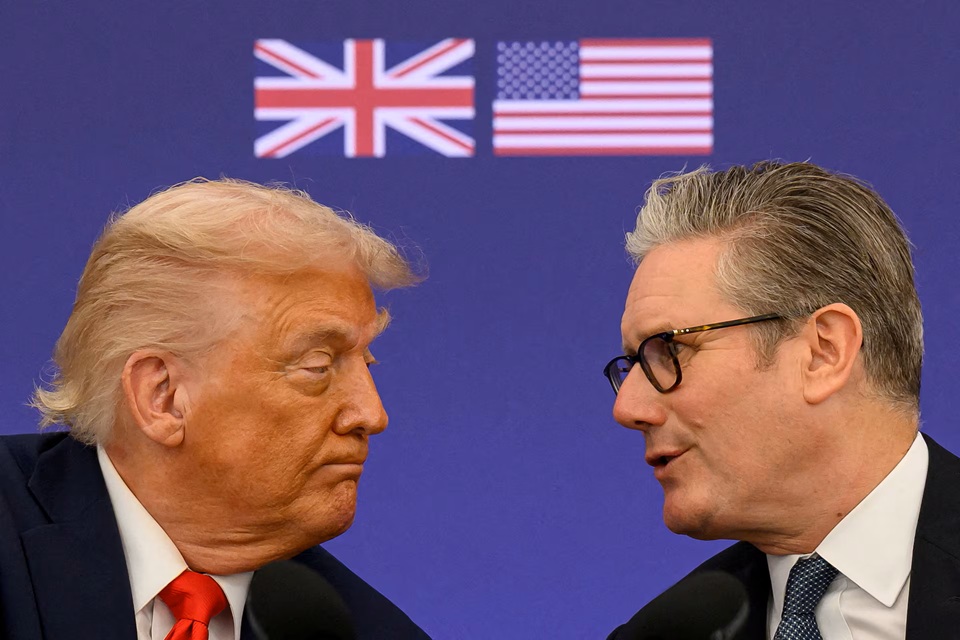
Starmer and Trump discuss urgent need to resume shipping through Strait of Hormuz amid rising regional tensions
British Prime Minister Keir Starmer and former US President Donald Trump have held talks regarding the urgent need to restore safe passage for commercial vessels through the Strait of Hormuz, according to reports from Emirati media outlet Al Bayan. The discussions come as international concern grows over disruptions to one of the world’s most critical maritime chokepoints, through which approximately 20% of global oil supplies transit. Neither leader’s office has confirmed the details of their conversation, and no official readout has been released by either Downing Street or Trump’s team as of April 2026.
The Strait of Hormuz, located between Oman and Iran, remains a focal point of geopolitical strain due to recurring incidents involving commercial shipping, naval deployments, and diplomatic maneuvering by regional and global powers. Recent reports indicate that Germany has deployed naval units to the Mediterranean in preparation for potential participation in a multinational maritime security initiative aimed at safeguarding transits through the strait. Similarly, British and French officials have expressed interest in advancing concrete progress on a coordinated plan to secure the waterway, while Indonesia has publicly declined to join the proposed coalition effort.
These developments follow a pattern of increasing military presence in the region, including the planned deployment of a German minehunter vessel to support future operations in the area. The ship, currently undergoing final preparations, is expected to join allied efforts focused on clearing naval mines and ensuring freedom of navigation—a mission complicated by Iran’s continued assertion of sovereignty over the strait and its periodic warnings to foreign vessels.
Diplomatic engagement amid maritime security concerns
The reported dialogue between Starmer and Trump underscores ongoing international efforts to address vulnerabilities in global energy supply chains. While the specifics of their exchange remain unverified through official channels, both leaders have previously emphasized the importance of stable maritime trade routes. Starmer, since assuming office in 2024, has consistently advocated for multilateral approaches to security challenges, particularly in coordination with NATO allies and Gulf partners. Trump, during his presidency, frequently highlighted the strategic importance of the Middle East and criticized what he described as disproportionate burdens on the US for securing global shipping lanes.
No verified transcript or recording of their conversation has been made public, and representatives for neither leader responded to requests for comment by World Today Journal at the time of writing. Analysts note that any coordination between the current UK prime minister and the former US president would be unusual given their differing political affiliations and foreign policy orientations, though both have acknowledged the necessity of preventing escalation in the Gulf.
The Strait of Hormuz has seen periodic tensions since 2019, including attacks on oil tankers, drone incidents, and naval confrontations. In response, various coalitions have been proposed or activated, such as the International Maritime Security Construct (IMSC), led by the United States and joined by several allied nations. Yet, participation has been inconsistent, with some countries citing concerns over being drawn into US-led initiatives without adequate consultation or shared strategic objectives.
Regional and international responses to Hormuz security
Germany’s decision to send naval assets to the Mediterranean as a preparatory step for potential Hormuz deployment reflects Berlin’s cautious but growing involvement in maritime security operations outside NATO’s traditional area of responsibility. German defense officials have stated that any contribution would be strictly defensive and focused on mine countermeasures, logistics support, and surveillance—roles aligned with its constitutional limitations on overseas military engagements.
Meanwhile, Britain and France have signaled their willingness to deepen cooperation on securing the strait, with officials describing their goal as achieving “real progress” on a joint initiative. Both countries maintain permanent naval presences in the Indian Ocean and have historically participated in multinational patrols, though differences in operational rules of engagement and national priorities have occasionally hindered seamless coordination.
Indonesia’s refusal to join the proposed multinational task force highlights the challenges of building broad consensus on Gulf security. Jakarta has emphasized its commitment to neutrality and non-alignment, stating that it avoids involvement in missions that could be perceived as taking sides in regional disputes. Indonesian foreign ministry officials have reiterated that the country supports freedom of navigation in principle but prefers diplomatic dialogue and confidence-building measures over military-led coalitions.
The planned deployment of a German minesweeper vessel—reportedly the FGS Weilheim or a similar Frankenthal-class ship—has been noted in maritime tracking sources as part of broader European efforts to enhance mine warfare capabilities in anticipation of potential mission requirements. Such vessels are specifically designed to detect and neutralize naval mines using sonar systems and remotely operated vehicles, a critical function given Iran’s known stockpiling of sea mines and past threats to mine the strait in times of heightened tension.
Why the Strait of Hormuz remains globally significant
The Strait of Hormuz is a 21-mile-wide choke point at the mouth of the Persian Gulf, through which tankers carrying crude oil, liquefied natural gas (LNG), and petrochemicals must pass to reach international markets. According to data from the US Energy Information Administration, an average of 17 million barrels of oil per day flowed through the strait in 2023, making it one of the most strategically important maritime routes on the planet.
Any sustained disruption to shipping in the area could trigger sharp increases in global energy prices, affect inflation rates worldwide, and disrupt supply chains for industries reliant on petroleum products. Economists and energy analysts have long warned that even short-term closures or delays—whether due to military action, accidents, or deliberate blockades—could have outsized economic consequences given the volume of trade that depends on unimpeded transit.
Beyond energy, the strait also supports the movement of container ships, bulk carriers, and liquefied gas tankers destined for markets in Asia, Europe, and North America. Its significance is amplified by the limited alternatives available; while some oil can be rerouted via pipelines such as the Saudi-Arabian East-West Pipeline (Petroline), these options lack the capacity to fully compensate for a loss of maritime throughput.
Challenges to securing the maritime corridor
Efforts to establish a lasting framework for secure passage through the Strait of Hormuz face several obstacles. Chief among them is Iran’s longstanding position that the strait falls within its territorial waters and that it retains the right to regulate access—a claim not recognized by most maritime nations under the United Nations Convention on the Law of the Sea (UNCLOS). Tehran has periodically conducted military exercises in the area, including missile drills and fast-boat maneuvers, which international observers describe as provocative and destabilizing.
the lack of a unified command structure for any potential multinational force complicates planning and execution. Unlike NATO operations, which benefit from standardized procedures and interoperable equipment, ad hoc coalitions in the Gulf often struggle with differing national mandates, communication protocols, and rules on the employ of force. These factors have contributed to hesitation among some governments about committing resources without clearer assurances of mission scope, duration, and oversight.
Legal experts also note that enforcing any security arrangement would require careful navigation of international law, particularly regarding the rights of innocent passage under UNCLOS. While coastal states may enact laws relating to navigation safety, they cannot impede transit in a manner that discriminates against foreign vessels or effectively closes the strait—a distinction that has been central to past diplomatic exchanges between Iran and Western powers.
Next steps and outlook for Hormuz stability
As of late April 2026, no formal announcement has been made regarding the establishment of a new or expanded maritime security mission in the Strait of Hormuz. The German naval deployment to the Mediterranean remains preparatory, with no confirmed timeline for onward movement to the Gulf. British and French officials continue to consult with partners on potential contributions, while Indonesia maintains its stance of non-participation in military-led initiatives.
The next key development to watch is whether any of the involved nations will issue joint statements or participate in coordinated exercises that signal operational readiness. Historically, such steps have preceded actual deployments, though they do not guarantee sustained engagement. Diplomatic channels between Gulf states, particularly Saudi Arabia and the United Arab Emirates, also remain active in efforts to de-escalate tensions and promote confidence-building measures, including hotline communications and maritime incident reporting protocols.
For ongoing updates, readers are encouraged to monitor official sources such as the UK Ministry of Defence, the French Directorate General for International Relations and Strategy, the German Federal Ministry of Defence, and the Indonesian Ministry of Foreign Affairs. International organizations including the International Maritime Organization (IMO) and the Combined Maritime Forces (CMF) based in Bahrain also provide periodic reports on shipping safety and security trends in the region.
World Today Journal will continue to follow this story as new verified information becomes available. We invite our global audience to share insights, ask questions, and engage in constructive discussion in the comments section below. Your perspectives help deepen understanding of complex international issues.
Worth a look