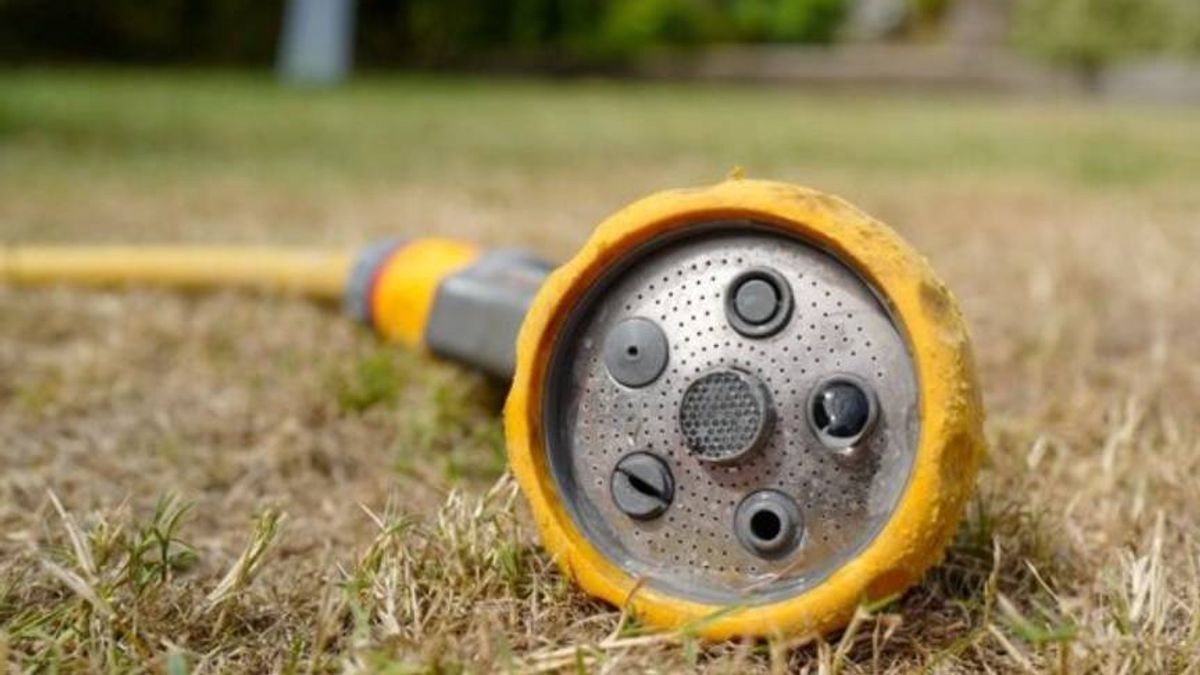
Millions of households across the UK face strict hosepipe bans and potential fines of up to £1,000 as scorching summer weather triggers severe water supply pressures.
Parched conditions and soaring temperatures have pushed water reserves down across England, prompting widespread restrictions on domestic outdoor water use. Suppliers warn that demand has surged during consecutive heatwaves, leaving reservoir storage levels noticeably below long-term averages for the summer season.
Millions Face £1,000 Fines as South East Water Joins Restrictions
Around 10 million customers now fall under official temporary use bans as companies struggle to maintain adequate pressure for essential daily needs.
The orders prohibit customers from using hosepipes to water gardens, wash cars, clean patios, fill swimming pools, or operate jet washers. Violating an official temporary use ban carries severe financial consequences.
The unfolding water shortage has affected multiple regional suppliers differently. Cambridge Water instituted a temporary ban for its 350,000 customers, marking the first time in three decades that the utility has taken such a step. Meanwhile, Affinity Water scheduled an upcoming ban across its central region, covering parts of Bedfordshire, Berkshire, Buckinghamshire, Essex, Hertfordshire, Surrey, and London, where customer demand jumped 20% above average.
Record Heatwaves and Declining Groundwater Reserves
The restrictions follow an unusually prolonged dry spell across central and south-east England. The Met Office reported that weather stations in both regions recorded zero rainfall for 14 consecutive days between July 2 and July 15, marking the longest rain-free spell in south-east England since April 1997 and in central England since June 1996.
“This year has been exceptionally hot and dry, and we’re already into the third heatwave of the summer. Every day of sustained hot weather increases the challenge of balancing supply and demand, and we’re now at the point where we need to ask customers to help by hanging up the hosepipe, letting lawns go brown, cars go dirty and using water even more wisely to help protect the environment and ensure water remains available for all customers.”
Dr Geoff Darch, head of strategic asset planning for Anglian Water
Environmental data released by the Environment Agency shows that reservoir storage levels across England dropped to 79%, sitting roughly five percentage points beneath the long-term average for the period. Six specific reservoirs fell into the notably low category, including Wimbleball in Somerset, Grafham in Cambridgeshire, and Hanningfield in Essex, while Blagdon reservoir reached an exceptionally low status.
Infrastructure Leakage Sparks Criticism Amid Public Restrictions
“Of course people should use water carefully during prolonged hot and dry weather. But it’s galling to be told to put away the hose while water companies are losing nearly three billion litres every day through leaks. Fossil-fuelled climate change is making severe droughts more frequent and more dangerous, so ministers must not treat water security as tomorrow’s problem.”
Photo: express.co.uk
Dr Doug Parr, chief scientist at Greenpeace UK
Experts note that climate mechanisms are actively altering seasonal patterns. According to Richard Allan, professor of climate science at the University of Reading, explained that a warmer atmosphere increases evaporation rates, depleting moisture from soil, rivers, and reservoirs more effectively and triggering faster-onset droughts and heatwaves.
While water suppliers continue to enforce demand-management measures, government plans project the construction of nine new reservoirs across England by 2050, alongside an ongoing project at Havant Thicket in Hampshire, aimed at addressing long-term supply resilience.