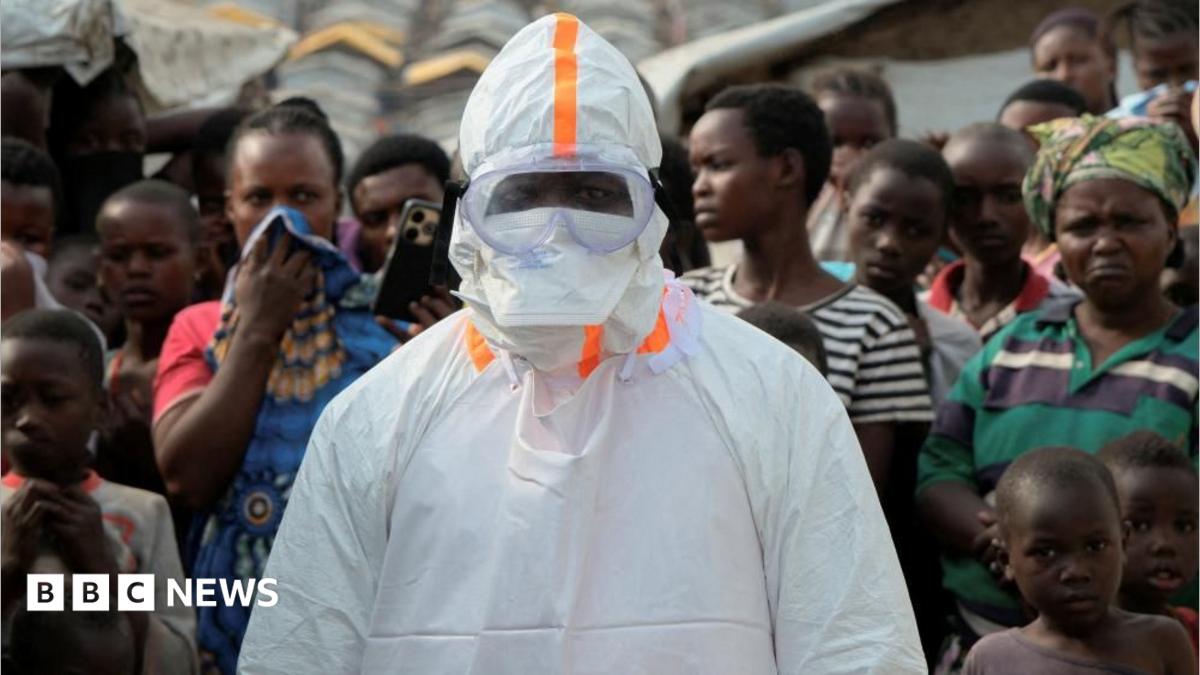
A humanitarian worker has been medically evacuated from the Democratic Republic of the Congo to a London hospital for monitoring following potential exposure to the Ebola virus. UK health officials report the individual currently shows no symptoms, and the risk to the general public in the UK remains low.
Evacuation and Current Status in London
The humanitarian worker, a UK resident whose identity has not been disclosed, was transported to London via a flight chartered specifically for the evacuation. According to the UK Health Security Agency (UKHSA), the move was initiated as a highly precautionary measure
following a potential healthcare-related exposure to the virus while the worker was supporting outbreak response efforts in the Democratic Republic of the Congo (DRC).
“The individual is not currently displaying any symptoms and remains well, but as a precautionary measure they have been evacuated on a flight chartered solely for the evacuation. They are now being assessed and monitored in isolation by infectious disease specialists at a London hospital.”
UK Health Security Agency (UKHSA), official statement
While the specific hospital has not been officially named, the Royal Free in north London is identified as the primary national centre equipped with high-level isolation units for managing high-consequence infectious diseases.
Public Risk and Official Assessment
Health officials have moved to reassure the public that there is no imminent threat. Richard Pebody, director of epidemic and emerging infections at the UKHSA, stated clearly that the risk to the general public remains low.
He further emphasized that the agency is pleased the individual remains well and that the transfer was carried out out of an abundance of caution.
Ebola is not airborne; transmission requires direct contact with the blood, secretions, organs, or other bodily fluids of an infected person who is already symptomatic. The virus is not considered contagious during its incubation period.
Outbreak Context in the Democratic Republic of the Congo
The evacuation occurs as the DRC continues to battle a significant epidemic. According to government data, the number of confirmed cases has risen to 2,423, resulting in 967 deaths. The current outbreak is driven by the Bundibugyo strain, a less common variant for which there is currently no approved vaccine or specific treatment.

Humanitarian organizations, including Médecins Sans Frontières (MSF), have raised concerns that the virus is spreading more rapidly than containment efforts can manage.
| Metric | Details |
|---|---|
| Fatality Rate | Variable |
| Incubation Period | 2 to 21 days |
| Current DRC Cases | 2,423 |
| Current DRC Deaths | 967 |
International efforts to manage the crisis remain strained. The head of Africa’s top public health agency has publicly written to challenge U.S. travel restrictions imposed on Uganda and the DRC, arguing that such measures are unnecessary as regions move toward being declared virus-free. Uganda, for example, recently began a 42-day countdown to declare its own outbreak over after discharging its final patient.
Precedent for UK Medical Evacuations
Metro notes that the last recorded cases of Ebola in the UK occurred in 2015, involving three health workers who returned from Africa. Furthermore, a patient suspected of having Ebola was admitted to Queen Elizabeth University Hospital in Glasgow; that individual ultimately tested negative for the disease.
The UK continues to maintain established protocols involving the NHS, Border Force, and health agencies to assess individuals returning from regions with active outbreaks. Any future developments regarding the health of the currently monitored worker will be managed by specialists under strict isolation guidelines.
Keep reading