
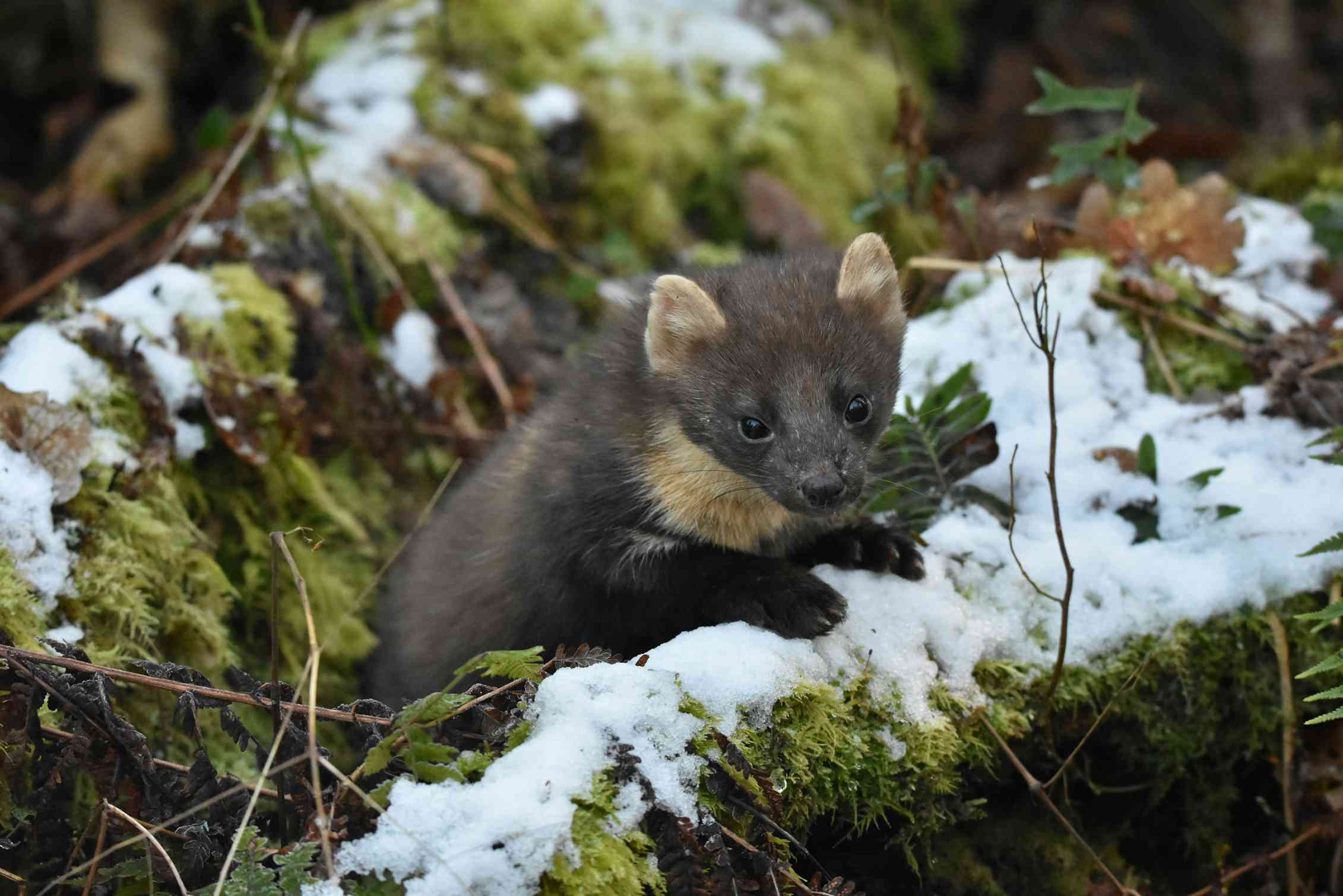
The canopy of the Forest of Dean is currently the site of one of the most ambitious biological experiments in British conservation history. In an effort to restore a precarious ecological balance, conservationists have introduced a formidable predator back into the English landscape: the pine marten. The goal is not merely the return of a lost species, but the strategic suppression of an invasive one.
For decades, the native red squirrel has been pushed to the brink of extinction in England, besieged by the invasive grey squirrel. The grey squirrel, introduced from North America, does more than just compete for food; it carries the squirrel pox virus, a pathogen that is often fatal to red squirrels but largely harmless to greys. This biological warfare, combined with the grey squirrel’s ability to process tannins in acorns more efficiently, created a scenario where the red squirrel had almost no chance of survival in the wild.
The introduction of the pine marten represents a shift toward “biological control”—using a natural predator to manage an invasive population. By releasing a specific number of these agile mustelids into the Forest of Dean, wildlife experts are testing whether a native predator can reverse the decline of the red squirrel by selectively targeting the grey squirrel.
The results emerging from this project suggest a significant shift in the forest’s hierarchy. As the pine marten population establishes itself, the grey squirrel, once the dominant force in the woodland, now faces a predator specifically adapted to hunting in the treetops.
The Strategy: Why Pine Martens?
The decision to use pine martens as a tool for conservation is based on a specific behavioral quirk of the predator. Research indicates that pine martens do not hunt red and grey squirrels with equal efficiency. Because red squirrels are smaller and more agile in the thinner branches of the canopy, they are harder for the marten to catch. Grey squirrels, being larger and heavier, are more susceptible to predation.

This creates a “predatory shield” for the native species. As pine martens reduce the density of the grey squirrel population, the pressure on red squirrels decreases. This reduction in grey squirrel numbers also slows the transmission of the squirrel pox virus, providing the red squirrels with the breathing room necessary to recover and expand their territories.
The initial phase of the project involved the careful release of 35 pine martens into the Forest of Dean. These animals were sourced from healthy populations in Scotland, where pine martens are still native and have already demonstrated a similar effect on grey squirrel populations. The objective was to create a self-sustaining population that could maintain this ecological pressure without human intervention.
Impact After Two Years: A Shifting Landscape
Two years after the initial release, the dynamics of the Forest of Dean have begun to change. While precise census data for every single squirrel is difficult to obtain in a wild environment, anecdotal evidence and tracking suggest that grey squirrels are avoiding areas with high pine marten activity. This “landscape of fear” forces grey squirrels to change their foraging habits, which in turn reduces their impact on the forest’s seed banks and young trees.
The pine marten is a versatile predator, but its impact on the grey squirrel is the primary metric of success for this specific project. By suppressing the invasive species, the project aims to create a “refuge” for red squirrels. This represents a critical component of broader Forestry England and conservation goals to ensure that the red squirrel does not vanish entirely from the English mainland.
the return of the pine marten contributes to overall biodiversity. As a mid-sized predator, the marten fills a vacant ecological niche, helping to regulate other small mammal populations and contributing to a more resilient forest ecosystem.
The Broader Ecological Stakes
The struggle between red and grey squirrels is about more than just two different animals; This proves about the health of the British woodland. Grey squirrels are known for “bark stripping,” a behavior where they strip the bark from trees to get to the sap. This can weaken trees, make them more susceptible to disease, and in some cases, kill them. By reducing the grey squirrel population, the pine marten indirectly protects the structural integrity of the forest.
This approach to conservation is part of a wider movement toward rewilding—the process of returning an area of land to its natural uncultivated state. Rather than relying on expensive and labor-intensive trapping and culling programs to manage grey squirrels, the reintroduction of a native predator offers a sustainable, long-term solution that mimics natural evolutionary processes.
Comparison of Squirrel Species and Predator Impact
| Feature | Red Squirrel (Native) | Grey Squirrel (Invasive) |
|---|---|---|
| Size | Smaller, more agile | Larger, heavier |
| Disease Resistance | Highly susceptible to Squirrel Pox | Carrier/Resistant to Squirrel Pox |
| Predation Risk | Lower (better canopy agility) | Higher (more vulnerable to martens) |
| Forest Impact | Low impact on bark | High impact (bark stripping) |
Challenges and Ethical Considerations
While the project shows promise, it is not without controversy. Some critics argue that introducing a predator to control another species is an oversimplification of complex ecology. You’ll see concerns about whether pine martens might prey on other protected species or if the population could grow beyond the forest’s carrying capacity.

However, proponents point to the success seen in Scotland. In areas where pine martens have naturally expanded, red squirrel populations have stabilized or increased, while grey squirrel numbers have plummeted. The “biological control” method is seen as more humane and efficient than large-scale trapping, as it integrates the control mechanism into the food web.
The long-term success of the Forest of Dean project depends on continued monitoring. Scientists are tracking the movement of the reintroduced martens and the population density of both squirrel species to ensure the balance is shifting in the intended direction.
What Happens Next?
The Forest of Dean serves as a pilot for potentially larger reintroduction efforts across England. If the data confirms that 35 pine martens can meaningfully alter the squirrel population dynamics over a two-year period, it may provide the blueprint for similar projects in other English woodlands.
The next critical checkpoint for the project will involve comprehensive population surveys to quantify the exact decline in grey squirrel numbers and the corresponding increase in red squirrel sightings. These findings will determine if further releases are necessary to maintain the predator-prey ratio required for the red squirrel’s survival.
As we watch this natural drama unfold, the Forest of Dean reminds us that the most effective solutions to environmental crises are often found in the restoration of the natural systems that were broken long ago.
Do you believe biological control is the best way to handle invasive species, or should we stick to traditional management? Let us know your thoughts in the comments below and share this story to spread awareness about UK biodiversity.