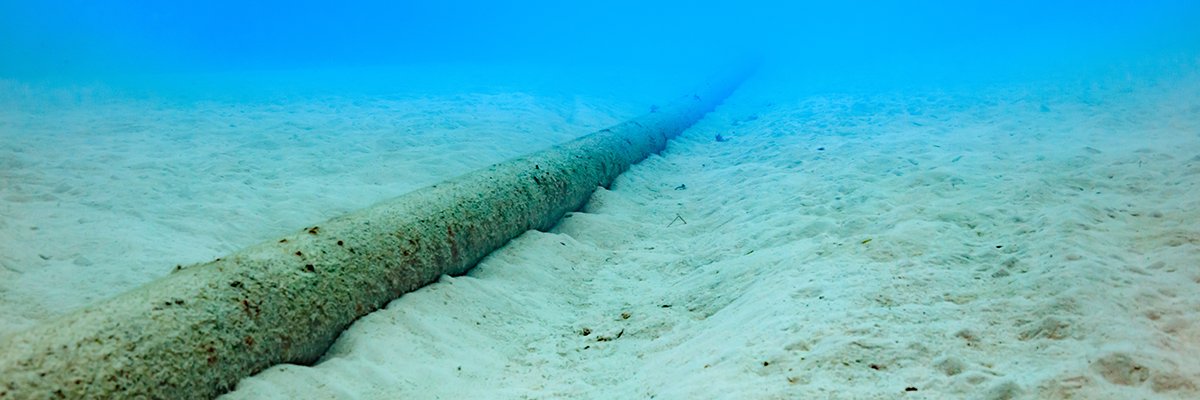
The Silent Threat Beneath the Waves: Protecting the UK’s critical Subsea Infrastructure
The internet, modern finance, and even national security are all underpinned by a largely invisible network: the vast web of subsea cables crisscrossing the ocean floor. A new report from the Joint Committee on the National Security Strategy has issued a stark warning – the UK’s reliance on this critical infrastructure is dangerously exposed, and the threat from state actors, particularly Russia, is escalating. This isn’t a hypothetical concern; it’s a present and growing risk demanding immediate and complete action.
A Vulnerable Lifeline: Understanding the Stakes
These aren’t simply wires carrying cat videos.Subsea cables are the arteries of the global digital economy, responsible for over $1.5 trillion in daily cross-border trade and the seamless functioning of financial markets. They facilitate high-frequency trading, support essential communication networks, and underpin the operation of vital services like emergency response systems. Disruption, even temporary, could trigger cascading failures across multiple sectors, leading to widespread economic and societal consequences.
The 2020 incident affecting the Shetland Islands,where a fishing vessel accidentally severed cables,offers a chilling glimpse of the potential fallout. Residents experienced widespread card payment failures, alongside disruptions to mobile and landline services. Similarly, damage to a cable connecting orkney and Banff in 2025 impacted business internet connectivity and even forced the closure of a hospital switchboard. These were accidental occurrences; intentional sabotage would be far more devastating.
The Rising Threat: Russia’s Capabilities and intent
The report highlights a concerning pattern of Russian activity targeting this critical infrastructure. Experts warn that Russia possesses the capability to damage or destroy these cables, utilizing titanium-hulled vessels capable of operating at extreme depths. More alarmingly, intelligence suggests a willingness to employ freelance shipping operators to carry out sabotage, possibly through the seemingly innocuous act of dragging anchors across cable routes.
Recent observations of the Russian spy ship Yantar in british waters, actively “gathering intelligence and mapping the UK’s critical underwater infrastructure,” further underscore the seriousness of the threat. The UK’s outlying islands, military communication cables, and those supporting the financial sector are particularly vulnerable. While complete national disruption might not be the immediate goal, the report emphasizes that even localized sabotage would be “costly, provocative and hard to prevent.”
Beyond the Cables: Onshore Vulnerabilities
the risk isn’t limited to the ocean floor. Onshore landing stations, where cables come ashore, represent another critical vulnerability. Sites like lowestoft (housing five cables) and Bude (housing nine) could be rendered inoperable through sabotage,creating meaningful bottlenecks and exacerbating the impact of any attack. This highlights the need for a holistic security approach, encompassing both the subsea habitat and the vital onshore infrastructure.
A call to Action: Strengthening Resilience and Deterrence
The Joint Committee’s report isn’t simply a warning; it’s a detailed roadmap for bolstering the UK’s defenses. Key recommendations include:
* Investing in Sovereign Repair Capacity: Currently, the UK lacks the autonomous capability to rapidly repair damaged cables. The report urges the government to acquire a dedicated cable repair ship by 2030.
* developing a Skilled Workforce: Establishing a cadre of reservists and serving Royal navy personnel trained in cable repair is crucial for ensuring a swift response in the event of conflict.
* Enhanced Monitoring and Surveillance: Scaling up cable monitoring schemes and improving data sharing with law enforcement agencies are essential for detecting and deterring malicious activity.
* Strengthening Legal Frameworks: Implementing robust legal sanctions and focusing on the “direct physical interdiction and prosecution” of suspicious vessels and crew will send a clear message that attacks on critical infrastructure will not be tolerated.
* Robust Resilience Planning (Especially in Finance): The financial sector, heavily reliant on low-latency connections, requires particularly robust resilience plans and updated contingency protocols.
* Proactive Physical Protections: Implementing stronger physical security measures around both subsea cables and onshore landing stations is paramount.
A Strategic Imperative: Protecting the UK’s Digital Future
As Matt Western, chair of the Joint Committee, emphasizes, “The scale of the UK’s strategic reliance needs to be taken more seriously.” The undersea cables are the backbone of the modern internet and the engine of global finance. Ignoring the escalating threat to this infrastructure is not an option.
“Putin has shown every sign of wanting to test the soft underbelly of the Nato alliance. Our cables are sufficiently vulnerable to make them a target,” Western warns. “We need stronger physical protections, better options to impose genuine costs for
- What Do People Really Think About Generative AI? Drexel University Study Reveals Public Perception
- Google Pixel vs. iPhone: How Gemini AI is Powering Google’s New Smartphone Strategy
- FDA Approves Groundbreaking mRNA Vaccine Booster for Adults 50+, Boosting Immunity and Protecting Against Chronic Health Risks (archyworldys.com)