Ukraine Accuses Hungarian Foreign Minister of Misrepresenting Details of Embassy Meeting
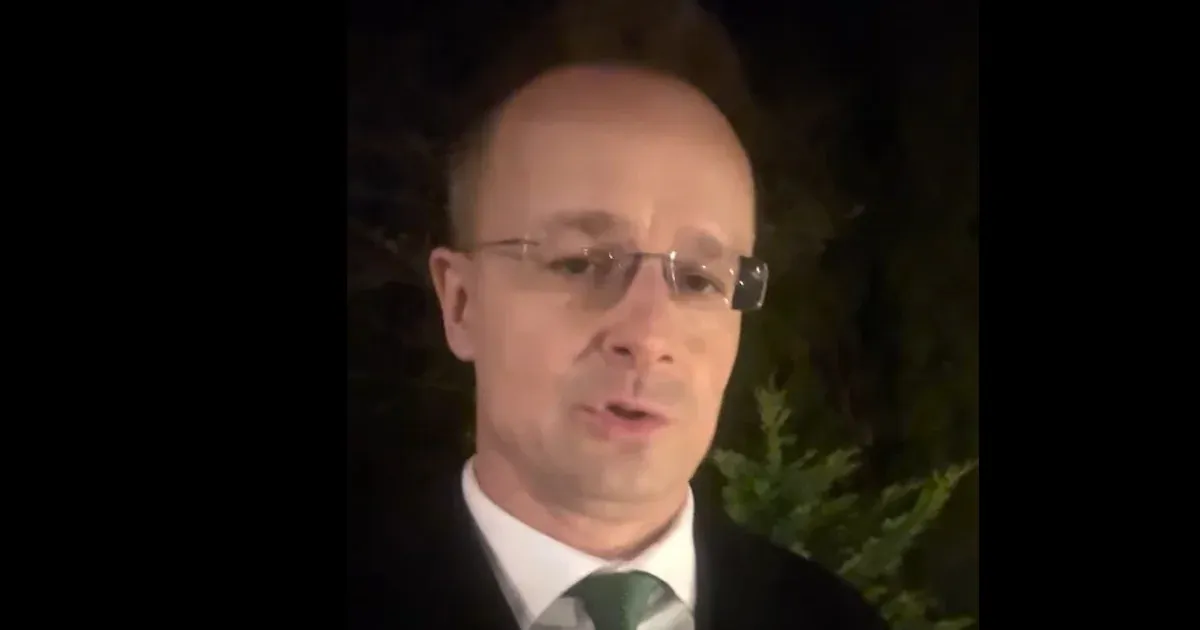
Kyiv has refuted statements made by Hungarian Foreign Minister Péter Szijjártó regarding a recent meeting between an envoy from the Hungarian embassy in Kyiv and Ukrainian officials. The dispute centers on the resumption of Russian oil transit through the Druzhba pipeline, with Ukraine alleging Szijjártó misrepresented the conversation to the Hungarian public. The escalating tensions come amid broader disagreements over energy security and political support for Ukraine as it continues to defend against Russian aggression.
Szijjártó claimed that Ukrainian officials informed the Hungarian envoy that the restart of oil shipments through the pipeline was contingent on receiving “weapons and money” from Hungary. He further asserted that Ukrainian officials admitted there were no physical or technical impediments to resuming the flow of oil, framing the delay as a deliberate political move. This account has been strongly contested by the Ukrainian Foreign Ministry, which accuses Szijjártó of deliberately distorting the facts.
The core of the disagreement lies in the stalled oil transit via the Druzhba pipeline, which has been halted since February 27th, impacting both Hungary and Slovakia. While both governments maintain the infrastructure is capable of resuming operations, Ukraine attributes the disruption to damage caused by Russian attacks and security concerns surrounding repairs. The situation has grow increasingly fraught, with Hungary’s Prime Minister Viktor Orbán linking continued energy supplies to broader political support for Ukraine, including the release of a €90 billion aid package currently under consideration by the European Union.
Disputed Account of the Embassy Meeting
According to the Ukrainian Foreign Ministry, the discussion with the Hungarian envoy did not involve any demands for “weapons and money” in exchange for restarting oil transit. Instead, the Ukrainian side reportedly raised concerns about statements made by Orbán suggesting Ukraine was preparing attacks on Hungarian energy infrastructure. Orbán had publicly voiced concerns about potential sabotage, leading to the deployment of troops to protect key energy facilities. Ukraine, in response, offered assistance in safeguarding these facilities, a detail Szijjártó’s account omitted.
The Ukrainian Foreign Ministry stated that the embassy official was summoned for a second time in as many days to express Kyiv’s strong disapproval of what they characterized as a “complete distortion” of the conversation’s content. Szijjártó, still, maintained that the second meeting yielded the same information as the first, further fueling the dispute. This discrepancy in accounts underscores a growing lack of trust between the two nations regarding energy security and political communication.
Background: Damage to the Druzhba Pipeline and Energy Security Concerns
The current impasse stems from damage sustained to a facility connected to the Druzhba pipeline near Brody in February 2026, reportedly as a result of Russian bombing. HVG.hu reported on the attack, highlighting the disruption to oil supplies for both Hungary and Slovakia. Since January 27th, 2026, neither country has received oil via the pipeline.
Both Hungary and Slovakia have asserted that the pipeline is technically capable of resuming transit, but Ukraine has cited security concerns and the need for repairs as obstacles. Ukrainian President Volodymyr Zelenskyy has stated that Russia was responsible for the damage and that repairs would pose a risk of further attacks, while also pointing to alternative supply routes through Croatia. This position has been met with frustration from Budapest and Bratislava, which rely on the Druzhba pipeline for a significant portion of their oil needs.
Orbán’s Stance and EU Aid Package
The dispute over the Druzhba pipeline has become intertwined with broader political tensions, particularly Hungary’s reluctance to support further financial aid to Ukraine. On February 24th, 2026, Zelenskyy responded to Orbán’s concerns regarding potential attacks on Hungarian energy infrastructure, stating that Russia was responsible for the damage to the pipeline and that alternative routes were available. Telex reported on Zelenskyy’s response, emphasizing the Ukrainian president’s attribution of blame to Russia.
On February 19th, 2026, Orbán sent a letter to António Costa, then President of the European Council, stating that Hungary would not support any decisions benefiting Ukraine until oil transit through the Druzhba pipeline is restored. Telex detailed the contents of the letter, which specifically referenced a proposed €90 billion aid package for Ukraine. This package, initially agreed upon by the European Council in December 2025, remains blocked due to Hungary’s opposition. The European Council announced the agreement in principle on December 19th, 2025, but stipulated that it would not have a financial impact on three member states, including Hungary.
Szijjártó has consistently maintained Hungary’s position, arguing that the delay in oil transit is a political decision by Ukraine. He has also accused Ukraine of attempting to leverage the energy supply for political concessions. This stance reflects Hungary’s broader policy of maintaining economic ties with Russia, despite international condemnation of the invasion of Ukraine.
Key Takeaways
- Ukraine and Hungary are engaged in a public dispute over the reasons for the stalled oil transit through the Druzhba pipeline.
- Ukraine accuses Hungarian Foreign Minister Péter Szijjártó of misrepresenting details of a recent meeting with Ukrainian officials.
- The dispute is linked to Hungary’s opposition to a €90 billion EU aid package for Ukraine.
- Damage to the pipeline caused by Russian attacks is a contributing factor, but Ukraine cites security concerns as a primary reason for the continued disruption.
- The situation highlights the complex interplay between energy security, political tensions, and international relations in the context of the ongoing war in Ukraine.
The situation remains fluid, with no immediate resolution in sight. Further developments are expected as the European Union continues to debate the aid package for Ukraine and as Hungary and Ukraine attempt to navigate their diverging interests. The next key event will be the upcoming meeting of EU foreign ministers on March 7th, 2026, where the issue of Ukraine aid is expected to be a central topic of discussion. Readers are encouraged to follow updates from official sources, such as the European Council and the Ukrainian and Hungarian Foreign Ministries, for the latest information.
What are your thoughts on this developing situation? Share your comments below and let us realize what you think. Don’t forget to share this article with your network to keep the conversation going.
Keep reading