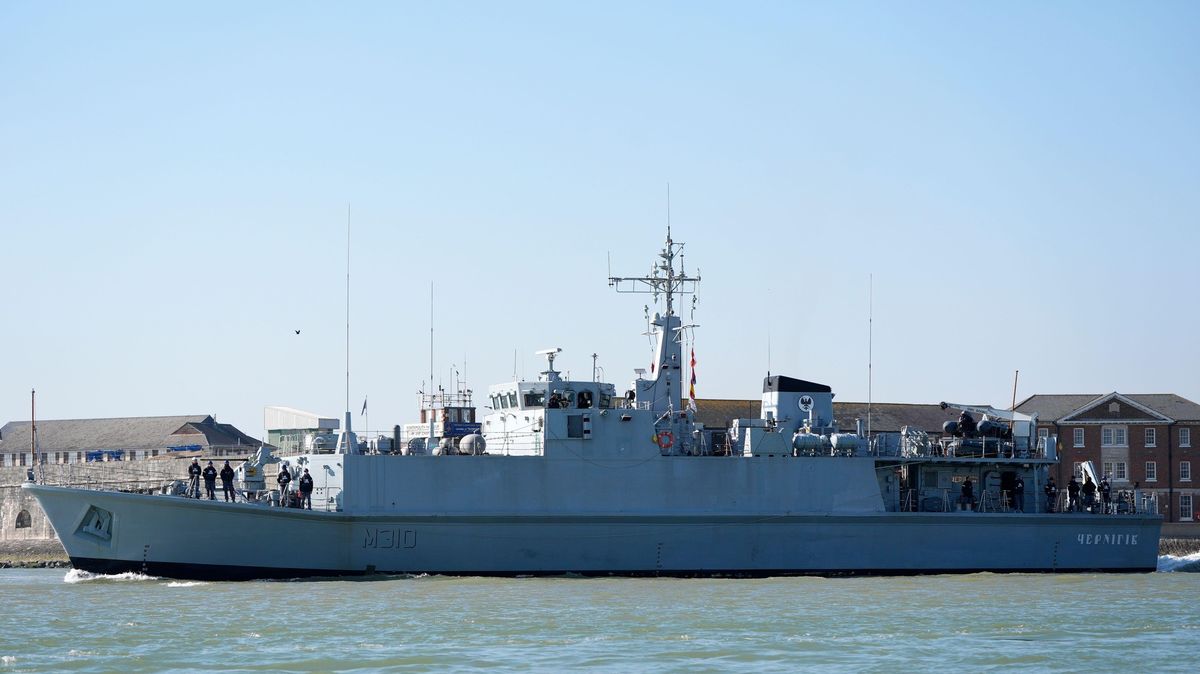
Ukraine is prepared to deploy four minehunters to the Strait of Hormuz as part of a broader international effort to secure maritime traffic in the region, according to verified reports from Ukrainian military sources cited by international media. The vessels, currently stationed in Portsmouth, United Kingdom, would join a British-French-led mission aimed at reopening the vital waterway following heightened tensions and attacks on commercial shipping.
The initiative reflects Ukraine’s strategic effort to leverage its naval expertise in mine countermeasures, gained through four years of operations in the Black Sea, to contribute to regional security beyond its immediate conflict zone. Ukrainian officials have emphasized that the deployment would not only demonstrate solidarity with Western allies but too help safeguard critical global trade routes through which approximately 20% of the world’s oil supply passes.
According to a Ukrainian military source speaking to The Times, Kyiv is ready to send any of its four minehunters to the Strait of Hormuz, noting that the ships cannot currently operate in Ukrainian waters due to the risk of becoming primary targets and restrictions under the 1936 Montreux Convention governing naval passage through the Turkish Straits. Two of the vessels, formerly HMS Shoreham and HMS Grimsby, were acquired by Ukraine in 2023 and are now named Chernihiv and Cherkasy in Ukrainian service.
The ships were originally procured for the purpose of clearing mines from the Black Sea once hostilities with Russia conclude, but their expertise in littoral mine warfare is now seen as applicable to the shallow, confined waters of the Hormuz Strait, where naval mines are easily laid and hard to detect. Ukrainian naval officers participated in a multinational military planning summit at the UK’s Permanent Joint Headquarters in Northwood, where they formally offered the country’s minehunting capabilities for regional security missions.
Beyond deploying ships, Ukraine has indicated it could contribute naval drones or counter-drone systems to help protect shipping from Iranian unmanned aerial threats, which have increasingly targeted commercial vessels in the area. Kyiv’s motivation includes countering perceptions that it might be abandoned by Western partners, particularly amid concerns that shifting U.S. Foreign policy under President Donald Trump could lead to a rapprochement with Russia, which continues to support Iran militarily in the region.
Analysts note that while the political will for such a mission exists, logistical challenges remain significant. Some allied vessels would require weeks to reach the operational area, and the timeline for forming a coordinated Franco-British task force in the Strait of Hormuz remains uncertain. The situation in the waterway has deteriorated sharply in recent weeks, with Iranian Revolutionary Guard Corps forces seizing multiple merchant ships and opening fire on others attempting to transit the strait.
International maritime authorities have reported a drastic decline in traffic through the Strait of Hormuz, with only six commercial vessels — including one oil tanker — recorded passing through in a single 24-hour period earlier this month, underscoring the severity of the disruption to global energy markets.
Ukraine’s offer to assist comes as its navy continues to refine its mine countermeasure tactics using advanced unmanned systems like the SeaFox underwater drone, which has been employed to inspect suspicious objects on the seafloor off the coast of Odesa. Operators have described the painstaking process of distinguishing between harmless debris and potential explosive threats, often requiring diver verification after initial drone identification.
The Ukrainian naval experience highlights a broader reality: while laying mines can be accomplished in minutes, their removal can take years due to environmental degradation, burial under sediment, and the painstaking nature of underwater search operations. This enduring threat has motivated Kyiv to seek partnerships where its hard-won expertise can be applied to stabilize other volatile maritime regions.
As diplomatic and military consultations continue among NATO allies and regional partners, Ukraine’s readiness to deploy its minehunting flotilla represents a tangible contribution to collective security efforts. The move underscores how capabilities developed in one theater of conflict can be repurposed to address emerging threats elsewhere, particularly in chokepoints vital to the global economy.
For updates on international maritime security operations in the Strait of Hormuz, readers are encouraged to monitor official statements from the United Kingdom Ministry of Defence, French Naval Forces, and the Combined Maritime Forces (CMF) coalition.
If you found this analysis informative, please consider sharing it with others interested in global maritime security and geopolitical developments. Comments and thoughtful discussion are welcome below.
Worth a look
- Trump Administration Revokes Visa of Brazil’s Ambassador Maria Luiza Ribeiro Viotti
- Armed Man Arrested Near Trump Golf Course in California
- US and Qatar Report Progress on Iran Ceasefire and Hormuz Strait Reopening (time.news)
- Eastern Conference Leaders Secure Road Win Over Huntsville City FC (news-usa.today)