
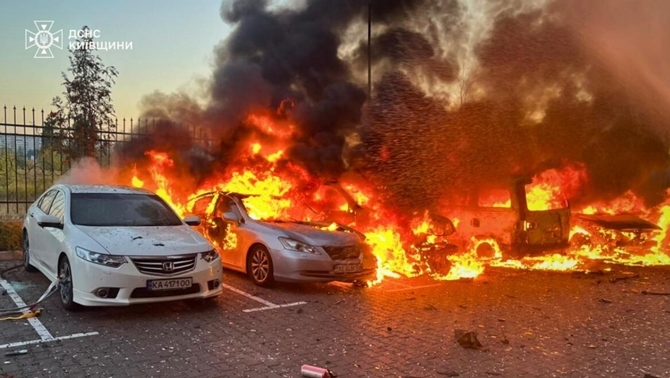
Recent Russian missile and drone strikes across Ukraine have resulted in at least three civilian deaths, while Ukrainian forces have intensified their campaign against Russian energy infrastructure by targeting another oil refinery. The escalating exchange of long-range strikes underscores the deepening impact of the conflict on both nations’ domestic fuel supplies and infrastructure stability.
As the conflict enters a new phase of attrition, the toll on non-combatants remains severe. Thousands of civilians have been killed or injured, with the total number of verified civilian casualties now reaching 16,000. The latest casualties occurred following a series of overnight barrages that struck residential and industrial targets.
Escalation in Energy Infrastructure Attacks
The strategic targeting of energy facilities has become a hallmark of the current phase of the war. Ukrainian drone strikes have increasingly focused on Russian oil refineries, aiming to disrupt the logistics that fuel the Russian military machine. These strikes have triggered operational disruptions within the Russian energy sector, leading to reports of fuel shortages in Moscow. Russia is currently in negotiations to import fuel amid attacks on energy infrastructure.
Conversely, Russia continues its systematic campaign against Ukraine’s power grid. These attacks have crippled significant portions of the country’s energy capacity, forcing residents and businesses to rely on backup generators and rotating blackouts. The persistent nature of these strikes has prompted international calls for increased air defense support for Kyiv to protect critical civilian infrastructure.
Frontline Dynamics and Regional Security
Military leadership of Ukraine has revealed that Russia is preparing to expand the front from the north, but it is believed that Belarus will not participate. While there are concerns regarding a potential expansion of the front, the situation remains under constant surveillance.
The regional security architecture remains fragile. This dynamic creates a complex security landscape for Ukraine, which must maintain a defensive presence along its northern border while simultaneously repelling Russian advances in the east and south.
Humanitarian Impact and Future Outlook
The human cost of these hostilities continues to grow. Beyond the immediate loss of life, the systematic destruction of housing, hospitals, and schools has displaced millions of people. Humanitarian organizations continue to call for adherence to international humanitarian law, which prohibits the targeting of civilian objects.
As the conflict continues, the focus remains on the resilience of both nations’ internal systems. For Ukraine, the priority is the restoration of power and the protection of urban centers. For Russia, the challenge lies in maintaining domestic economic stability while its energy sector faces unprecedented pressure from drone strikes.
Readers are encouraged to share their perspectives or report verified updates in the comments section below. For ongoing coverage of the situation in Eastern Europe, follow our World section for the latest dispatches.