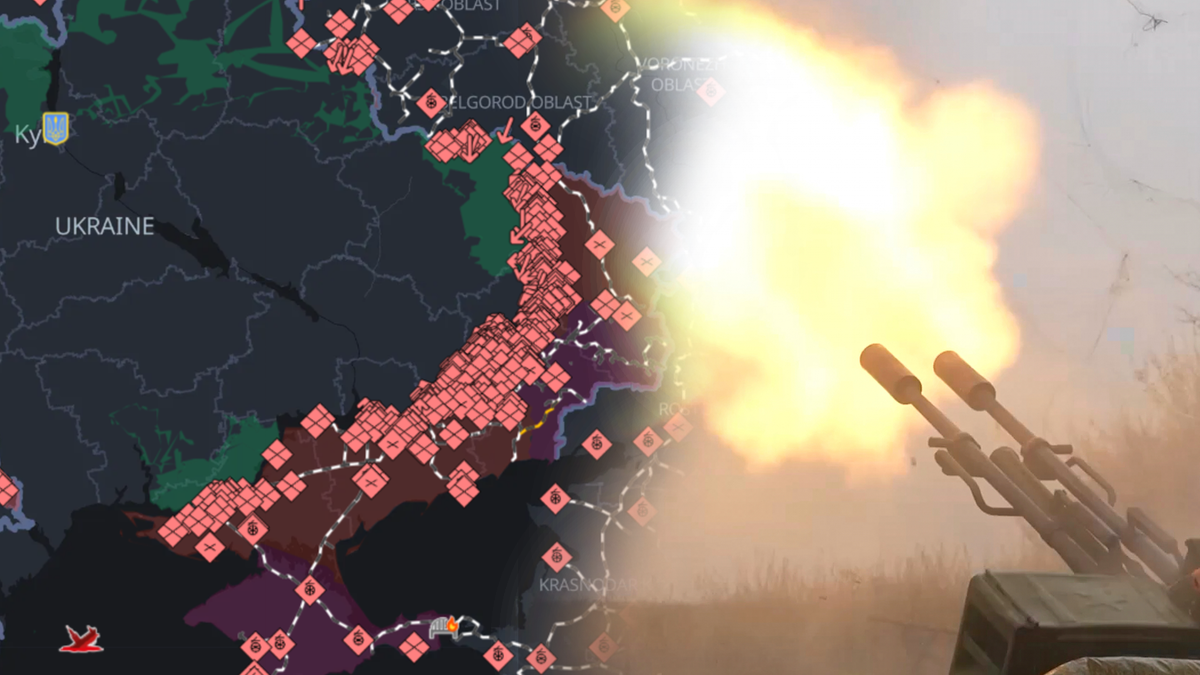
The conflict in Ukraine has entered a volatile spring phase, characterized by a massive but failed Russian push in the east and an escalating cycle of strategic aerial strikes. While Moscow has attempted to capitalize on the changing season to break Ukrainian lines, recent reports indicate that these efforts have met with significant resistance, resulting in heavy losses for Russian mechanized forces.
In a concentrated effort to seize ground in the Lyman-Borova sector, Russian forces launched what has been described as their largest offensive in that region to date. However, the operation has largely stalled, with the Ukrainian military claiming to have turned the advance into a significant defeat for the attacking forces. This clash underscores the ongoing struggle for territorial control as both nations brace for intensified fighting throughout the spring.
Simultaneously, the war has expanded its reach further into Russian territory. Ukraine has intensified its use of long-range drones to target critical industrial infrastructure, including petrochemical plants and maritime terminals, while Russia continues to launch strikes on civilian hubs and residential areas within Ukraine.
The Failed Push in the Lyman-Borova Sector
The scale of the recent Russian offensive in Ukraine along the Lyman-Borova axis was substantial, involving the deployment of the 1st Tank Army and the 20th Combined Arms Army. According to reports from the Ukrainian Third Army Corps, the assault began on March 19, with Russian forces attacking simultaneously across seven different directions along the borders of the Kharkiv, Donetsk, and Luhansk regions.
Despite the mass of manpower and machinery—which included over 500 infantry soldiers, 28 armored vehicles, and more than 100 light vehicles such as buggies, quads, and motorcycles—the offensive failed to reach the primary lines of contact. The Ukrainian Third Army Corps reported that the assault was repelled within four hours of the initial push, thanks to prior observations and defensive exercises.
The cost for the Russian military was severe. Verified reports indicate that the offensive resulted in losses of more than 400 soldiers, with 288 confirmed killed, and the destruction of approximately 100 units of military equipment . This failure highlights the difficulty Russian forces face in executing large-scale mechanized maneuvers against prepared Ukrainian defenses.
Strategic Drone Strikes on Russian Industry
While the ground war remains locked in the east, Ukraine has shifted its focus toward degrading Russia’s industrial capacity. In a coordinated series of attacks during the night of April 4-5, 2026, Ukrainian drones targeted the Togliattikauczuk petrochemical plant in Togliatti, located in the Samara region. As one of Russia’s largest facilities of its kind, the plant suffered fires in several locations following the strikes .
Military analysis suggests that the Ukrainian army utilized at least 10 An-196 Lutyj drones for the Togliatti operation. While the primary target was the industrial complex, the governor of the Samara region, Vyacheslav Fedorishchev, confirmed that a residential building was also damaged and one plant worker was wounded by shrapnel .
Beyond the Samara region, Ukraine has also targeted Russian maritime assets. Recent strikes hit a Russian port, causing fires at an oil terminal and damaging a vessel. In the Rostov region, an attack on the coastal city of Taganrog resulted in a fire aboard a civilian vessel in the Sea of Azov, leading to one death and four injuries .
Civilian Toll and Urban Warfare
The escalation of aerial warfare has continued to take a heavy toll on Ukrainian civilians. In the Dnipropetrovsk region, Russian forces struck a market in Nikopol, a hit that resulted in five deaths and 19 injuries . These strikes on non-military targets reflect a continuing pattern of urban bombardment intended to disrupt civilian life and logistics.
Similarly, the port city of Odessa has remained a primary target for Russian shelling. Recent attacks have hit residential buildings, further complicating the humanitarian situation in one of Ukraine’s most vital economic hubs.
The current state of the conflict suggests a strategic stalemate on the ground, punctuated by high-intensity “attrition” warfare. While Russia attempts to leverage its numerical superiority in the east, Ukraine is increasingly relying on precision drone technology to move the battleground into Russian industrial heartlands.
Summary of Recent Casualties and Damages (March-April 2026)
| Location | Event | Confirmed Casualties/Losses | Primary Target |
|---|---|---|---|
| Lyman-Borova Sector | Russian Offensive | 400+ soldiers (288 killed), ~100 equipment units | Frontline positions |
| Nikopol, Ukraine | Russian Strike | 5 dead, 19 wounded | City market |
| Togliatti, Russia | Ukrainian Drone Attack | 1 wounded, residential damage | Togliattikauczuk plant |
| Taganrog, Russia | Ukrainian Drone Attack | 1 dead, 4 wounded | Civilian vessel (Sea of Azov) |
As the spring season progresses, the focus remains on whether Russia can sustain its manpower losses in the east or if Ukraine’s strategy of targeting industrial infrastructure will force a shift in Moscow’s operational priorities. We find currently no confirmed dates for diplomatic negotiations or official ceasefire filings.
We will continue to monitor official reports from the Ukrainian Third Army Corps and regional authorities for further updates on the front lines. Share your thoughts on these developments in the comments below or share this report with your network to keep the global community informed.
Worth a look