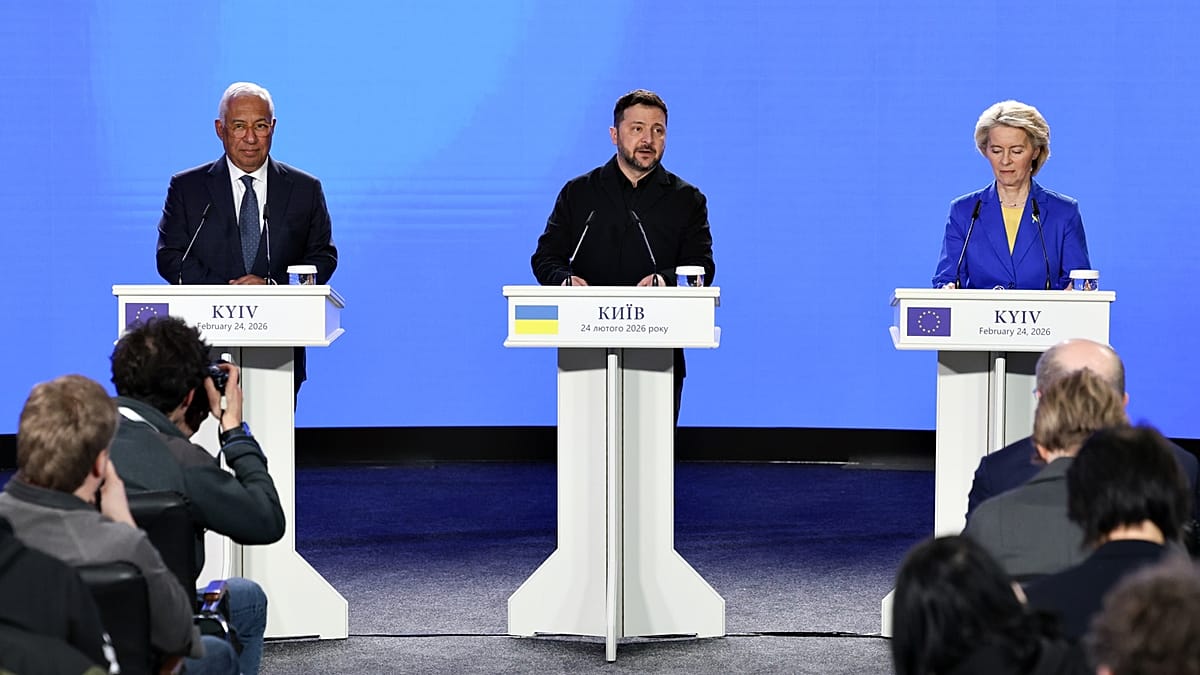
Sofia, Bulgaria – Ukraine has agreed to allow an external inspection of the Druzhba pipeline, a critical artery for Russian oil transit to Europe, in a move aimed at resolving a dispute with Hungary and unlocking a crucial €90 billion aid package from the European Union. The agreement, announced Tuesday, comes just days before EU leaders convene in Brussels for a summit where the stalled financial assistance for Ukraine is expected to be a central focus. The situation highlights the complex geopolitical maneuvering surrounding energy security and financial support for Ukraine amidst ongoing conflict.
The impasse stems from Hungarian Prime Minister Viktor Orbán’s repeated veto of the EU aid package, which was initially approved in December 2023. Orbán has linked his approval to the resumption of oil flows through the Druzhba pipeline, alleging that Ukraine is deliberately blocking the pipeline for political reasons ahead of Hungary’s upcoming elections on April 12th. This claim has been strongly refuted by Ukrainian officials, who attribute the disruption to damage sustained during Russian attacks on critical infrastructure.
Damage and Repair Efforts: Ukraine’s Perspective
According to a letter from Ukrainian President Volodymyr Zelenskyy to European Commission President Ursula von der Leyen and European Council President António Costa, the interruption of oil flow is a direct result of “serious” damage inflicted on the Brody pumping station in eastern Ukraine during late January. Zelenskyy maintains that the damage renders it “impossible” to safely transport oil through the pipeline. He estimates that repairs will require approximately one and a half months, contingent on the absence of further Russian attacks. The Ukrainian government has consistently maintained that Russia bears responsibility for the damage, framing the situation as a consequence of Moscow’s ongoing aggression.
In response to the EU’s offer of technical support and funding, Zelenskyy stated, “Within this context, I welcome and accept your offer of the necessary technical support and funding to be able to conclude the repair works as well as to explore the long-term sustainable options.” This acceptance signals a willingness to cooperate with the EU in assessing and rectifying the damage to the pipeline, potentially paving the way for a resolution to the dispute. The EU’s offer includes the immediate deployment of European experts to assist in the assessment and repair process.
EU’s Rationale and Energy Market Concerns
The joint statement released by von der Leyen and Costa emphasized the importance of restoring the Druzhba pipeline in light of current energy market volatility. The statement noted that the war in the Middle East has driven oil prices above $100 a barrel, increasing the urgency of securing stable energy supplies. Fixing the Druzhba pipeline is seen as a way to alleviate some of the pressure on global energy markets and ensure continued oil deliveries to Hungary and Slovakia, both of which rely on the pipeline for a significant portion of their oil imports.
However, the EU leaders as well reassured Zelenskyy that the repair operation will not compromise the bloc’s long-term commitment to phasing out Russian fossil fuels by the end of 2027. The European Commission has already implemented a ban on Russian gas and is preparing to introduce a similar measure on Russian oil, expected sometime this spring, potentially after the Hungarian elections. This commitment underscores the EU’s strategic goal of reducing its dependence on Russian energy sources and strengthening its energy independence.
US Sanctions and European Disagreement
The situation is further complicated by recent actions taken by the United States regarding sanctions on Russian crude oil. The US has eased some sanctions on Russian crude at sea, a move that has drawn swift condemnation from European allies. This divergence in policy highlights differing approaches to addressing Russia’s energy exports and the broader geopolitical landscape. The EU’s concerns center on maintaining a unified front against Russia and avoiding any actions that could undermine the effectiveness of existing sanctions.
The Druzhba Pipeline: A Historical Overview
The Druzhba pipeline, meaning “friendship” in Russian, is one of the world’s longest oil pipelines. Constructed during the Soviet era, it stretches over 4,000 kilometers (approximately 2,500 miles) and transports oil from western Siberia to various countries in Central and Eastern Europe. The pipeline has multiple branches, serving nations including Belarus, Czech Republic, Germany, Hungary, Poland and Slovakia. The pipeline’s capacity is estimated at over 1.2 million barrels per day, making it a vital component of Europe’s energy infrastructure.
The pipeline has been subject to disruptions in the past, often linked to geopolitical tensions between Russia and its neighbors. In 2019, a contamination incident caused a temporary halt to oil flows through the Druzhba pipeline, raising concerns about the reliability of Russian energy supplies. The current disruption, however, is directly linked to the ongoing conflict in Ukraine and the broader geopolitical fallout from Russia’s invasion.
Orbán’s Position and the Hungarian Elections
Hungarian Prime Minister Viktor Orbán’s stance on the Druzhba pipeline is closely tied to the upcoming Hungarian elections on April 12th. Orbán has consistently argued that the pipeline is fully operational and that Ukraine is intentionally blocking oil flows to exert political pressure on Hungary. He has suggested that the resumption of oil deliveries is a prerequisite for his government to lift its veto on the EU’s €90 billion aid package for Ukraine.
Orbán’s position reflects Hungary’s strong economic ties with Russia and his government’s reluctance to fully align with the EU’s hardline stance against Moscow. Hungary has repeatedly resisted efforts to impose stricter sanctions on Russia, citing concerns about the impact on its economy and energy security. The upcoming elections are widely seen as a test of Orbán’s political dominance and his ability to navigate the complex geopolitical challenges facing Hungary.
Key Takeaways
- Ukraine has accepted EU assistance to inspect and repair damage to the Druzhba pipeline.
- The dispute is linked to Hungary’s veto of a €90 billion EU aid package for Ukraine.
- Hungary alleges Ukraine is blocking the pipeline for political reasons, a claim Ukraine denies.
- The EU aims to restore oil flows while maintaining its long-term goal of reducing reliance on Russian fossil fuels.
- The situation is complicated by differing US and EU approaches to sanctions on Russian energy.
The outcome of the EU summit on Thursday remains uncertain. While Ukraine’s acceptance of the EU’s offer represents a positive step, it is unclear whether it will be sufficient to persuade Orbán to lift his veto. The resolution of this dispute will have significant implications for Ukraine’s financial stability and the EU’s ability to provide crucial support to the country as it continues to defend itself against Russian aggression. The next key development will be the outcome of the EU summit and whether a compromise can be reached that satisfies all parties involved. Readers are encouraged to share their thoughts and perspectives on this evolving situation in the comments below.
Worth a look