Escalating Human Rights Crisis in Ukraine: A Deepening Cycle of Abuse and Suppression
The ongoing conflict in Ukraine is fueling a severe and escalating human rights crisis, marked by widespread violations of international law, systematic abuse of civilians, and a deliberate suppression of Ukrainian identity in occupied territories. Recent findings from the Office of the High commissioner for Human Rights (OHCHR), presented by High Commissioner Volker Türk, paint a grim picture of a situation worsening with the onset of winter and a concerning lack of accountability. This report details the key findings,highlighting the urgent need for international action and a swift end to the hostilities.
Devastating Impact on Civilian Infrastructure and Lives
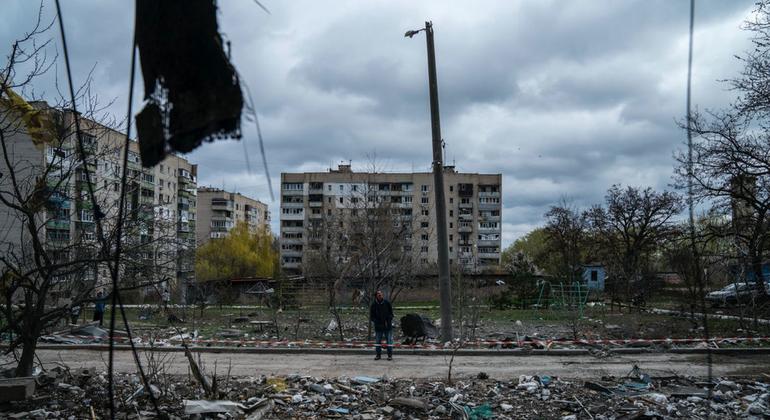
The relentless bombardment of Ukrainian cities continues to inflict immense suffering on the civilian population.Critical infrastructure – energy facilities, healthcare systems, and water supplies – are being systematically targeted, disrupting essential services and jeopardizing the lives of millions. This deliberate targeting, particularly as winter approaches, is exacerbating the vulnerability of already struggling communities. The OHCHR acknowledges reports from russia regarding civilian casualties attributed to Ukrainian forces, but has been unable to independently verify these claims. Though, the documented impact of Russian attacks on civilian areas is undeniable and represents a grave breach of international humanitarian law.
Arbitrary Detention, Torture, and Extrajudicial Killings: A Pattern of Abuse
A particularly alarming aspect of the crisis is the widespread and systematic detention of Ukrainian civilians and military personnel by Russian forces. OHCHR reports detail a disturbing pattern of arbitrary arrests, with individuals seized from the streets of occupied territories and held for extended periods – weeks, months, and even years – in many cases amounting to enforced disappearances.
The evidence gathered by OHCHR is deeply disturbing. They have documented 90 cases of extrajudicial executions of Ukrainian civilians detained by Russian authorities, alongside 38 deaths in custody attributable to torture, denial of medical care, and inhumane conditions.Furthermore, the OHCHR has meticulously documented patterns of widespread torture and ill-treatment, including harrowing accounts of sexual violence, mirroring similar violations previously recorded against Ukrainian prisoners of war.
Erosion of Legal Protections and Entrenched Impunity
The situation is further compounded by recent amendments to Russian legislation that effectively grant impunity to military personnel. These changes shield perpetrators of extrajudicial executions, torture, and ill-treatment from prosecution, creating a climate where abuses can occur without fear of consequence.This deliberate erosion of legal safeguards represents a fundamental violation of international law and a significant obstacle to achieving justice for victims.
While the OHCHR also acknowledges reports of torture and mistreatment of detainees connected to the conflict by Ukrainian authorities – including instances of sexual violence, primarily in 2022 – they note that Ukrainian authorities have taken steps to strengthen safeguards and improve detention conditions. However, accountability remains limited.
Suppression of Ukrainian Identity and Forced Assimilation
Beyond physical violence,the Russian occupation authorities are engaged in a systematic effort to suppress Ukrainian identity and impose russian control over occupied territories. Residents are facing increasing pressure to obtain Russian citizenship to access basic services, facing intimidation, deportation, and property confiscation if they refuse.
This extends to the education system,where Russian curricula are being imposed,prioritizing patriotic and military education. Simultaneously,surveillance and censorship have intensified,targeting messaging apps and VPNs,effectively stifling dissent and limiting access to information. These actions represent a deliberate attempt to erase Ukrainian culture and identity, violating fundamental human rights.
Methodology and Evidence gathering
The OHCHR’s findings are based on rigorous inquiry and documentation. Teams conducted over 400 interviews in 17 places of detention across all regions under Ukrainian control. Crucially, they also conducted 216 interviews with released detainees from russian-occupied territory, providing invaluable firsthand accounts of the abuses suffered. This thorough approach underscores the credibility and reliability of the OHCHR’s assessment.
Urgent Calls for Action and a Path Towards Peace
High Commissioner Türk issued a clear and urgent call to action, urging the Russian Federation to:
* Halt all extrajudicial executions, torture, mistreatment, and sexual violence against civilian detainees and prisoners of war.
* End all arbitrary and unlawful detention practices.
* Respect international law in territory under its control.
* Ensure effective oversight of all places of detention.
* Grant full access for autonomous monitors to civilian detainees.
He also urged Ukraine to uphold its obligations under international law in the treatment of detainees, safeguarding them from torture, ill-treatment, and sexual violence.
Ultimately,though,the High Commissioner emphasized the fundamental need to end the war. The human cost - the staggering loss of life,the widespread suffering,and the long-term trauma – is simply unacceptable. Recent reports of Russian military drones operating in neighboring countries serve as a stark reminder of the escalating risks of regional instability and the potential for wider conflict.
**The international community
Related reading