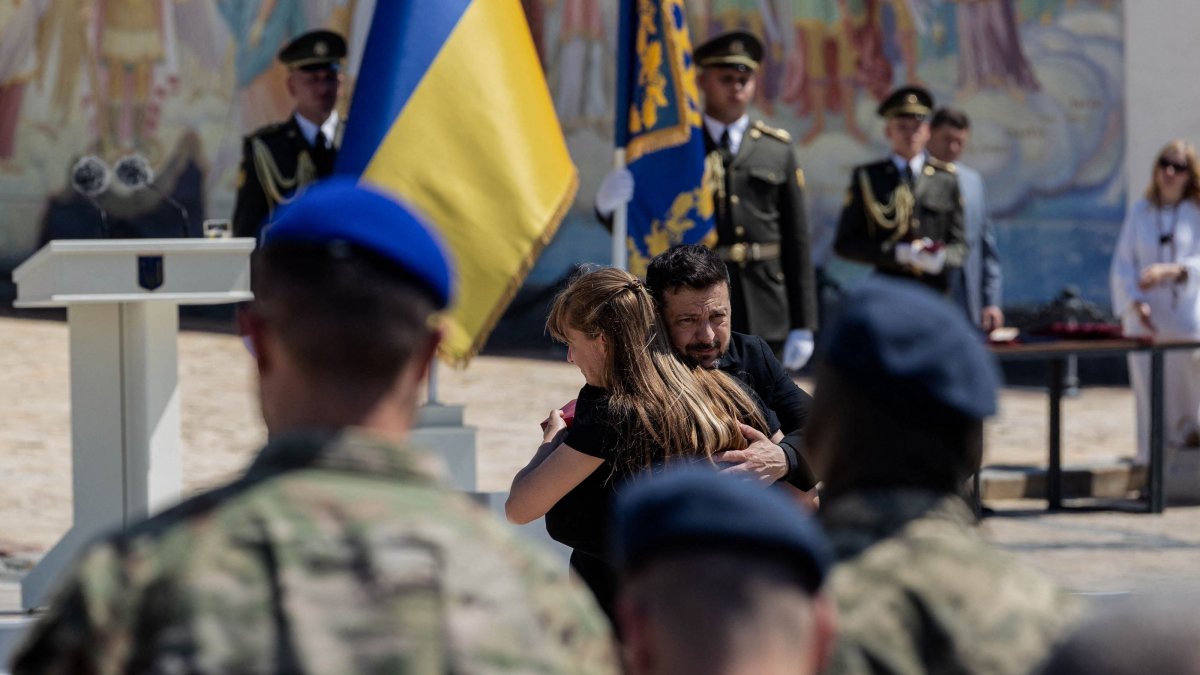
The United States is shifting its approach to the Russia-Ukraine war by easing restrictions on the use of long-range Western weapons for strikes inside Russian territory. According to the White House and reports from Reuters and the Associated Press, this policy change aims to help Ukraine defend its positions and disrupt Russian logistics, marking a departure from previous constraints designed to avoid direct escalation between NATO and Moscow.
For much of the conflict, Washington maintained a strict prohibition against Ukraine using U.S.-supplied missiles, such as ATACMS (Army Tactical Missile Systems), to strike targets deep within Russia. This cautious stance was rooted in the Biden administration’s desire to prevent a wider regional war. However, recent Ukrainian incursions into the Kursk region and continued Russian assaults in eastern Ukraine have prompted a recalibration of these rules of engagement.
The shift comes as Ukraine seeks to leverage its tactical advantages to force Russia toward negotiations. By targeting airfields, ammunition depots, and command centers inside Russia, Kyiv intends to degrade the Russian military’s ability to sustain its offensive in the Donbas region. This strategic pivot reflects a growing consensus among some U.S. officials that the previous “incremental” approach to weaponry provided Russia with a predictable environment in which to operate.
The Shift in Long-Range Weaponry Restrictions
The core of the change centers on the authorization to use long-range precision munitions. According to the U.S. Department of State, the administration has moved toward allowing Ukraine to hit military targets across the border, though specific “red lines” regarding the types of targets and the depth of strikes may still be communicated privately to Kyiv.

This decision follows months of pressure from President Volodymyr Zelenskyy, who argued that the ban on long-range strikes created an asymmetrical disadvantage. Ukrainian forces were previously unable to hit the very bases where Russian missiles were launched, effectively forcing them to defend against attacks they were forbidden from preempting. The use of ATACMS, which can travel over 300 kilometers, significantly expands the operational reach of the Ukrainian Armed Forces.
The strategic goal is to disrupt the “logistics tail” of the Russian army. By destroying stockpiles of missiles and drones within Russian borders, Ukraine can reduce the frequency and intensity of strikes on its own energy infrastructure and civilian centers. This move transitions the war from a static battle of attrition in the east to a more dynamic conflict that threatens Russian sovereign territory.
NATO Alignment and the Kursk Offensive
The policy shift coincides with Ukraine’s unexpected offensive into Russia’s Kursk region, which began in August 2024. According to NATO officials, the operation demonstrated that Russia’s border defenses were more porous than previously estimated. The success of this maneuver provided the political cover necessary for Washington to loosen restrictions, as it proved Ukraine’s ability to execute complex, high-stakes operations.
European allies have been divided on this issue. While the United Kingdom and France have provided long-range capabilities with fewer restrictions, other NATO members feared that allowing strikes deep into Russia would provoke a nuclear response from the Kremlin. However, the U.S. lead in this policy change effectively signals a unified NATO front in supporting Ukrainian sovereignty and its right to self-defense, as outlined in Article 51 of the UN Charter.
The Kremlin has responded with threats of escalation. Russian officials, including spokesperson Dmitry Peskov, have stated that allowing Western weapons to strike Russian soil would treat the U.S. and UK as direct participants in the conflict. Despite these warnings, Washington has maintained that providing the means for defense is not an act of aggression but a necessary step to ensure a stable peace.
Economic and Geopolitical Stakes
From an economic perspective, the continued flow of high-cost munitions is tied to U.S. congressional funding. The U.S. Congress has approved billions in aid packages, but the sustainability of this support depends on the perceived efficacy of the weapons provided. There is a growing argument in Washington that “victory” is more likely if Ukraine is allowed to impose a significant cost on the Russian military infrastructure.
The geopolitical risk remains high. The primary concern for U.S. policymakers is the “escalation ladder.” If Russia perceives these strikes as an existential threat, it may expand its target list to include NATO infrastructure or increase its reliance on North Korean munitions and personnel. Currently, the U.S. is monitoring the volume of North Korean shipments to Russia as a key indicator of Moscow’s desperation and capability.
Furthermore, this shift affects the timeline for potential peace talks. A stronger Ukrainian position on the battlefield, supported by long-range capabilities, gives Kyiv more leverage in any future negotiations. Conversely, if these strikes fail to produce a decisive shift in Russian capabilities, the U.S. may face internal political pressure to pivot toward a negotiated settlement that involves territorial concessions.
Comparison of Weaponry Restrictions
| Weapon System | Previous U.S. Policy | Current/Revised Policy | Strategic Impact |
|---|---|---|---|
| ATACMS | Limited to Ukrainian territory | Permitted for military targets in Russia | Deep strikes on logistics and airfields |
| Storm Shadow/SCALP | UK/France permitted use | U.S. alignment with European allies | Increased coordination in long-range campaigns |
| F-16s | Training and delivery phase | Integration into active combat | Enhanced air superiority and escort for strikes |
What Happens Next
The immediate focus for observers is the upcoming winter offensive and whether Russia will retaliate by targeting the remaining Ukrainian power grid with increased intensity. The U.S. administration is expected to provide additional batches of precision munitions to ensure Ukraine can maintain the tempo of its deep-strike operations.
The next confirmed checkpoint is the ongoing review of military aid by the U.S. Department of Defense, which will determine the scale of the next munitions package. Additionally, the international community is watching for any official response from the Kremlin regarding the specific “red lines” they claim have been crossed.
We invite our readers to share their perspectives on this strategic shift in the comments below. How should the international community balance the need for Ukrainian defense with the risk of escalation?