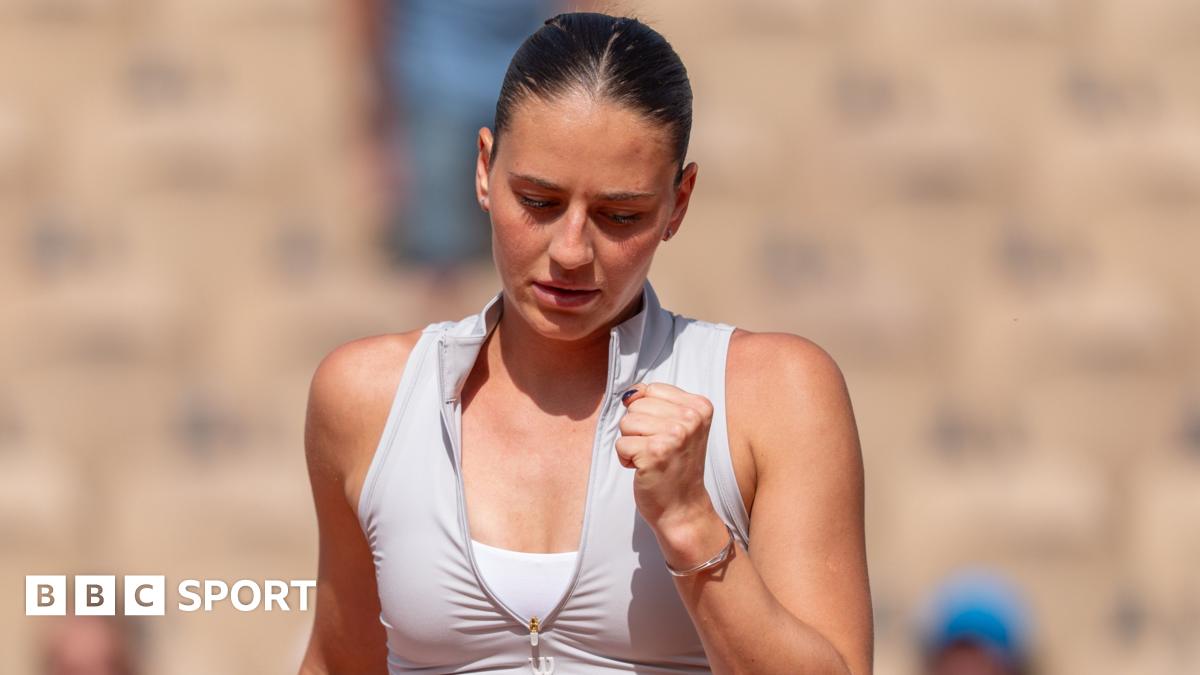
Victory in Paris, Terror in Kyiv: Marta Kostyuk Dedicates French Open Win to Ukraine
The red clay of Roland Garros is often a stage for displays of pure athletic prowess, but for Ukrainian tennis star Marta Kostyuk, her first-round victory at the 2026 French Open was defined by something far more profound than a tennis score. Amidst the intense concentration required to navigate the grueling opening rounds in Paris, Kostyuk carried the weight of a nation—and the terrifying reality of a war that continues to strike close to home.
Following her hard-fought win, the Ukrainian player revealed that the emotional stakes of the match were unprecedented. The night preceding her appearance on the court was marked by Russian missile strikes in Kyiv, which landed in close proximity to her parents’ residence. While the physical strikes narrowly missed her family, the psychological impact of the near-miss loomed large over her performance on the court.
Kostyuk, who has become one of the most vocal advocates for her country within the professional tennis circuit, expressed profound gratitude to the heavens and her supporters that her family remains safe. Her victory, while a professional milestone in the prestigious Grand Slam tournament, was explicitly dedicated to the resilience of the Ukrainian people and the safety of her loved ones.
A Narrow Escape: The Night Before the Match
For most professional athletes, the 24 hours leading up to a Grand Slam match are dedicated to strict physical regimens, hydration, and tactical visualization. For Kostyuk, those hours were spent in a state of high-alert anxiety. As reports emerged of missile activity over the Ukrainian capital, the proximity of the strikes to her family’s home transformed a standard tournament preparation into a battle for emotional survival.
While the exact distance of the strikes from her parents’ home has been a point of intense concern for her supporters, the reality remains that the strikes occurred in the residential areas of Kyiv where her family resides. The narrowness of the escape has added a layer of harrowing complexity to her presence on the WTA tour. Kostyuk has frequently navigated the duality of competing at the highest level of international sport while remaining tethered to the life-and-death struggles of her homeland.
The psychological toll of such events cannot be overstated. Athletes are trained to compartmentalize stress, yet the direct threat to immediate family members represents a breach of the mental sanctuary required for elite performance. Kostyuk’s ability to transition from the uncertainty of a missile strike in Kyiv to the precision required on the clay courts of Paris is being hailed by commentators as a testament to her extraordinary mental fortitude.
Resilience on the Clay: The Performance
Despite the heavy emotional atmosphere, Kostyuk’s play on the court demonstrated the technical discipline that has propelled her into the upper echelons of the women’s rankings. The French Open, known for its slow, demanding clay surfaces, requires a blend of patience, heavy topspin, and physical endurance—qualities Kostyuk displayed even while processing the news from home.
Her victory was not merely a product of tactical superiority but a display of sheer will. Observers noted that while the tension was visible, Kostyuk’s focus during critical break points remained sharp. This ability to channel adrenaline and anxiety into competitive energy has become a hallmark of her recent career trajectory, as she continues to balance her professional ambitions with her role as a representative of a nation under siege.
This win marks a significant step in her 2026 campaign. As the tournament progresses, the pressure will only increase, and the mental load will remain a constant factor. For Kostyuk, every match is now a dual struggle: one against an opponent across the net, and another against the circumstances that threaten her peace of mind.
Key Takeaways: Kostyuk’s French Open Context
- Event: French Open (Roland Garros) First Round.
- Primary Motivation: Dedication to Ukraine and her family’s safety.
- Incident: Missile strikes in Kyiv near her parents’ home occurred the night before the match.
- Status: Successfully advanced to the second round.
- Significance: Highlights the growing intersection of geopolitics and professional sports.
The Psychological Toll of War on Professional Athletes
Marta Kostyuk is far from alone in this struggle. The ongoing conflict in Ukraine has created a unique class of professional athletes who must navigate the global sporting calendar while managing the trauma of war. From football players in European leagues to tennis stars on the WTA tour, the mental health challenges faced by Ukrainian athletes are a growing concern for sports psychologists and governing bodies alike.

The concept of “sport as an escape” is often discussed, but for those with families in active conflict zones, sport becomes a platform for visibility and a means of maintaining a sense of normalcy. However, the “normalcy” is frequently shattered by real-time notifications of strikes, casualties, and shifting frontlines. This creates a state of “continuous traumatic stress,” which differs from PTSD in that the threat is ongoing, and unpredictable.
The international sporting community has largely rallied behind these athletes, providing platforms for them to speak their truths. Yet, as Kostyuk’s experience demonstrates, the support of the crowd and the prestige of the tournament do little to mitigate the visceral fear felt when a missile falls near a loved one’s home. Her story serves as a reminder that behind the broadcasted scores and professional statistics are human beings navigating unimaginable personal crises.
The Broader Impact on the WTA Tour
Kostyuk’s presence and her willingness to speak openly about the strikes in Kyiv have sparked broader conversations within the Women’s Tennis Association (WTA) regarding athlete welfare. There is an increasing recognition that the “mental toughness” expected of players must be supported by robust mental health resources, especially for those whose personal lives are directly impacted by global instability.
As the tour moves through the clay-court season and toward the grass-court swing, the visibility of Ukrainian athletes will remain high. Their ability to compete at the highest level is not just a feat of athleticism, but a powerful form of soft diplomacy, keeping the attention of the global public focused on the human cost of the war in Ukraine.
For the fans in Paris and around the world, watching Kostyuk is no longer just about watching a tennis match; it is about witnessing a display of human endurance. Her journey through the 2026 French Open is a narrative of survival, proving that even in the face of profound terror, the drive to compete and the desire to honor one’s roots can provide a path forward.
| Category | Details |
|---|---|
| Nationality | Ukrainian |
| Primary Sport | Professional Tennis (WTA) |
| Current Tournament | 2026 French Open (Roland Garros) |
| Key Theme | Resilience amidst geopolitical conflict |
| Recent Event | Missile strikes near family in Kyiv |
Marta Kostyuk is scheduled to compete in her second-round match at the French Open in the coming days. Details regarding her opponent and the specific court assignment will be confirmed by the tournament organizers following the conclusion of the current round.
What are your thoughts on the intersection of global politics and professional sports? How can the sporting community better support athletes facing such extreme personal challenges? Share your comments below and share this story to keep the conversation going.
Keep reading