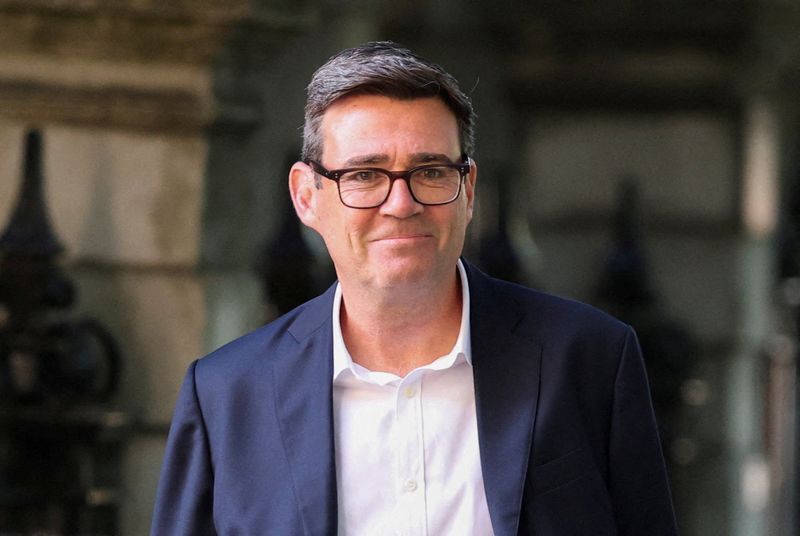
Andy Burnham, the current Mayor of Greater Manchester, is not the Prime Minister of the United Kingdom. Following the UK General Election held on July 4, 2024, the Labour Party secured a decisive victory, and Keir Starmer was officially appointed as Prime Minister by King Charles III on July 5, 2024, according to official records from the UK Government. Claims suggesting Andy Burnham is set to become the next Prime Minister are factually incorrect.
Clarifying the UK Political Leadership
The confusion regarding the UK’s leadership stems from the recent transition of power. Keir Starmer replaced Rishi Sunak after the Labour Party won a significant majority in the House of Commons. As confirmed by the UK Parliament, Starmer is currently leading the government, and there is no scheduled leadership contest or transition involving Andy Burnham. Burnham continues to serve in his capacity as the elected Mayor of Greater Manchester, a position he has held since 2017.

Burnham’s Stance on International Policy
While Andy Burnham is not the Prime Minister, he has frequently commented on international issues, including the situation in the Middle East, from his position as a regional leader. Throughout the conflict in Gaza, Burnham has advocated for a more robust diplomatic approach. In various public statements and media appearances, he has called for an immediate ceasefire and has urged the UK government to exert greater pressure on Israel to adhere to international humanitarian law.
In November 2023, Burnham joined other regional leaders in calling for a ceasefire, emphasizing the humanitarian crisis in Gaza and the need for a long-term political solution to the Israeli-Palestinian conflict, as reported by BBC News. His advocacy reflects a broader debate within the Labour Party and the wider British political landscape regarding the balance of the UK’s foreign policy, particularly concerning arms exports and diplomatic leverage.
The Role of Regional Mayors in National Discourse
The Mayor of Greater Manchester holds a significant platform in British politics, often influencing national policy debates from the local level. However, foreign policy remains a reserved power of the UK central government in Westminster. While Burnham’s influence is substantial within the Labour Party, he does not direct the Foreign, Commonwealth and Development Office or determine the UK’s official stance on international sanctions or military aid.

Current government policy under Prime Minister Keir Starmer has focused on maintaining traditional diplomatic alliances while navigating internal party pressures regarding the conflict. According to the official statements from the Prime Minister’s office, the government continues to support a two-state solution and emphasizes the importance of international law, though specific approaches to exerting pressure on Israel remain a point of active debate in Parliament.
Understanding the Context of Misinformation
The spread of inaccurate information regarding leadership changes often occurs during periods of intense political transition. Readers are encouraged to verify political appointments through official government channels, such as the GOV.UK portal, which provides real-time updates on cabinet appointments and ministerial responsibilities.
For those interested in following the ongoing policy discussions regarding the UK’s approach to the Middle East, official records of parliamentary debates and questions can be accessed via the UK Parliament Hansard. These records provide the most accurate account of the government’s official position and the contributions made by various political figures, including regional mayors and members of the cabinet.
This report was filed by Maria Petrova, Editor of the World section at World Today Journal. For further updates on UK political developments, please refer to official parliamentary bulletins. We welcome your thoughts on this coverage in the comments section below.