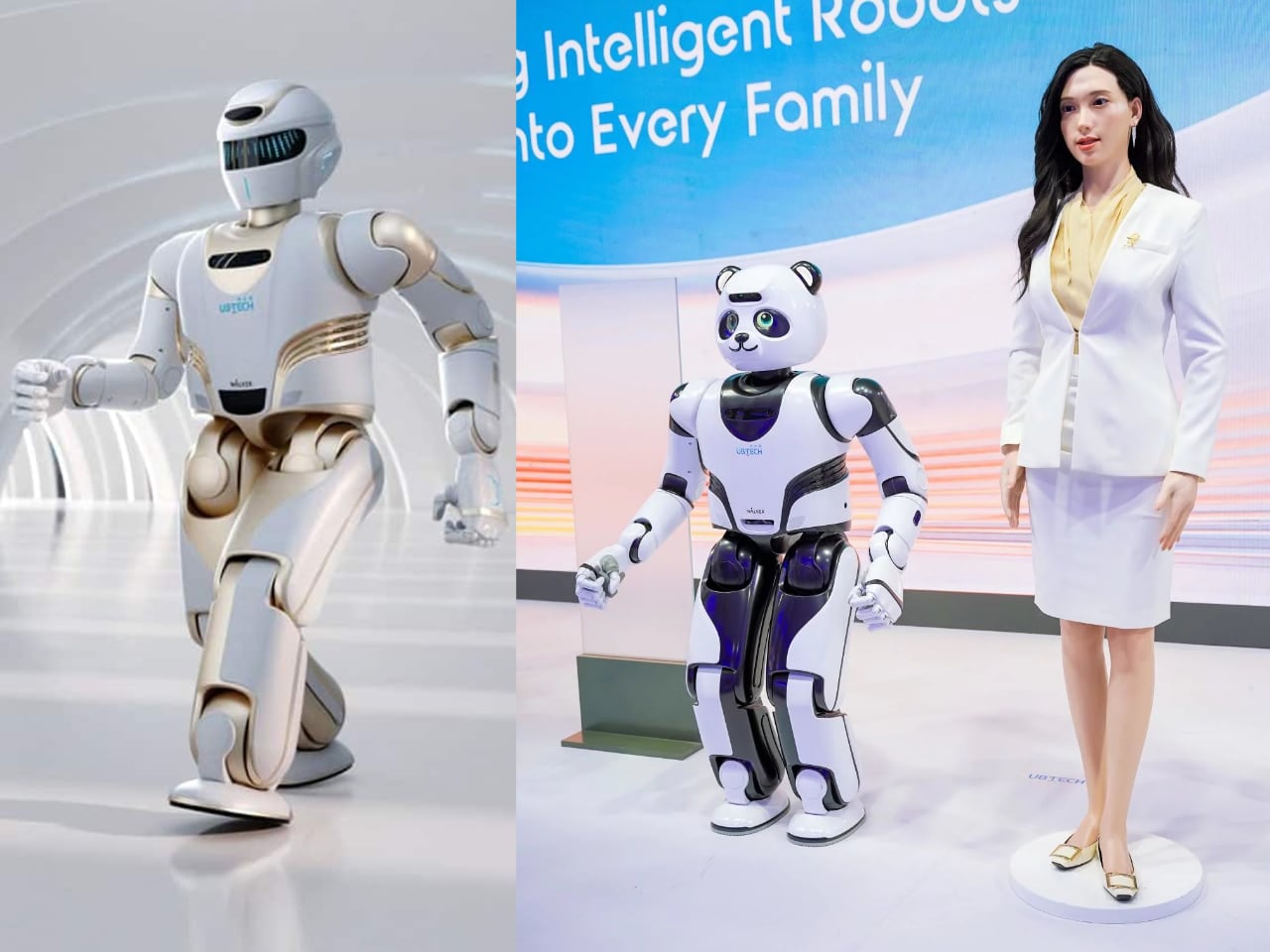
China has introduced a new generation of hyper-realistic humanoid companion robots capable of emotional interaction, marking a significant leap in artificial intelligence and robotics. UBTECH Robotics, one of the world’s leading robotics firms, unveiled the technology at a recent industry event, with experts describing it as a potential turning point for AI-driven social companionship.
Developed with advanced machine learning and biomechanical engineering, these robots are designed to mimic human expressions, gestures, and even voice modulation with near-indistinguishable realism. According to UBTECH’s official statement, the new models incorporate “deep emotional intelligence algorithms” that enable them to recognize and respond to human emotions, setting a new benchmark in companion robotics. The technology raises questions about the future of human-robot interaction, ethical considerations in AI development, and the societal impact of increasingly lifelike machines.
While the robots are currently targeted at domestic and therapeutic markets, industry analysts warn that their capabilities could accelerate broader adoption of AI in everyday life. “This isn’t just about creating a more advanced toy—it’s about redefining what it means to interact with artificial intelligence,” said Dr. Li Wei, a robotics expert at Tsinghua University, in comments to Reuters. “The emotional intelligence aspect is particularly groundbreaking, as it moves beyond functional tasks into the realm of social companionship.”
UBTECH, which has been a pioneer in humanoid robotics since its founding in 2008, is not the only company exploring this frontier. South Korea’s Robotis and Japan’s SoftBank Robotics have also developed emotionally responsive robots, though UBTECH’s new models are distinguished by their hyper-realistic design and integration with Chinese tech ecosystems like Alibaba’s AI platforms. The company did not disclose exact pricing or mass production timelines, but industry sources suggest the robots could enter consumer markets within 12–18 months.
The robots’ lifelike features include dynamic facial expressions, adaptive body language, and voice synthesis that mimics human intonation. Below is a demonstration video from UBTECH’s recent showcase:
Why These Robots Could Reshape AI and Society
UBTECH’s new companion robots represent more than just an engineering achievement—they embody a convergence of several technological and societal trends:
- Emotional AI: The robots’ ability to recognize and respond to human emotions pushes the boundaries of what artificial intelligence can achieve in social contexts. Previous models focused on functional tasks, but this generation aims to replicate emotional intelligence, a capability previously considered the domain of humans.
- Domestic and Therapeutic Applications: Early adopters are likely to include elderly care facilities, where robots could assist with companionship, and households seeking interactive entertainment. UBTECH has already partnered with Chinese hospitals to test the robots in patient care scenarios.
- Ethical and Privacy Concerns: The lifelike nature of these robots raises questions about data privacy, consent, and the potential for emotional manipulation. Regulators in China and globally will need to address how such technologies are governed, particularly regarding their use with vulnerable populations.
- Global Competition: While UBTECH leads in China, competitors in the U.S., Europe, and South Korea are also advancing in emotional AI. The race to perfect these technologies could accelerate innovation but also intensify geopolitical tensions over AI dominance.
How UBTECH’s Robots Compare to Existing Models
UBTECH’s new companion robots stand out from earlier generations and competitors’ offerings in several key ways:
.jpg?width=1280&auto=webp&quality=80&disable=upscale "How UBTECH's Robots Compare to Existing Models")
| Feature | UBTECH’s New Model | Previous UBTECH Models | Competitors (e.g., SoftBank’s Pepper, Robotis’ EMY) |
|---|---|---|---|
| Realism | Hyper-realistic facial and body movements | Functional but less lifelike | Moderately realistic, with some limitations |
| Emotional Intelligence | Advanced algorithms for emotion recognition and response | Basic emotional detection | Limited to scripted interactions |
| Voice Synthesis | Natural intonation and adaptive speech patterns | Pre-recorded or robotic-sounding | Improved but still synthetic |
| Integration with AI Ecosystems | Seamless compatibility with Chinese AI platforms (e.g., Alibaba’s AI) | Standalone operation | Limited to proprietary systems |
Source: UBTECH Robotics product specifications and Financial Times analysis of competitor technologies.
What Happens Next: Regulatory and Market Challenges
The introduction of these robots is likely to trigger several developments in the coming months:
- Regulatory Scrutiny: Chinese authorities, along with global regulators, will likely examine the ethical implications of emotionally intelligent robots. The Chinese Cyberspace Administration may issue guidelines on data privacy and consent, particularly for robots used in healthcare or domestic settings.
- Market Expansion: UBTECH has signaled plans to expand beyond China, targeting markets in Southeast Asia and Europe where demand for companion robots is growing. The company’s integration with Alibaba’s AI infrastructure could give it a competitive edge in these regions.
- Ethical Debates: Philosophers and technologists will continue to debate the ethical boundaries of AI companionship. Questions about emotional manipulation, dependency, and the potential for robots to replace human interaction are already surfacing in academic circles.
- Investment and Innovation: The success of UBTECH’s robots could attract further investment in emotional AI, leading to rapid advancements in the field. Competitors may respond with their own lifelike models, intensifying innovation cycles.
Expert Perspectives: The Future of Human-Robot Interaction
Industry experts and ethicists offer differing views on the implications of UBTECH’s new robots:
“This technology is a double-edged sword. On one hand, it has tremendous potential for improving quality of life, especially for the elderly or those with social isolation. On the other hand, we must consider the psychological impact of replacing human interaction with artificial companions,” said Dr. Elena Rodriguez, a bioethicist at the University of Oxford.
“From a business perspective, UBTECH is positioning itself at the forefront of the next wave of AI-driven consumer products. The emotional intelligence aspect is a game-changer, as it opens up entirely new use cases beyond traditional robotics,” said Mark Chen, a tech analyst at IDC.
UBTECH’s CEO, Zhang Yiming, emphasized the company’s commitment to ethical development in a recent interview with Caixin Global:
“Our goal is not to replace human interaction but to enhance it. These robots are designed to complement human experiences, whether in healthcare, education, or daily life. We are also working closely with regulators to ensure responsible deployment.”
Where to Find Official Updates and Resources
For readers interested in following this story or exploring the technology further, the following resources provide authoritative information:
- UBTECH Robotics Official Website – Product details, press releases, and technical specifications.
- Chinese Cyberspace Administration – Potential regulatory updates on AI and robotics.
- Financial Times Technology Section – In-depth analysis of global AI and robotics trends.
- Reuters Technology – Latest news on UBTECH and competitor developments.
The next major checkpoint for this story will be UBTECH’s official announcement of mass production timelines and pricing, expected in the third quarter of 2024. Additionally, regulators in China and other regions may release guidelines on the ethical use of emotionally intelligent robots by the end of the year.
We welcome your thoughts on this development. Will these robots change how we interact with AI, or do they raise more questions than answers? Share your perspective in the comments below or on our social media channels.
Worth a look