An independent American Heart Association AI Assessment Lab report released on July 22, 2026, finds that Ultromics’ EchoGo Heart Failure algorithm could identify preserved ejection fraction heart failure up to nine months earlier than standard clinical care, potentially saving 477 lives per every 10K patients.
Heart failure with preserved ejection fraction remains one of the most stubborn clinical challenges in modern cardiology. Symptoms often remain nonspecific, and standard imaging tests frequently fail to catch the condition early because normal diagnostic ranges have historically skewed toward white male populations. That diagnostic bias leaves women and people of color facing steep barriers to timely detection, with an estimated 30 to 50 percent of affected individuals walking around unaware of their condition until the disease advances significantly.
Now, new evaluation data suggests artificial intelligence could shorten that diagnostic blind spot by nearly nine months. According to PR Newswire, an impact report from the American Heart Association AI Assessment Lab demonstrates that the EchoGo Heart Failure algorithm could have identified the condition an average of 263 days earlier than standard practice.
Independent Evaluation Through the AHA Assessment Lab and Dandelion Health Data
The evaluation framework was designed to give healthcare systems a rigorous, third-party look at how cardiovascular AI tools actually perform in real-world settings.
The assessment lab itself functions as an independent testing environment. Lee H.
“The American Heart Association AI Assessment Lab provides an independent evaluation and testing environment for clinical AI algorithm performance as well as economic impact, patient outcomes and healthcare workflows.”
Lee H. Schwamm, MD, stroke neurologist, Heart Association Volunteer Expert, and member of the AHA AI Solutions in Healthcare Steering Committee
By relying on external advisory panels featuring experts in cardiology, stroke, and healthcare delivery, the lab attempts to cut through vendor claims and provide hospitals with reliable data on clinical and economic value.
Modeled Clinical Benefits and Healthcare Utilization Reductions
The implications of catching preserved ejection fraction heart failure earlier extend far beyond faster paperwork. The modeled data, calculated per 10K patients over a five-year period, projects sweeping reductions in acute care usage and improved survival rates.
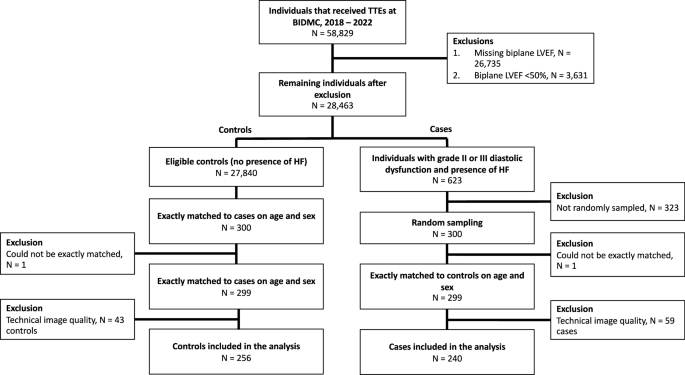
According to the report’s modeled outcomes, earlier detection could result in 477 lives saved per 10k patients over a five-year period. Furthermore, subgroup analyses pointed toward a measurably higher likelihood of benefit among younger and non-white patients, offering a potential tool to help narrow persistent healthcare disparities.
- Hospital admissions: 406 fewer hospital admissions.
- Readmissions: 501 fewer readmissions.
- Emergency department visits: 564 fewer emergency department visits.
These drops in hospital utilization reflect the fundamental advantage of earlier clinical intervention, giving physicians a window to alter disease trajectories before acute decompensation forces emergency care.
Economic Returns and Institutional Trust in Clinical AI
Hospital adoption of novel diagnostic AI often stalls because administrators demand proof of return on investment alongside clinical validity. The AHA evaluation attempts to address both sides of that equation.

The assessment projects that health systems can see up to $1.9 million in additional revenue over 5 years when using EchoGo® Heart Failure. Estimated savings came out to approximately $1,800 per patient when evaluated from both health system and payer perspectives.
Bridging the gap between software theory and daily hospital workflows remains a core hurdle for artificial intelligence developers.
“Since they’re so novel, AI diagnostics are evaluated differently than traditional cardiovascular technologies. Right now, many hospitals struggle to adopt them since they need clear evidence of how these models are trained, validated, and integrated into real clinical workflows before they can trust them in practice.” Roger Owens, MS, Chief Commercial Officer at Ultromics Owens added that independent validation from bodies like the American Heart Association is essential to prove that an algorithm functions consistently across diverse patient populations while supporting, rather than replacing, physician judgment. Keep reading