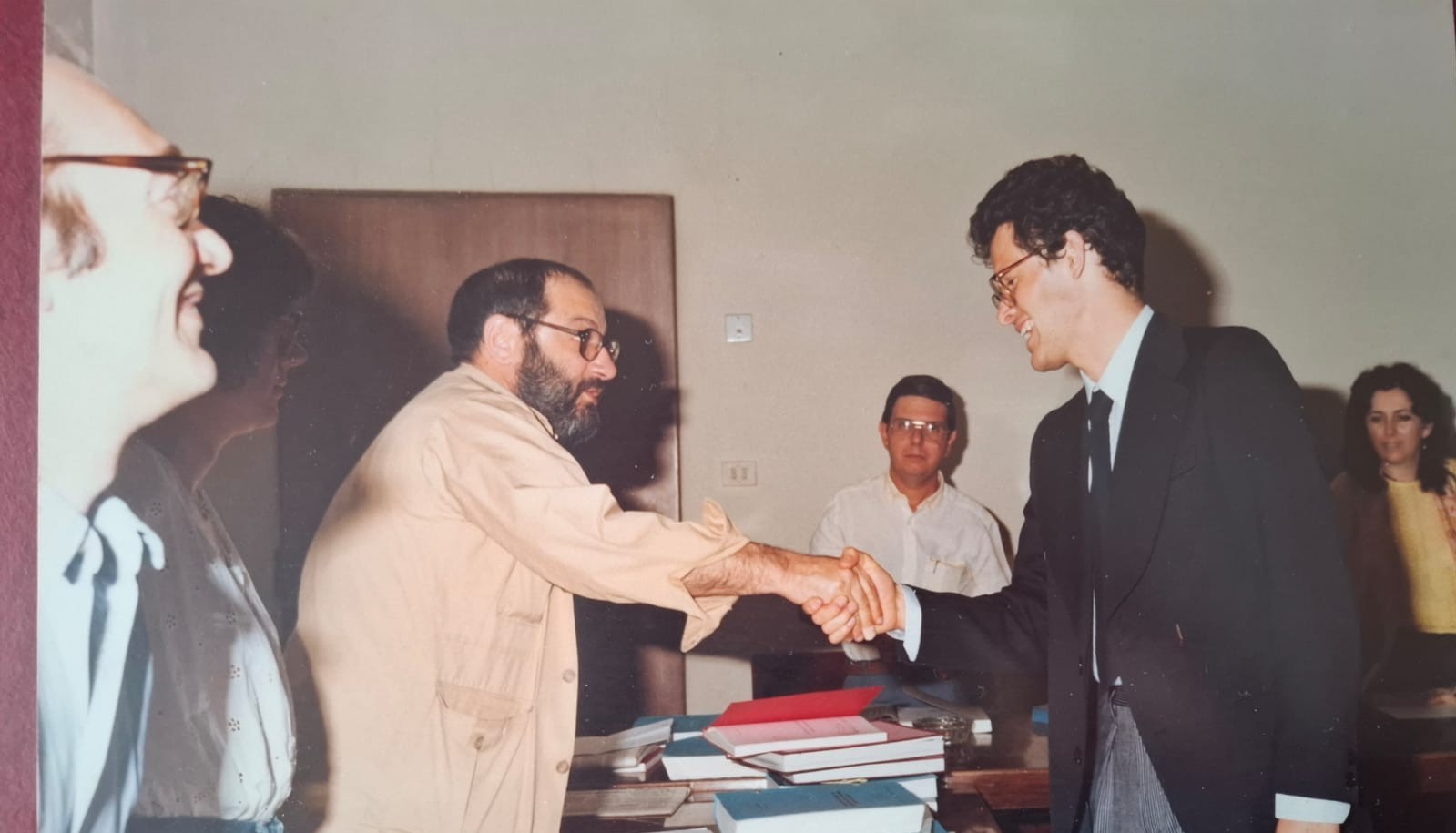
Bologna, Italy – For a decade following the death of celebrated Italian semiotician, philosopher, and novelist Umberto Eco on February 19, 2016, his explicit wish for no official commemorations, conferences, or celebrations was honored. Now, with that period of respectful silence concluded, a glimpse into the impact of his teaching is emerging through the recollections of those who studied under him. One such voice is Rino Filippin, a former student at the DAMS (Disciplines of the Arts, Music and Performance) program at the University of Bologna, who shared his experiences with the professor and the formative years spent within the university’s walls.
Filippin’s memories offer a personal perspective on Eco’s influence, particularly within the context of the DAMS program – a pioneering course of study in the arts and humanities. The University of Bologna, established around 1088, is recognized as the oldest university in continuous operation in the world, and its legacy of intellectual inquiry provided a fertile ground for Eco’s innovative approach to semiotics and communication studies. The University of Bologna currently boasts over 90,000 students, making it one of the largest universities in Europe.
The Allure of Semiotics and Eco’s Engaging Lectures
Filippin recalls that in the early 1980s, the Institute of Communication, directed by Professor Eco, was a central hub for students aspiring to careers in journalism. He specifically sought out Eco’s lectures on Semiotics, a field dedicated to the study of signs and symbols and their interpretation. These lectures, held in the university’s aula magna, were intentionally scheduled for 1:00 PM to 2:00 PM, a time slot designed to discourage casual attendees. Despite this, Filippin remembers the hall being consistently packed, with students often forced to stand. The appeal, he explains, wasn’t solely the subject matter itself, but Eco’s captivating teaching style.
“The lessons were very entertaining, full of wit,” Filippin recounted. “It was a spectacle, a performance. Perhaps that’s why I chose to write my thesis on semiotics.” This engaging approach to complex theoretical concepts was a hallmark of Eco’s teaching, making him a popular and influential figure among students. Umberto Eco’s contributions extended beyond the classroom; he was a prolific writer, literary critic, and philosopher whose work explored the intersection of semiotics, culture, and communication. The University of Bologna recognized Eco’s impact, bestowing upon him numerous accolades and acknowledging his enrichment of the institution through his teaching and the courses he created.
A Professor Accessible to His Students
Filippin’s experience highlights Eco’s dedication to his students, even amidst a demanding schedule and widespread recognition. He described how, during meetings to discuss his thesis progress, Eco would politely defer calls from prominent figures in the cultural and media landscape. “He would say, ‘Tell them to call back, I’m busy right now,’” Filippin remembers. “It showed a great respect for the student, an attitude that was quite rare in many fields.” This accessibility and willingness to prioritize student interaction underscore Eco’s commitment to mentorship and fostering the next generation of scholars.
The support extended beyond Eco himself. Filippin similarly credits Professor Massimo Bonfantini, Eco’s assistant, for his guidance throughout the thesis process. Together, they helped Filippin navigate the complexities of semiotics and journalism, ultimately leading to his graduation with a thesis that bridged both disciplines. Massimo Bonfantini was a noted semiotician in his own right, contributing significantly to the field alongside Eco.
From Academia to Professional Journalism
Following his graduation from the DAMS program, Filippin launched his career in journalism, securing a position as a trainee with the Repubblica-L’Espresso group at the Gazzetta di Modena, where he eventually became a professional journalist. He complemented his journalistic work with editorial and musical pursuits. He attributes the foundation for his success to his four years at DAMS, emphasizing the positive impact of the program and the mentorship he received from Eco and Bonfantini. The DAMS program itself, founded with Eco’s involvement, was the first of its kind in Italy, dedicated to the study of Drama, Art and Music Studies. The University of Bologna recognized the program’s significance as a cornerstone of its humanities offerings.
Eco’s influence wasn’t limited to the theoretical realm. His work often engaged with popular culture, analyzing phenomena like television and mass media. His 1961 work, *Fenomenologia di Mike Bongiorno* (The Phenomenology of Mike Bongiorno), examined the popular Italian television personality, demonstrating his ability to apply semiotic principles to everyday cultural artifacts. This approach resonated with students like Filippin who were interested in pursuing careers in journalism and media.
The Legacy of a Semiotician and Educator
Umberto Eco’s passing in 2016 was mourned globally, with tributes pouring in from across the academic and cultural spheres. The University of Bologna, in particular, acknowledged the loss of a figure who had significantly enhanced its prestige and reputation worldwide. He was remembered as an extraordinary intellectual, a profound thinker, and a humanist who revolutionized cultural understanding. His emphasis on understanding the underlying structures of language and expression, as a prerequisite for subverting them, remains a powerful message for scholars and creatives alike.
The recollections of students like Rino Filippin provide a valuable insight into Eco’s impact as an educator. His ability to make complex ideas accessible, his dedication to his students, and his commitment to fostering critical thinking left a lasting impression on those who had the privilege of learning from him. As the “silenzio celebrativo” concludes, these personal stories serve as a fitting tribute to a remarkable scholar and teacher.
The University of Bologna continues to build on Eco’s legacy, offering a vibrant academic environment and fostering innovative research in the humanities. The DAMS program remains a prominent feature of the university’s curriculum, attracting students from around the world who are eager to explore the intersection of art, music, and performance. The university’s commitment to academic excellence and its dedication to preserving Eco’s intellectual heritage ensure that his influence will continue to be felt for generations to approach.
Looking ahead, the University of Bologna will undoubtedly continue to honor Eco’s memory through its academic programs and research initiatives. Further exploration of his extensive body of work and the ongoing dissemination of his ideas will be crucial in ensuring that his contributions to semiotics, philosophy, and cultural studies remain relevant and impactful. The university’s website, www.unibo.it, serves as a valuable resource for those seeking to learn more about Eco’s life and work.
What are your memories of Umberto Eco? Share your thoughts and reflections in the comments below. Don’t forget to share this article with others who may be interested in learning more about this influential figure and his lasting impact on the world of academia.
Worth a look