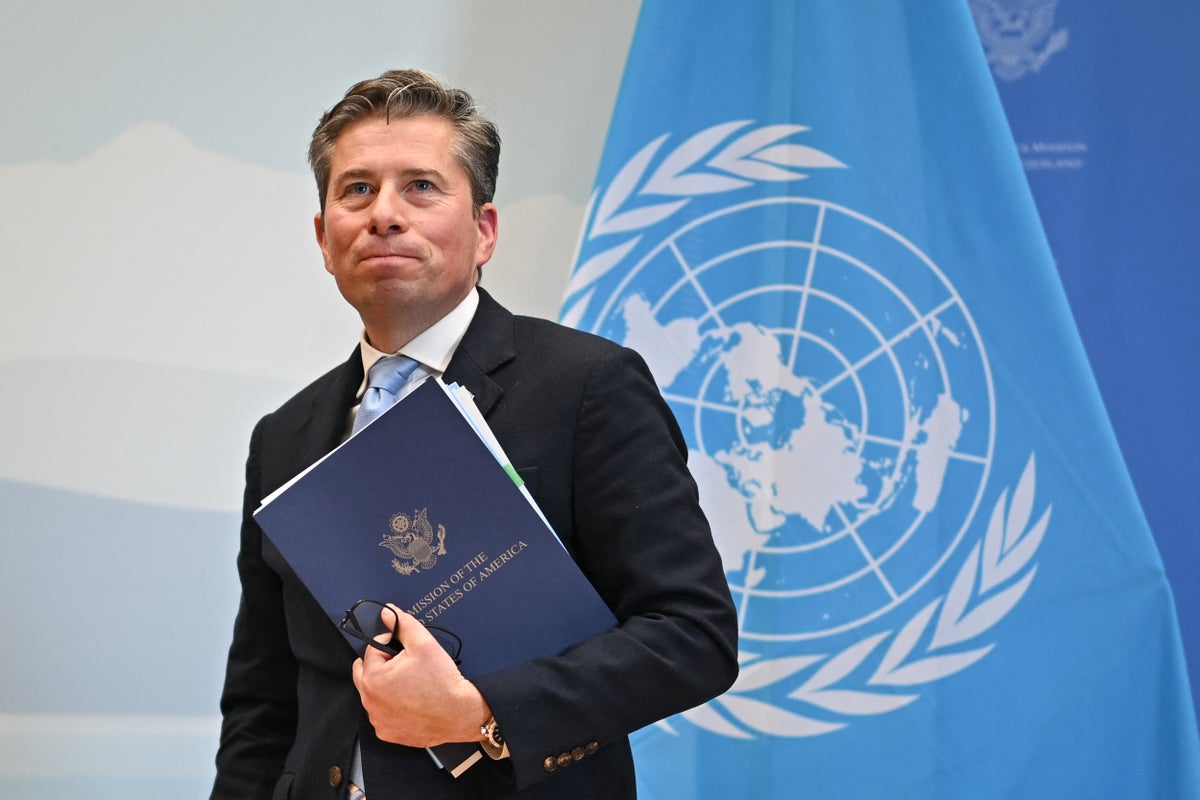
Tom Fletcher, the United Nations Under-Secretary-General for Humanitarian Affairs and Emergency Relief Coordinator, has issued a stark warning about the growing gap between declining foreign aid and rising humanitarian needs worldwide. Speaking in his capacity as the UN’s top humanitarian official, Fletcher emphasized that traditional approaches to aid delivery are no longer sufficient in the face of what he described as “cataclysmic” funding cuts.
Fletcher, who assumed office on 9 October 2024 following his appointment by UN Secretary-General António Guterres, brings extensive experience to the role after serving as British Ambassador to Lebanon from 2011 to 2015 and as Principal of Hertford College, Oxford from 2020 to 2024. His background similarly includes foreign policy advisory roles at 10 Downing Street under prime ministers Tony Blair, Gordon Brown, and David Cameron.
The humanitarian chief’s remarks come amid growing concerns about the sustainability of international aid systems. Fletcher has consistently advocated for renewed global solidarity and innovative approaches to humanitarian assistance, stressing that “we have to do things differently” to address the widening chasm between available resources and escalating needs.
As Under-Secretary-General for Humanitarian Affairs, Fletcher oversees the UN Office for the Coordination of Humanitarian Affairs (OCHA), which coordinates emergency responses to crises ranging from natural disasters to complex conflicts. His leadership comes at a critical juncture when multiple protracted emergencies continue to strain the international humanitarian system.
Renewed Call for Global Solidarity
Fletcher’s appeal for renewed solidarity reflects a broader shift in humanitarian discourse toward more collaborative and locally-led responses. Since taking office, he has emphasized the importance of partnerships between international organizations, national governments, and local civil society groups in delivering effective aid.
The UN humanitarian chief has pointed to successful models where early investment in preparedness and resilience-building has reduced long-term costs and improved outcomes for vulnerable populations. This approach aligns with the UN’s broader reform agenda aimed at making humanitarian action more anticipatory, localized, and accountable.
In his public statements, Fletcher has repeatedly highlighted the moral imperative of maintaining humanitarian principles even amid financial constraints. He argues that cutting aid during times of rising need not only violates international humanitarian law but also undermines global stability and security.
Innovation in Humanitarian Response
The call to “do things differently” encompasses several strategic shifts Fletcher has championed since assuming his UN role. These include greater utilize of cash-based assistance, which empowers recipients to make their own choices about priorities whereas stimulating local economies.

Fletcher has also advocated for anticipatory action—taking preventive measures based on forecasts before crises fully materialize. This approach, he argues, can significantly reduce suffering and costs compared to traditional reactive responses.
Technology and data innovation represent another pillar of Fletcher’s reform agenda. He has supported expanded use of satellite imagery, artificial intelligence for needs assessment, and digital identity systems to improve aid targeting and reduce duplication of efforts.
Challenges Facing the Humanitarian System
The humanitarian landscape Fletcher navigates is marked by unprecedented challenges. Climate change continues to increase the frequency and intensity of natural disasters, while protracted conflicts in regions such as Sudan, Ukraine, and the Gaza Strip create complex, long-term displacement situations.
These pressures come as donor governments face competing domestic priorities, leading to what Fletcher has characterized as unpredictable and often insufficient funding flows. The UN’s Global Humanitarian Overview regularly shows significant gaps between requested funding and actual contributions.
Fletcher has acknowledged these realities while maintaining that innovation and efficiency gains can facilitate bridge some of the divide. He has urged donors to move toward more flexible, multi-year funding mechanisms that allow humanitarian organizations to plan and respond more effectively.
Leadership Experience and Approach
Before his UN appointment, Fletcher’s career combined diplomatic service with academic leadership and policy advisory function. His tenure as Principal of Hertford College, Oxford from 2020 to 2024 provided him with experience managing a major educational institution during the challenging period of the COVID-19 pandemic and its aftermath.
As British Ambassador to Lebanon, Fletcher navigated one of the most complex diplomatic environments in the Middle East, gaining firsthand experience with humanitarian crises stemming from regional conflicts and economic collapse. His time advising UK prime ministers on foreign policy and Northern Ireland affairs further shaped his understanding of how humanitarian considerations intersect with broader political dynamics.
Fletcher is also known as a writer and commentator on international affairs, having authored books on diplomacy and global politics. This background informs his communication approach as humanitarian chief, where he seeks to make complex humanitarian issues accessible to broader audiences.
Way Forward and Next Steps
The UN humanitarian chief has outlined several priorities for strengthening the global humanitarian system. These include reinforcing the centrality of international humanitarian law, improving coordination between development and humanitarian actors, and ensuring that affected populations have meaningful voice in decisions that affect their lives.

Fletcher has also stressed the importance of humanitarian diplomacy—using principled engagement to secure access to populations in need, even in highly politicized environments. This approach recognizes that delivering aid often requires navigating complex political landscapes while maintaining neutrality and impartiality.
Looking ahead, Fletcher’s focus remains on building a more resilient, adaptive, and effective humanitarian system capable of meeting 21st-century challenges. His leadership emphasizes that while resources are finite, human ingenuity and solidarity can drive meaningful improvements in how the world responds to suffering and crisis.
The next major milestone in Fletcher’s humanitarian agenda will be the UN’s annual Global Humanitarian Overview update, typically released toward the end of each year. This report provides the most comprehensive assessment of global humanitarian needs and funding requirements, serving as a key benchmark for measuring progress toward closing the aid gap.
For ongoing updates on UN humanitarian initiatives and Fletcher’s leadership, the official website of the UN Office for the Coordination of Humanitarian Affairs provides regular reports, press releases, and detailed information about current emergency responses worldwide.
We encourage our readers to share their thoughts on this critical issue in the comments section below and to spread awareness by sharing this article with others interested in global humanitarian affairs.