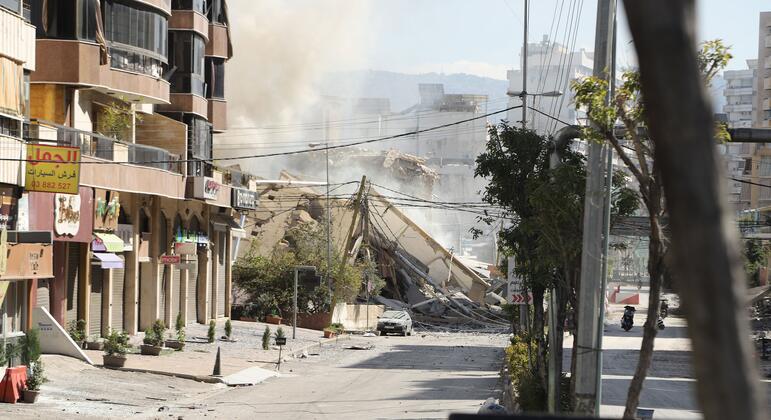
London, United Kingdom – March 12, 2026 – The escalating conflict in the Middle East continues to exert significant pressure on global markets, humanitarian organizations, and international diplomatic efforts. A United Nations Security Council resolution condemning Iranian attacks on several Gulf states was adopted yesterday, while a separate Russian-led resolution addressing the broader regional crisis failed to garner sufficient support. This comes as shipping attacks persist, oil prices climb, and a widening humanitarian crisis unfolds, demanding urgent international attention. The situation is particularly acute in Lebanon, where the UN is warning of mounting needs as displacement rises and essential services are strained.
The Bahrain-led resolution, adopted with 13 votes in favor and two abstentions from China and Russia, “condemns in the strongest terms the egregious attacks” by Iran against Bahrain, Kuwait, Oman, Qatar, Saudi Arabia, the United Arab Emirates, and Jordan, determining they constitute “a breach of international law and a serious threat to international peace and security,” according to the UN News report. The resolution demands the “immediate cessation” of all attacks by Iran and calls on Tehran to comply fully with its international obligations, including civilian protection.
UN Security Council Condemns Iranian Attacks, Russia’s Resolution Fails
The vote at the UN Security Council reflects a growing international consensus regarding Iran’s destabilizing actions in the region. The resolution, co-sponsored by a record 135 UN Member States, according to Gulf News, signals a strong rebuke of Tehran’s recent military activities. China’s abstention stemmed from concerns that the text did not fully address the underlying causes of the conflict, with Ambassador Fu Cong stating the situation risks pushing the entire Middle East into a “dangerous abyss.” Russia’s draft resolution, which aimed to address the wider regional crisis, failed to pass, highlighting the deep divisions within the Security Council regarding the appropriate response to the escalating tensions.
The attacks condemned by the resolution include missile and drone strikes targeting civilian infrastructure and commercial vessels. The National News reports that the resolution specifically condemns actions aimed at closing or obstructing international navigation through the Strait of Hormuz and the Bab Al Mandeb, vital waterways for global trade. Iran’s actions are reportedly in retaliation for US-Israeli attacks that resulted in the death of Ayatollah Ali Khamenei, the Iranian supreme leader.
Oil Prices Surge Amidst Shipping Disruptions
The instability in the Middle East is already impacting global energy markets. Concerns over potential disruptions to oil supplies have driven up crude prices, adding to inflationary pressures worldwide. Iranian forces have targeted commercial ships passing through the Strait of Hormuz, a crucial sea passage for the global fuel trade, in an attempt to inflict economic pain. The potential for further escalation and wider disruptions to maritime traffic is fueling volatility in the oil market. Analysts are closely monitoring the situation, with some predicting further price increases if the conflict intensifies. The price of Brent crude, the international benchmark, has risen by 7.2% since the beginning of the month, reaching $92.45 per barrel as of today, March 12, 2026.
Humanitarian Crisis Deepens, Particularly in Lebanon
Beyond the economic implications, the conflict is exacerbating an already dire humanitarian situation across the region. Displacement is rising, placing immense strain on already overstretched resources. The UN warns that essential services, such as healthcare and sanitation, are struggling to cope with the influx of displaced populations. The situation is particularly critical in Lebanon, which is grappling with a severe economic crisis and political instability. The UN’s morning briefing on Lebanon highlighted the urgent need for increased humanitarian assistance to address the growing needs of vulnerable populations. The World Food Programme (WFP) is scaling up its operations to provide food assistance to those affected by the conflict, but faces significant challenges in accessing those in need due to ongoing insecurity and logistical constraints.
The UN estimates that over 2.5 million people have been displaced across the region as a direct result of the conflict, with Lebanon hosting a significant proportion of these refugees. The influx of displaced persons is placing a tremendous burden on Lebanon’s already fragile infrastructure and economy. The UN is appealing for increased international funding to support humanitarian efforts in Lebanon and across the region. The UN High Commissioner for Refugees (UNHCR) is working to provide shelter, protection, and essential services to displaced populations, but warns that resources are dwindling.
Impact on Global Trade and Supply Chains
The disruptions to maritime traffic in the Red Sea and the Persian Gulf are having a ripple effect on global trade and supply chains. Shipping companies are rerouting vessels around the Cape of Good Hope, adding significant time and cost to shipments. Here’s leading to delays in the delivery of goods and increased transportation costs, which are ultimately passed on to consumers. The disruptions are particularly impacting trade between Asia and Europe, as well as the flow of energy supplies from the Middle East to global markets. The longer the conflict continues, the more severe the impact on global trade and supply chains is likely to be.
International Response and Diplomatic Efforts
The adoption of the UN Security Council resolution represents a significant step towards holding Iran accountable for its actions. However, the effectiveness of the resolution will depend on its implementation and the willingness of the international community to enforce its provisions. Diplomatic efforts are ongoing to de-escalate the conflict and find a peaceful resolution. Several countries are engaged in shuttle diplomacy, attempting to mediate between the parties involved. However, the deep-seated mistrust and conflicting interests make a negotiated settlement challenging. The United States has reiterated its commitment to supporting its allies in the region and has warned Iran against further aggression. European powers are likewise calling for restraint and a return to dialogue.
Bahrain’s ambassador to the UN, Jamal Alrowaiei, expressed his “deepest gratitude” on behalf of the Gulf Cooperation Council (GCC) following the vote, emphasizing the region’s importance to the global economy and energy security. The GCC views the resolution as a crucial step in safeguarding regional stability and protecting international trade routes.
The situation remains highly volatile and unpredictable. The risk of further escalation is high, and the potential for a wider regional conflict cannot be ruled out. The international community must work together to de-escalate tensions, address the underlying causes of the conflict, and provide humanitarian assistance to those in need. The next key development to watch will be the response from Iran to the UN Security Council resolution and the progress of ongoing diplomatic efforts.
Key Takeaways:
- The UN Security Council has condemned Iranian attacks on Gulf states.
- Oil prices are rising due to disruptions in shipping lanes.
- A humanitarian crisis is deepening, particularly in Lebanon.
- Diplomatic efforts to de-escalate the conflict are ongoing.
The situation in the Middle East is evolving rapidly. We will continue to provide updates as modern information becomes available. Please share your thoughts and perspectives in the comments below.
Keep reading
- Delta Air Lines Permanently Cancels Three Direct JFK Routes to Key US Destinations
- CJ CheilJedang Altive Protein Drinks and Low-Sugar Soy Milk Lineup
- Honolulu City Council District 4 Race Narrowed to Three Candidates (news-usa.today)
- Trump Orders New Strike on Iran as Conflict Enters Sixth Month (world-today-news.com)