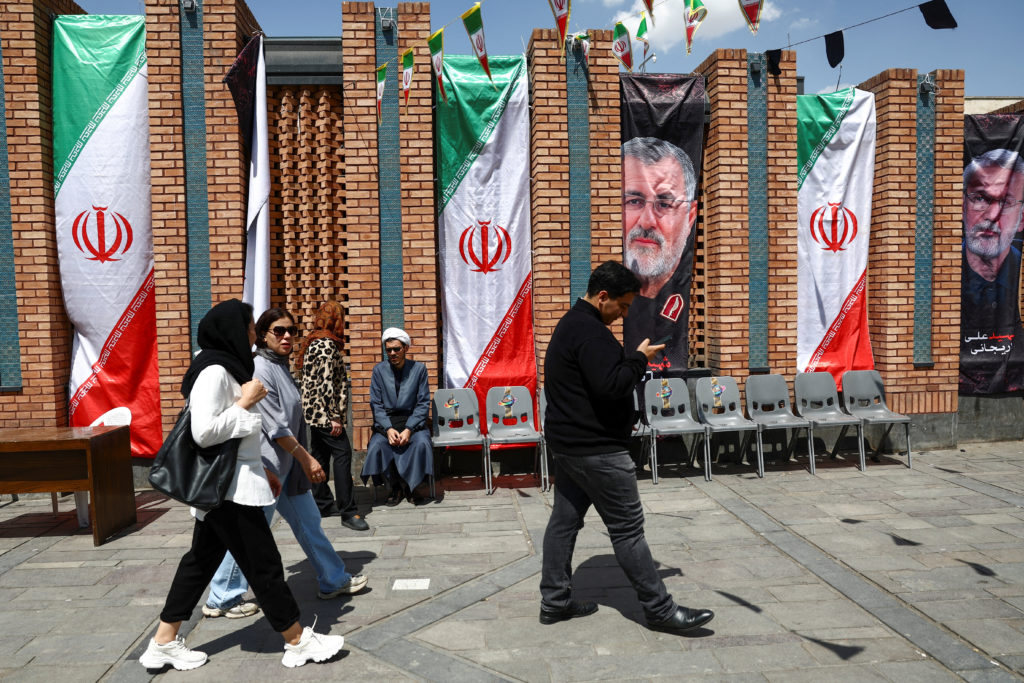
U.S. And Iranian officials have signaled renewed efforts to engage in ceasefire talks in Islamabad as a fragile truce between the two nations approaches its expiration date, according to recent reporting from international news agencies. The discussions, which remain unconfirmed by either government, reach amid heightened diplomatic activity in the Pakistani capital aimed at preventing a collapse of the temporary de-escalation agreement that has held for several weeks.
While neither the United States nor Iran has publicly acknowledged the timing or location of any official meetings, Iranian state television has denied reports suggesting that Iranian officials are already present in Islamabad for negotiations. This denial underscores the sensitivity surrounding the talks, which have been conducted discreetly due to the historically adversarial relationship between the two countries and domestic political pressures on both sides.
The renewed push for dialogue follows a series of indirect communications facilitated by intermediaries, including Oman and Qatar, which have previously played roles in backchannel negotiations between Washington and Tehran. Pakistani officials have positioned Islamabad as a neutral venue capable of hosting sensitive discussions, leveraging the country’s longstanding ties with both nations despite its own complex regional dynamics.
According to reporting by the Associated Press, U.S. And Iranian representatives have exchanged signals indicating willingness to explore terms for extending or formalizing the current truce, which was initially established to reduce the risk of direct military confrontation following a period of heightened tensions in the Gulf region. The AP noted that while no formal agenda has been set, topics under discussion reportedly include maritime security in the Strait of Hormuz, prisoner exchanges, and mechanisms to prevent accidental escalations.
Al Jazeera reported that Pakistani diplomats are working under significant time pressure to secure Iranian participation in the talks before the existing truce framework lapses, emphasizing that Islamabad views successful mediation as critical to maintaining its role as a regional stabilizer. The network cited unnamed officials familiar with the process who said Pakistan has offered logistical and security assurances to encourage Iranian engagement, though Tehran has yet to commit to sending a delegation.
BBC Monitoring noted that Iranian state media’s denial of official presence in Islamabad aligns with Tehran’s typical approach to sensitive negotiations, where public acknowledgment of talks with the United States is often avoided until concrete outcomes are achievable to mitigate hardliner criticism domestically. The BBC added that Iranian officials have historically used third-party capitals like Baghdad, Muscat, and Doha for similar discreet engagements when direct talks are politically fraught.
The current truce, which has held despite sporadic incidents involving proxy forces in Iraq and Syria, remains vulnerable to disruption from regional flashpoints, including ongoing conflicts in Yemen and Lebanon where Iranian-backed groups operate. Analysts warn that any collapse of the understanding could increase the risk of miscalculation, particularly in maritime zones where U.S. Naval forces routinely operate near Iranian territorial waters.
Diplomatic observers in Vienna, where indirect negotiations over Iran’s nuclear program have stalled, suggest that progress in Islamabad could create favorable conditions for reviving talks on the Joint Comprehensive Plan of Action (JCPOA), though officials caution that the ceasefire discussions are narrowly focused on de-escalation and do not inherently address nuclear enrichment levels or sanctions relief.
As the deadline for the current truce nears, international monitors including the United Nations Assistance Mission in Afghanistan (UNAMA) have expressed concern that renewed hostilities could destabilize already fragile security conditions across South and West Asia, affecting refugee flows, trade routes, and counter-narcotics operations. UNAMA has urged all parties to exercise restraint and prioritize diplomatic channels to manage disagreements.
For readers seeking official updates, the U.S. Department of State regularly publishes statements on its website regarding Iran-related diplomacy, while Iran’s Ministry of Foreign Affairs issues periodic communiqués in Persian and English through its official portal. The Embassy of Pakistan in Washington, D.C. Also maintains public records of diplomatic engagements involving third-country mediation efforts.
As this story develops, World Today Journal will continue to verify claims through primary sources and authoritative reporting, avoiding speculation while providing context on the implications for global energy markets, regional alliances, and the broader architecture of Middle Eastern security.
What do you think about the prospects for sustained U.S.-Iran de-escalation through third-party mediation? Share your perspective in the comments below, and help inform the conversation by sharing this article with others interested in foreign policy and international diplomacy.