
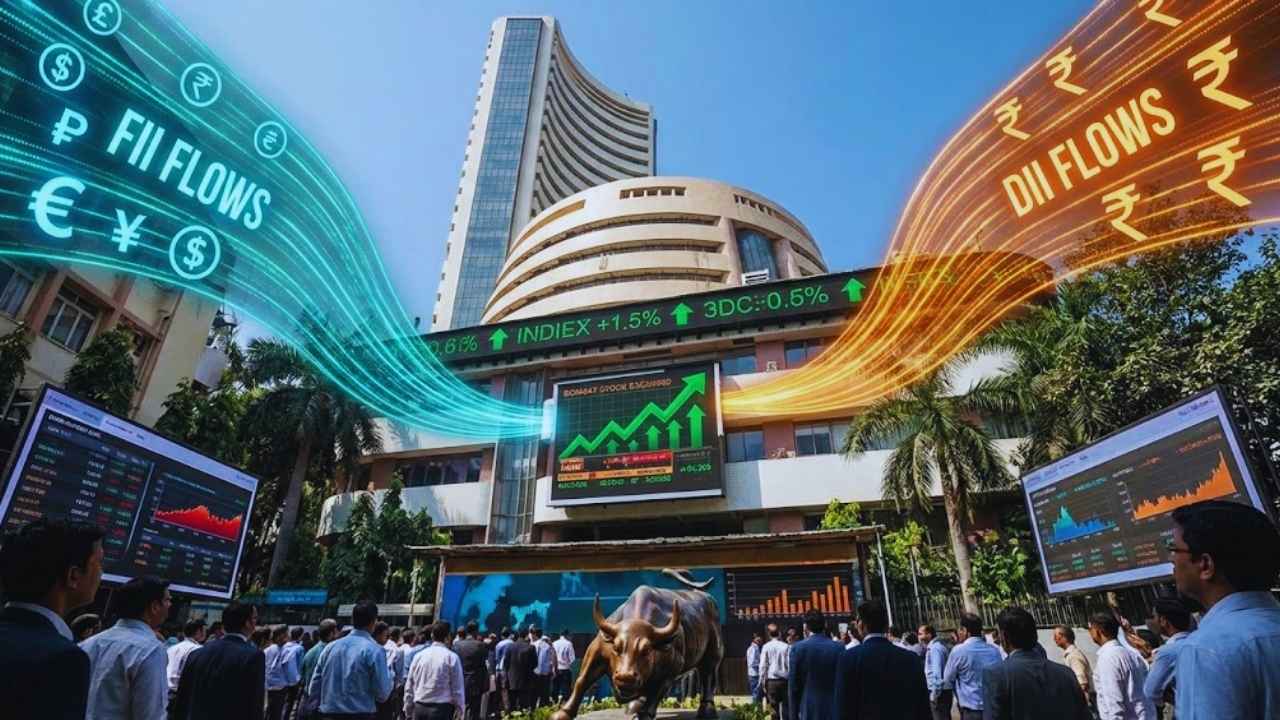
Understanding FII & DII Data in the Stock Market
In the dynamic world of stock market investing, understanding the forces driving price movements is crucial. While numerous indicators and analytical tools exist, tracking the activity of Foreign institutional Investors (FIIs) and Domestic Institutional Investors (DIIs) is gaining prominence as a key strategy. This article explores FII and DII data, its significance, how to interpret it, and how to combine it with tools like the Volume Weighted Average Price (VWAP) indicator for a more thorough market analysis.
What are FII and DII?
Foreign Institutional Investors (FIIs) are entities based outside of a country that invest in its financial markets. These typically include mutual funds, pension funds, hedge funds, and insurance companies. domestic Institutional Investors (DIIs), conversely, are entities based within the country, such as mutual funds, insurance companies, and banks, that invest in the domestic stock market.
Both FIIs and DIIs deal in large volumes, and their investment decisions can significantly impact market trends. Tracking their activity provides valuable insights into market sentiment and potential future movements.
How to Access FII and DII Data
Several platforms provide access to FII and DII data.Some key sources include:
- National Stock Exchange of India (NSE): The NSE website provides daily FII and DII trading data. NSE FII DII Activity
- Securities and Exchange Board of India (SEBI): SEBI publishes reports and data related to institutional investments. SEBI Website
- Financial News Websites: Reputable financial news sources like The Economic Times and Business standard regularly report on FII and DII activity.
- BlinkX: Offers a consolidated view of FII and DII data alongside other analytical tools. BlinkX
Interpreting FII and DII Data
Analyzing FII and DII data involves looking at their buying and selling patterns. Here’s a breakdown of what different scenarios might indicate:
- FII Buying > DII Selling: Generally considered a bullish signal, suggesting positive sentiment towards the market.
- FII Selling > DII Buying: Often interpreted as a bearish signal,indicating potential market weakness.
- Both FII & DII Buying: A strong bullish signal, suggesting widespread positive sentiment.
- Both FII & DII Selling: A strong bearish signal, indicating widespread negative sentiment.
However, it’s importent to note that these are generalizations. Context is crucial. for example, a small FII outflow might not be notable, while a large outflow coudl signal a more significant trend.
Using FII DII Data with VWAP Indicator
To get the most from institutional data,many market participants combine it with tools like the VWAP indicator. VWAP, or Volume Weighted Average price, helps show the average price at which a stock is traded throughout the day, based on both price and volume.
when institutional buying happens above VWAP, it often signals strong demand. When selling happens below VWAP, it may indicate weakness. Together, FII DII data and VWAP offer a comprehensive and simplified way to view both who is trading and at what price levels.
This combination is flexible, works in different situations, and is widely used across the industry.
Why Tracking Institutional Data Is a Major Shift?
Recently, there has been a clear improvement in how investors approach market analysis. Instead of relying solely on tips or news, many now focus on data-based insights. This shift towards institutional tracking is a strong strategy and reflects a more mature investment approach.
As new tools and technology make this data easily accessible, investors can now analyze market behavior in real time. This change has improved transparency and helped people make more informed decisions.
In a fast-changing space like the stock market, such tools are forward-looking and can grow with demand.
Final Thoughts
FII DII data, offering organized and trustworthy institutional insights, is essential for stock market analysis and investment. this data is easily accessible through online platforms like BlinkX, and when combined with tools like the VWAP indicator, it helps better understand market behavior. By combining these insights with fundamental and technical analysis, investors can navigate the market more effectively.
Frequently Asked Questions (FAQ)
- Q: Is FII/DII data always accurate?
- A: While generally reliable, data can sometimes be subject to revisions or delays. It’s best to consult multiple sources for confirmation.
- Q: Can FII/DII data predict market crashes?
- A: No, it cannot predict crashes with certainty. However, significant and sustained outflows from FIIs can be a warning sign of potential market correction.
- Q: How often is FII/DII data updated?
- A: Most platforms provide daily updates on FII/DII activity, typically at the end of the trading day.


