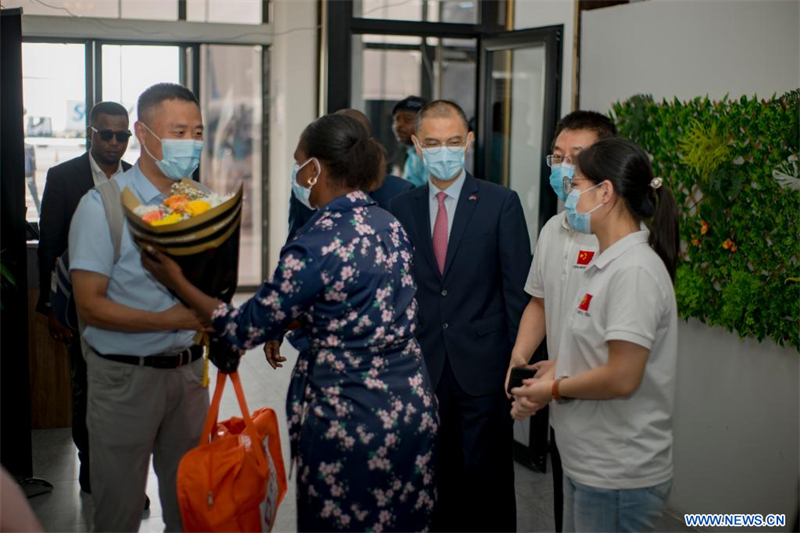
A new team of Chinese medical experts arrived in Uganda this week to begin a specialized residency program at the China-Uganda Friendship Hospital in Kampala. The deployment marks the continuation of a long-standing bilateral health cooperation agreement between the two nations, focused on clinical training, surgical support, and the exchange of medical expertise in public health management.
The medical team, which arrived in the Ugandan capital to support local clinical operations, is composed of specialists selected from various medical disciplines. According to the Ministry of Health of Uganda, these collaborations have historically focused on enhancing hospital infrastructure and improving patient care standards through shared protocols and technical training for local practitioners.
Strengthening Clinical Capacity at China-Uganda Friendship Hospital
The China-Uganda Friendship Hospital, located in the Naguru neighborhood of Kampala, serves as the primary site for this partnership. The facility, which provides general and specialized medical services to the public, has been the beneficiary of multiple medical missions since its establishment. The current team is tasked with providing hands-on clinical support and mentorship to Ugandan staff, particularly in departments where specialized equipment or advanced surgical techniques are required.
Medical cooperation between China and Uganda has evolved over several decades, shifting from basic infrastructure support to more complex technical exchanges. Data from the World Health Organization (WHO) regarding international health partnerships highlights that such bilateral arrangements are frequently used to address regional capacity gaps in sub-Saharan Africa. By integrating international specialists into the local hospital workforce, the program aims to reduce the burden on domestic health systems while fostering long-term knowledge transfer.
Historical Context of Medical Cooperation
The arrival of this team follows a pattern of rotating medical missions that have been active in Uganda since the early 1980s. These missions are typically managed under the framework of the China-Africa medical cooperation initiative, which provides for the periodic deployment of medical personnel to various African nations. The Ministry of Health of Uganda often coordinates these arrivals to ensure the incoming specialists are appropriately licensed and integrated into the existing hospital hierarchies.
For the local healthcare landscape, the impact of these missions is measured by the number of procedures performed and the level of training provided to local medical residents. In recent years, the focus has expanded to include the management of non-communicable diseases as well as maternal and child health—two priority areas identified in the Ugandan government’s National Health Sector Strategic Plan.
Addressing Public Health Needs in Kampala
The integration of the new medical team is expected to last for a standard rotation period, after which a subsequent group will likely be assigned to continue the project. The hospital administration typically hosts an orientation phase to align the visiting team’s expertise with the current patient load and the specific clinical needs of the facility. This structured approach is designed to ensure that the presence of international experts translates into measurable improvements in patient outcomes.
Patients seeking care at the China-Uganda Friendship Hospital can expect services to continue as scheduled during this transition. Official updates regarding the team’s specific activities and the duration of their stay are managed through the hospital’s administrative office and the Ugandan Ministry of Health. For those interested in the ongoing status of this cooperation, the Ministry of Health maintains a public portal for official health sector reports and partnership updates.
As the team settles into their new rotation, the local community remains the primary beneficiary of the increased clinical staffing levels. Further information regarding the progress of these medical exchanges will be provided in the upcoming quarterly health sector review, which is expected to be published by the Ministry of Health later this year.
Have you had experience with the services provided at the China-Uganda Friendship Hospital? Share your thoughts or questions in the comments section below.