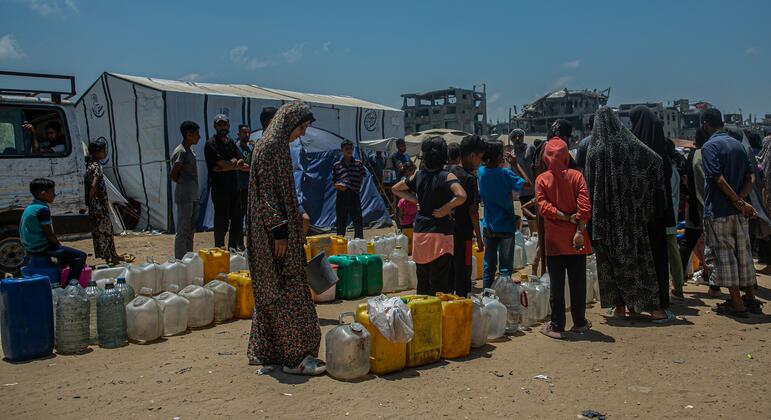
UNICEF has condemned the killing of two contracted water truck drivers in the Gaza Strip, calling for an immediate and independent investigation into the incident. The workers, who were delivering clean water to families in northern Gaza, were killed although carrying out humanitarian aid operations, according to a statement released by the agency on April 17, 2024. UNICEF described the attack as “outrageous” and a grave violation of international humanitarian law, emphasizing that aid workers must be protected at all times.
The incident underscores the extreme dangers faced by humanitarian personnel operating in Gaza, where access to basic necessities like clean water remains critically limited due to ongoing conflict and infrastructure damage. Water truck drivers play a vital role in sustaining life in besieged areas, often navigating checkpoints and active conflict zones to deliver essential supplies. Their targeting raises serious concerns about the safety of aid operations and the erosion of humanitarian principles in the region.
According to UNICEF, the two workers were employed by a local contractor partnered with the agency to support its water, sanitation, and hygiene (WASH) program in Gaza. The agency did not disclose the identities of the deceased, citing privacy and safety concerns for their families. But, it confirmed that both were Palestinian nationals working under contract to deliver water to displaced families in the Jabalia and Beit Lahia areas of northern Gaza.
“The killing of humanitarian workers carrying out life-saving work is utterly unacceptable,” said Adele Khodr, UNICEF Regional Director for the Middle East and North Africa. “These individuals were not combatants. They were fathers, sons, and neighbors trying to bring clean water to children and families who have gone days without safe drinking water. Their deaths are a tragic loss and a stark reminder of the human cost of this conflict.”
UNICEF has called on all parties to the conflict to respect international humanitarian law, which prohibits attacks on civilians and humanitarian personnel. The agency urged the Israeli military and Palestinian armed groups to ensure the safety of aid workers and facilitate unimpeded access for humanitarian assistance. It also demanded a transparent, independent investigation into the incident, with findings made public and accountability pursued where warranted.
The incident occurred amid a deepening humanitarian crisis in Gaza, where over 1.7 million people have been displaced since October 2023, according to the United Nations Office for the Coordination of Humanitarian Affairs (OCHA). Access to clean water has been severely compromised, with UNICEF reporting that only 5% of Gaza’s normal water production capacity remains functional due to damage to infrastructure, fuel shortages, and restrictions on imports.
In a related development, the World Health Organization (WHO) warned on April 16, 2024, that the risk of waterborne diseases such as cholera and dysentery is rising rapidly in overcrowded shelters across Gaza, where sanitation systems have collapsed and clean water is scarce. WHO reported a 300% increase in cases of acute watery diarrhea among children under five in northern Gaza compared to pre-conflict levels, underscoring the urgency of restoring water services.
Humanitarian organizations have repeatedly warned that the destruction of water wells, pipelines, and desalination plants—combined with limited fuel for operating pumps—has pushed Gaza’s water system to the brink of total failure. UNICEF estimates that over 95% of Gaza’s population now relies on humanitarian water trucking for their daily needs, making the safety of water delivery operations critical to survival.
The Israeli military has not issued a public statement specifically addressing the killing of the two water truck drivers. However, in previous incidents involving aid workers, Israeli officials have stated that they investigate all reports of potential violations and grab appropriate action when evidence suggests misconduct by its forces. The military maintains that it takes precautions to avoid harming civilians and accuses Hamas of using humanitarian infrastructure for military purposes, a claim denied by the group.
Palestinian civil defense services recovered the bodies of the two workers and transported them to a local hospital for identification. Local residents in Jabalia reported hearing explosions near the Al-Faluja area around dawn on April 16, followed by the discovery of the damaged water truck and the bodies of its occupants. Witnesses described the vehicle as clearly marked with UN and humanitarian logos, though UNICEF has not independently verified these details.
International human rights groups, including Amnesty International and Human Rights Watch, have called for the incident to be included in ongoing investigations into potential war crimes in Gaza. Both organizations have urged the International Criminal Court (ICC) to continue its examination of the situation, noting that attacks on humanitarian personnel may constitute violations under the Rome Statute.
The ICC’s Pre-Trial Chamber I affirmed in February 2024 that it has jurisdiction over alleged crimes committed in Gaza since June 13, 2014, including war crimes and crimes against humanity. Prosecutor Karim Khan has stated that his office is actively collecting evidence related to the conflict, including incidents affecting humanitarian access and the protection of civilians.
As of April 18, 2024, UNICEF continues to operate water trucking services in Gaza, though with heightened security concerns and reduced frequency in some areas due to risks to staff. The agency has appealed for $1.2 billion in funding for its 2024 humanitarian response in the State of Palestine, with over $400 million allocated specifically for WASH interventions in Gaza, including water trucking, repairs to wells and networks, and distribution of hygiene kits.
Donors and partner organizations are urged to support UNICEF’s emergency appeal to sustain life-saving water services. The agency emphasizes that every contribution helps ensure that water truck drivers can continue their work safely and that families in Gaza receive the clean water they desperately require to survive.
Why the Killing of Water Truck Drivers Matters for Gaza’s Humanitarian Crisis
The targeting of water truck drivers strikes at the heart of Gaza’s survival infrastructure. Unlike food or medicine, water cannot be stockpiled in large quantities for extended periods, and its delivery depends on a fragile network of functioning wells, treatment plants, fuel supplies, and secure transport routes. When water truckers are killed or deterred from working, the entire system risks collapse, accelerating public health dangers.
Clean water is essential not only for drinking but also for cooking, personal hygiene, and preventing the spread of disease in overcrowded shelters where infectious illnesses can spread rapidly. UNICEF notes that children are especially vulnerable to dehydration and waterborne illnesses, which can become fatal quickly in malnourished populations with limited access to healthcare.
The incident also highlights the broader risks faced by local humanitarian workers, who make up the vast majority of aid personnel in Gaza. Unlike international staff who may be evacuated during escalations, local contractors and volunteers often remain in place, bearing the brunt of violence while trying to assist their communities. Their safety is frequently overlooked in global discussions about aid worker protection.
How Aid Workers Are Protected Under International Law
Humanitarian personnel are granted specific protections under international humanitarian law, primarily the Fourth Geneva Convention and its Additional Protocols. These laws classify aid workers as civilians who must be respected and protected at all times, provided they are not participating in hostilities. Deliberate attacks on such personnel may constitute war crimes.
The United Nations has repeatedly reiterated that the use of the emblem of the United Nations or humanitarian organizations does not, by itself, guarantee protection—but it does signal the humanitarian nature of the mission and should prompt all parties to exercise caution. Parties to a conflict are obligated to distinguish between combatants and civilians and to take all feasible precautions to avoid harming the latter.
UNICEF’s call for an independent investigation aligns with standard procedures following incidents involving aid workers. Such investigations aim to establish facts, determine responsibility, and recommend measures to prevent recurrence. The agency has stated it will cooperate fully with any credible inquiry while advocating for justice and accountability.
What Happens Next: Monitoring and Humanitarian Access
The next key development to watch is whether any formal investigation is launched by Israeli authorities, Palestinian authorities, or an international body such as the ICC. As of April 18, 2024, no official investigation has been publicly announced, though UNICEF continues to urge all parties to permit impartial fact-finding.
Humanitarian access remains a critical concern. OCHA reports that Israeli authorities have approved only a fraction of planned humanitarian missions into northern Gaza in recent weeks, citing security reviews. Aid groups say delays and denials are putting lives at risk, particularly in areas where groundwater is contaminated and alternative water sources are unavailable.
UNICEF advises the public to refer to its official website and the United Nations Office for the Coordination of Humanitarian Affairs (OCHA) for updates on the humanitarian situation in Gaza and statements regarding aid worker safety. The agency also encourages individuals to support verified humanitarian appeals through its national committees or partner organizations.
Stay informed, stay engaged, and aid amplify the call for protection of those who risk their lives to bring water, food, and medicine to the most vulnerable.
Keep reading