
The transition from traditional fee-for-service models to value-based care (VBC) represents one of the most significant shifts in modern medicine. At its core, VBC aims to reward healthcare providers for the quality of care and patient outcomes rather than the volume of services performed. However, as the industry moves toward this outcome-oriented framework, a persistent technical barrier remains: the inability to reliably identify and track patients across a fragmented ecosystem of providers, payers and health systems.
For a value-based model to function, a provider must have a comprehensive, longitudinal view of a patient’s health history. When patient data is siloed across different electronic health records (EHRs) or mismatched due to clerical errors, the resulting “identity fragmentation” creates dangerous gaps in care and financial inaccuracies in reimbursement. To solve this, healthcare leaders are increasingly advocating for a unified identity strategy—a centralized approach to patient and provider identification that serves as the bedrock for true interoperability.
This challenge is the focus of upcoming industry discussions, including a specialized webinar scheduled for May 27, which will explore how a unified identity strategy, spanning patients, providers, and emerging solutions like the Verato Identity Network, can enable accurate attribution and drive the success of value-based care initiatives.
The Critical Link Between Identity and Value-Based Care
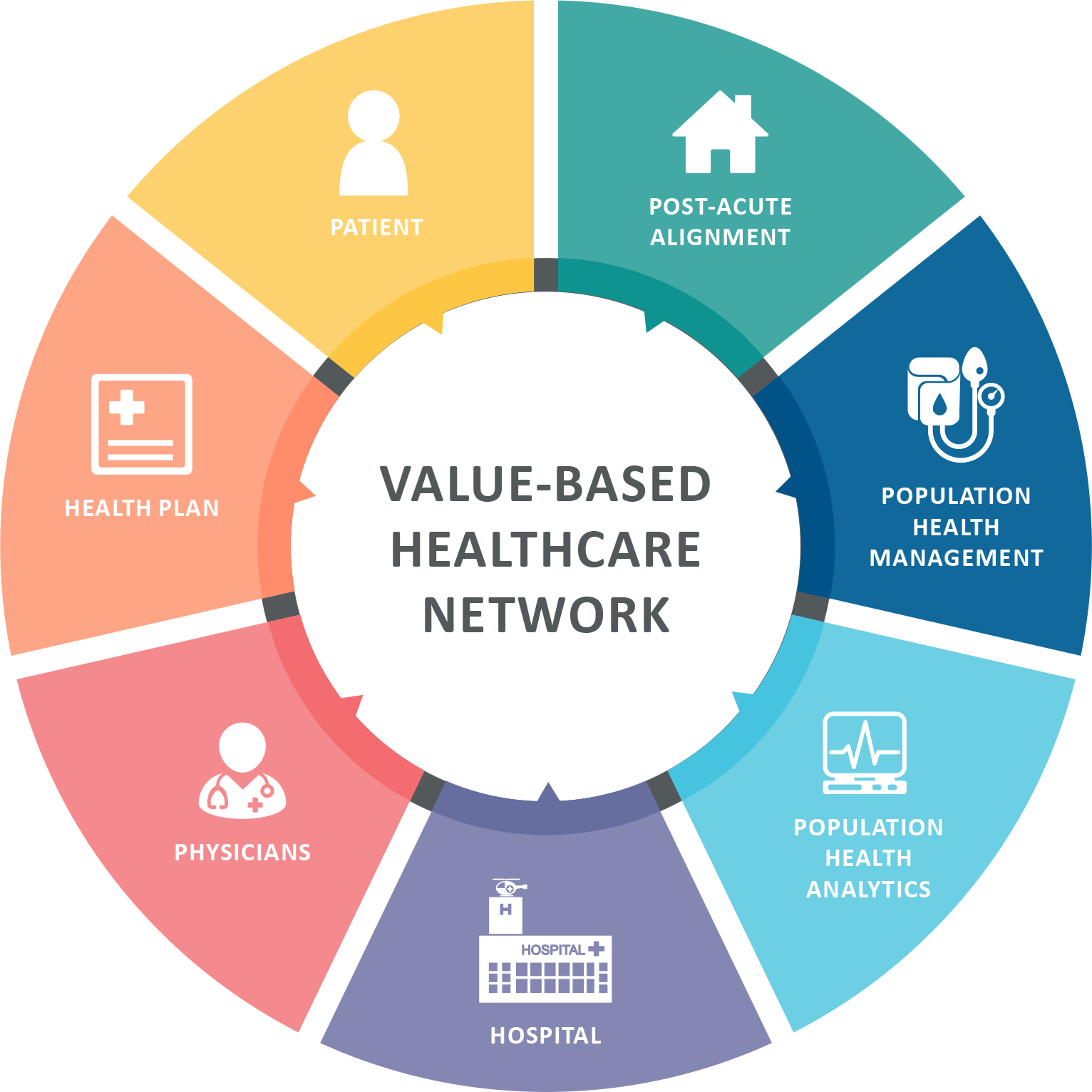
Value-based care requires a holistic understanding of the patient journey. Unlike the fee-for-service model, where a physician is paid for a specific office visit regardless of the overall outcome, VBC models—such as Accountable Care Organizations (ACOs)—rely on the ability to manage populations. This means identifying high-risk patients, coordinating preventative screenings, and reducing unnecessary hospital readmissions.
None of these goals are achievable if the healthcare system cannot definitively answer a simple question: “Is this the same patient?” In many health systems, a single individual may have multiple medical record numbers (MRNs) across different departments or facilities. A patient might be listed as “Jonathan Doe” in a primary care clinic and “John Doe” in a specialist’s office. When these records are not unified, the provider lacks a complete clinical picture, leading to redundant testing, medication errors, and a breakdown in care coordination.
Interoperability—the ability of different health information systems to exchange and use data—is often discussed in terms of software standards like FHIR (Fast Healthcare Interoperability Resources). While these standards allow systems to “talk” to each other, they do not solve the identity problem. If System A sends data about “Patient 123” to System B, but System B doesn’t know that “Patient 123” is actually “Patient 456” in its own database, the interoperability is functionally useless.
Solving the Patient Matching Dilemma
Historically, healthcare organizations have relied on deterministic matching to link patient records. This method looks for exact matches in specific fields, such as a Social Security number or a date of birth. However, deterministic matching is fragile; a single typo or a missing digit can result in a “failed match,” creating a duplicate record.
To combat this, the industry is shifting toward probabilistic and referential matching. Probabilistic matching uses algorithms to weigh the likelihood that two records belong to the same person based on multiple data points. Referential matching takes this a step further by comparing local patient data against a massive, third-party “reference” dataset—a trusted source of truth that contains billions of verified identity attributes.
By utilizing a referential approach, such as the one employed by the Verato Identity Network, organizations can resolve identities in real-time without needing to maintain a massive, internal Master Patient Index (MPI) that requires constant manual cleaning. This creates a “unified identity strategy” where the identity of the patient is decoupled from the specific EHR, allowing the record to follow the patient regardless of where they receive care.
The Role of Accurate Attribution in Financial Viability
In the context of value-based care, “attribution” is the process of assigning a patient to a specific provider or care team for the purpose of measuring outcomes and distributing payments. Attribution is the financial engine of VBC; if a provider is responsible for a patient’s health but that patient is incorrectly attributed to another clinic, the provider may be penalized for outcomes they did not influence or miss out on shared savings bonuses.
Identity fragmentation directly undermines attribution. When patient records are duplicated or mismatched, payers and providers cannot accurately track who is delivering the care and where the costs are being incurred. This leads to “leakage,” where patients seek care outside of their attributed network, often because the network’s internal systems failed to coordinate the referral or track the visit.
A unified identity strategy ensures that every encounter—whether it occurs in an urgent care center, a pharmacy, or a specialist’s office—is attributed to the correct patient and provider. This precision is essential for meeting the rigorous reporting requirements set by the Centers for Medicare & Medicaid Services (CMS), which oversees many of the largest VBC programs in the United States.
Overcoming the Interoperability Gap
True interoperability is not merely the movement of data; It’s the movement of *meaningful* data. For a clinician to make an informed decision at the point of care, they need a longitudinal record that spans the patient’s entire history. This is particularly vital for managing chronic diseases like diabetes or hypertension, where a patient’s history of medication changes and lab results across multiple providers is critical.
The Office of the National Coordinator for Health Information Technology (ONC) has pushed for policies to reduce “information blocking” and encourage the seamless flow of data. However, the technical hurdle of patient matching remains a primary reason why data exchange often fails in practice. When a health information exchange (HIE) cannot confidently match a patient, it may either fail to return a record or, worse, return the record of the wrong patient, posing a severe clinical risk.
By implementing a unified identity strategy, healthcare systems can move toward a “golden record”—a single, authoritative version of a patient’s identity that links all disparate clinical data points. This allows for:
- Enhanced Population Health: More accurate identification of gaps in care across a total patient population.
- Improved Patient Safety: Elimination of duplicate records that hide critical allergies or medication histories.
- Reduced Administrative Burden: Less time spent by staff manually merging duplicate charts and correcting attribution errors.
The Future of Health Identity Networks
As we look toward the future of healthcare delivery, the concept of a “networked” identity is emerging. Rather than each hospital trying to build its own perfect database, the industry is moving toward shared identity networks. These networks act as a utility, providing a consistent identity layer that exists above the EHRs and payers.

This shift is essential as healthcare incorporates more “emerging solutions,” including remote patient monitoring (RPM) and wearable health technology. These devices generate vast amounts of data that must be tied back to a verified patient identity to be clinically useful. Without a unified strategy, the influx of data from wearables will only add to the noise and fragmentation of the medical record.
the inclusion of provider identity in these strategies is equally important. Accurate provider attribution ensures that the right clinicians are credited for the care they provide and that patients are connected to the most appropriate specialists within a VBC network.
Key Takeaways for Healthcare Leaders
- Identity is the Foundation: Interoperability and VBC cannot succeed if the system cannot reliably match patients across different platforms.
- Beyond Deterministic Matching: Referential matching against external trusted datasets is more effective than relying on internal MRNs or exact-match fields.
- Financial Impact: Accurate patient attribution is mandatory for the financial success and viability of value-based reimbursement models.
- Clinical Safety: A unified identity strategy reduces the risk of medical errors caused by fragmented or duplicated patient records.
The path toward successful value-based care is not just a clinical or financial journey, but a technical one. By prioritizing a unified identity strategy, the healthcare industry can finally bridge the gap between data exchange and actual interoperability, ensuring that the right data reaches the right provider for the right patient at the right time.
The industry will continue to refine these strategies in the coming months, with further technical deep-dives and collaborative sessions scheduled to address the integration of identity networks into existing clinical workflows.
Do you believe the current EHR landscape is capable of solving the identity crisis, or is a third-party identity network the only viable path forward? Share your thoughts in the comments below or share this article with your professional network.
Keep reading