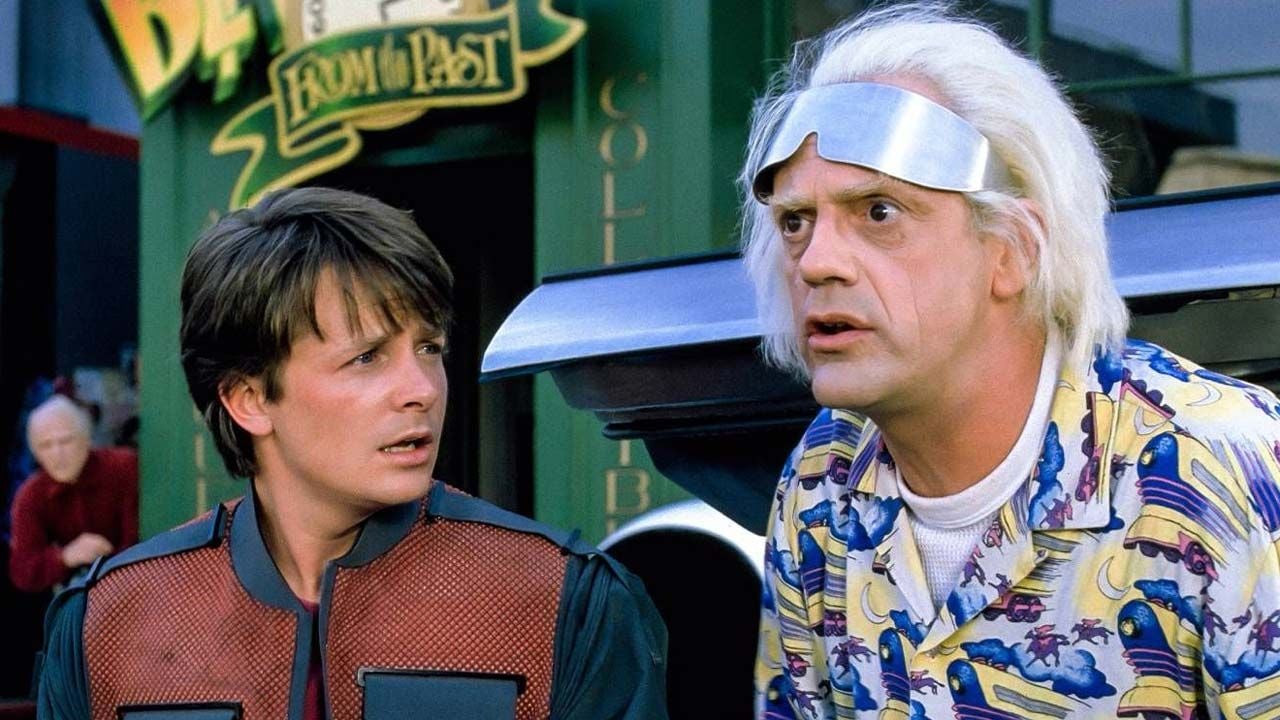
For millions of movie fans around the world, the fourth installment of a legendary time-travel franchise did not arrive on silver screens in the digital age, but rather debuted over three decades ago inside a theme park queue line. When Universal Studios opened its Florida resort doors, visitors discovered an attraction officially subtitled as a continuation of the beloved cinematic universe created by Robert Zemeckis and Bob Gale. This immersive motion-simulation ride effectively served as a continuation of the trilogy before Hollywood ever considered a traditional sequel.
The groundbreaking project, officially titled Back to the Future: The Ride, welcomed its very first park guests in June 1991 at Universal Studios Florida. Featuring a unique blend of live-action elements, massive 70mm OMNIMAX projection screens, and synchronized motion-base vehicles shaped like modified DeLorean time machines, the attraction placed riders directly inside the narrative of the original films. According to historical records from Universal Parks & Resorts, the development cycle required years of engineering innovation to synchronize the physical vehicle movements with the filmed footage.
Far from a simple amusement park ride, the multi-million dollar installation was treated by its creators as a genuine canonical extension of the cinematic story. Original trilogy director Robert Zemeckis served as creative consultant, while executive producer Steven Spielberg helped oversee the attraction’s high-stakes narrative. Beloved cast members reprised their iconic roles specifically for the ride film, including Christopher Lloyd as Doctor Emmett Brown and Thomas F. Wilson as the relentless antagonist Biff Tannen, who once again hijacks a time-travel vehicle and forces riders into a frantic chase across prehistoric eras and futuristic cityscapes.
The Evolution and Global Expansion of a Theme Park Icon
Following its successful East Coast debut, the massive financial and technical triumph of the simulation theater prompted Universal executives to export the ride to additional international destinations. In June 1993, a carbon-copy installation opened at Universal Studios Hollywood in California, replacing the vintage Screen Test Comedy Theater on the studio’s upper lot. Years later, as Universal expanded its international footprint, a third iteration launched in March 2001 at Universal Studios Japan in Osaka.
Each regional installation maintained the identical pre-show storyline and main-attraction film. Visitors walked through the Institute of Future Technology, a fictional research facility established by Dr. Brown, before a sudden security breach involving Biff Tannen forced guests into the eight-person DeLorean simulators. The attraction relied on state-of-the-art pneumatic motion bases designed by Ride & Show Engineering, Inc., which delivered rapid acceleration tilts and sharp turns that closely mirrored the visual velocity on the giant curved dome screens.
Industry analysts often credit the ride with establishing a new benchmark for intellectual property integration inside theme parks. Rather than simply placing static character statues along a walking path, Universal utilized cutting-edge projection technology and Hollywood talent to pull park visitors directly into an active, high-velocity narrative. Alan Silvestri’s triumphant orchestral score, recorded specifically for the attraction, reinforced the cinematic illusion from the moment guests entered the waiting area.
Legacy, Closure, and the Shift Toward Modern Franchises
Despite a passionate global fanbase that fought fiercely to preserve the attraction, technological evolution eventually caught up with the 1990s engineering marvel. Universal Studios Florida permanently closed its version of the ride in September 2007 to make way for the Springfield USA expansion featuring The Simpsons Ride, which utilized similar motion-base technology. The California location followed suit in October 2007, closing its doors to clear space for the Transformers: The Ride-3D installation.
The final operational outpost of the legendary attraction persisted for over a decade at Universal Studios Japan. Japanese parkgoers and international travelers continued experiencing Dr. Brown’s time-travel mishaps until the Osaka installation permanently ceased operations in May 2016. The closure marked the definitive end of an era for the physical franchise footprint within global theme parks, leaving behind a rich archival history preserved through enthusiast documentaries and memorabilia.
Today, decades after its initial launch, the attraction remains a touchstone for how film franchises can successfully transition into physical entertainment spaces. While fans still occasionally debate whether a traditional fourth cinematic film should ever be produced, park historians and cinematic archivists continue to acknowledge the 1991 theme park experience as the definitive fourth chapter of the saga. Universal Studios continues to showcase archival materials from the ride during special anniversary exhibitions, ensuring the legacy of the Institute of Future Technology survives for new generations of moviegoers.
Related reading