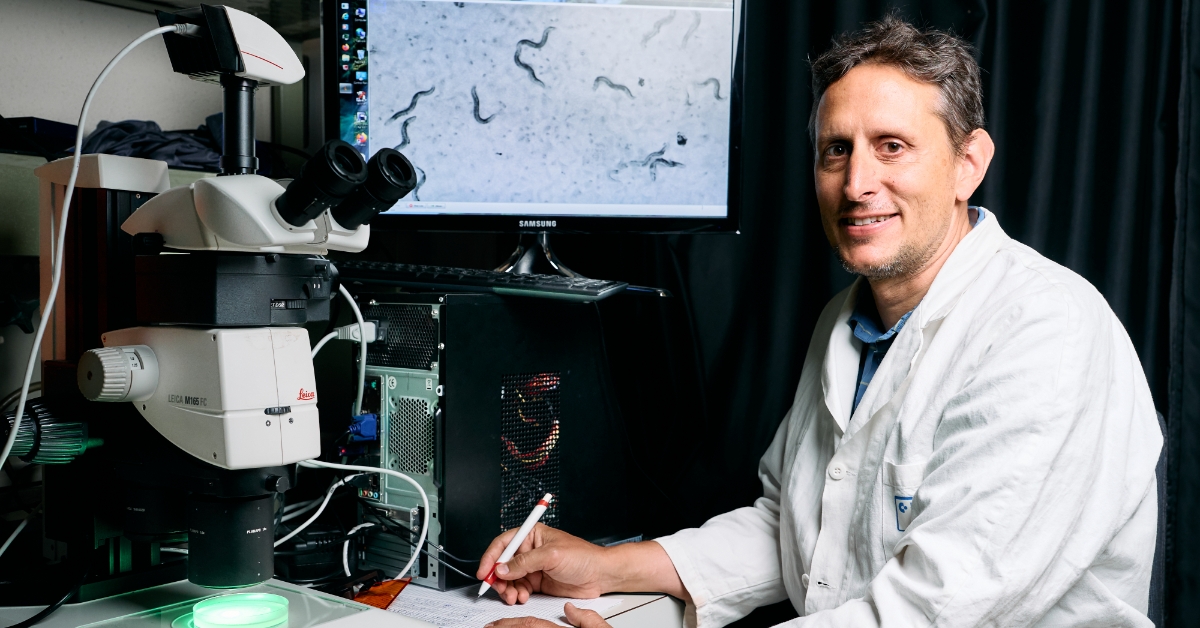
Researchers at the University of Bern have achieved significant progress in understanding how genetic material is organized and “packaged” within the cell nucleus. By examining the complex architecture of chromatin—the combination of DNA and proteins—scientists are gaining new insights into how cells regulate gene expression, a process essential for both healthy development and the progression of various diseases. This research provides a clearer view of the structural mechanisms that determine which genes remain accessible and which are silenced.
The human genome, if stretched out, would extend nearly two meters in length. To fit within the microscopic confines of a cell nucleus, this DNA must be tightly coiled around specialized proteins called histones. This dense packaging, known as chromatin, is not merely a storage solution; it acts as a sophisticated control center. According to the University of Bern, the precise configuration of this packaging dictates the biological identity of a cell, determining whether it functions as a muscle cell, a neuron, or a blood cell.
The Mechanics of Chromatin Dynamics
At the core of this research is the study of chromatin remodeling. The physical state of DNA—whether it is tightly packed (heterochromatin) or more loosely organized (euchromatin)—directly influences whether the cellular machinery can access specific genes to produce proteins. When this packaging process is disrupted, it can lead to developmental errors or the onset of conditions such as cancer, where cells lose their specialized function.
Scientists are utilizing advanced imaging techniques to observe these structures in real-time. By tracking how chromatin shifts its shape, researchers are mapping the “spatial organization” of the genome. This is crucial because genes that are distant from one another on a linear DNA strand may be brought into close proximity through 3D folding, allowing them to interact and regulate one another. The Swiss National Science Foundation frequently supports such fundamental research into the molecular foundations of life, providing the necessary infrastructure for high-resolution genomic mapping.
Implications for Medical Diagnostics
Understanding the “packaging” of genetic material has practical implications for clinical medicine. Many rare genetic disorders are now understood to be “chromatinopathies”—conditions caused by mutations in the proteins responsible for folding or modifying DNA. When these proteins fail, the cell’s ability to read its own genetic instructions is compromised.
In the field of oncology, researchers are observing that cancer cells often exhibit “epigenetic instability.” This means that while the DNA code itself may remain intact, the way it is packaged is altered, leading to the activation of genes that should remain dormant, such as those that promote uncontrolled cell growth. By targeting the enzymes involved in chromatin remodeling, clinicians hope to develop more precise therapies that can “re-package” the genome into a healthy state. This approach is a cornerstone of modern epigenetic medicine, which seeks to reverse disease markers without permanently altering the underlying DNA sequence.
Challenges in Genomic Mapping
Despite these advances, mapping the 3D landscape of the genome remains a technical challenge. The nucleus is a crowded environment, and chromatin is constantly in motion. Current studies rely on high-throughput sequencing methods, such as Hi-C, which allow researchers to capture the frequency of interactions between different segments of DNA. However, these methods provide a “snapshot” rather than a continuous movie of nuclear activity.
Integrating these datasets requires significant computational power. Researchers at institutions like the University of Bern are increasingly merging molecular biology with bioinformatics to build models that predict how DNA will fold under different cellular conditions. This predictive capability is vital for understanding how environmental factors, such as toxins or stress, might influence gene expression by physically altering the chromatin architecture over time.
Future Directions in Epigenetic Research
The next phase of this research involves moving from descriptive mapping to functional intervention. Scientists are investigating how to use CRISPR-based technologies to physically relocate specific segments of DNA within the nucleus. By changing the location of a gene, researchers can test whether its proximity to certain “regulatory hubs” changes its expression level. This would represent a major leap forward in our ability to control cellular behavior.
As the scientific community continues to uncover the complexities of the nuclear landscape, the focus remains on the translation of these findings into patient care. Whether through early diagnostic screening for chromatin-related disorders or the development of drugs that stabilize the genome, the study of packaged DNA is shifting from a theoretical pursuit to a clinical necessity. For those interested in the latest developments, official updates on these research projects are often published through the university’s research news portal, providing a transparent view of the ongoing efforts to decode the human genome’s structural secrets.
Keep reading