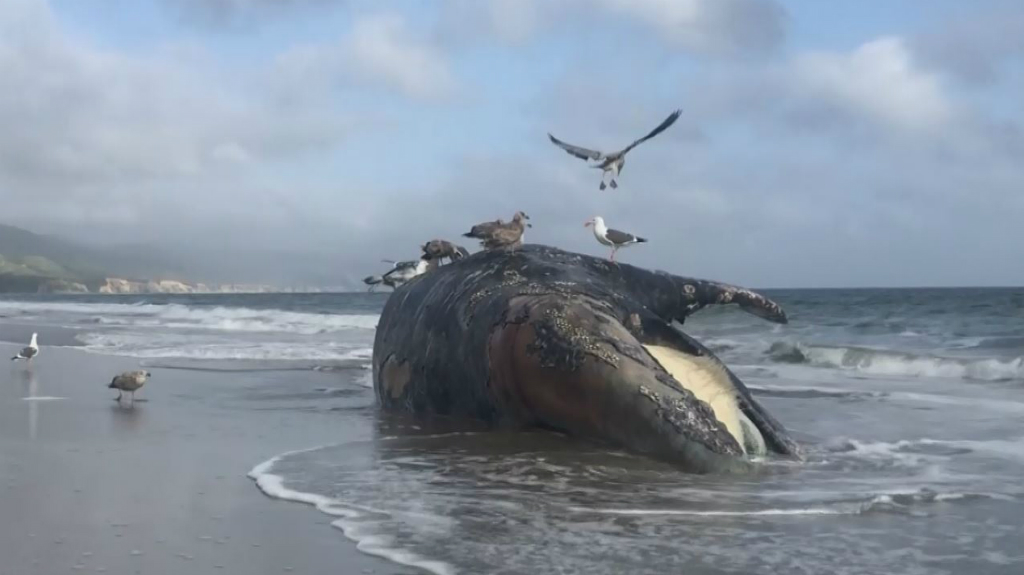
Marine biologists are investigating a series of unusual deaths involving gray whales along the Washington coastline, including a juvenile whale that died after swimming deep into a river system. The discovery of three dead whales within a short window has raised concerns among researchers, as the animals were found in disparate locations—two on a beach and one within a river fork.
The most striking case involved a juvenile gray whale that was spotted multiple times in the Willapa River last week. Despite close monitoring by biologists in the north fork of the river, officials confirmed on Saturday, April 5, 2026, that the whale had died after swimming up the river in Washington state.
In a separate but temporally linked event, two adult gray whales washed ashore on April 3 at Ocean Shores, Washington, located approximately 20 miles north of the mouth of Willapa Bay near Ocean Shores. These adults, one male and one female, were both found to be in poor nutritional condition, adding a layer of complexity to the investigation into why these animals are stranding.
The Cascadia Research Collective, a non-profit organization leading the effort, is working alongside the Washington Department of Fish and Wildlife and SR³ – Sealife Response, Rehabilitation & Research to determine the exact causes of death. While the deaths occurred in close proximity, experts emphasize that gray whales are generally solitary and do not travel in family groups, suggesting the strandings are likely the result of general migration patterns, tides and ocean currents according to the Cascadia Research Collective.
Analysis of the Ocean Shores Strandings
Examinations conducted on April 4 provided critical insights into the health of the two adult whales found at Ocean Shores. Both animals measured approximately 42 feet in length and exhibited signs of severe malnourishment at Ocean Shores.
The male whale showed evidence of significant trauma to the head. Biologists stated that this specific injury is consistent with a collision involving a vessel, indicating a possible ship strike during the investigation. The female whale, while also malnourished, was not lactating, which confirmed she was not nursing a calf at the time of her death.
The combination of poor nutritional status and physical trauma suggests a multifaceted struggle for these animals. Malnourishment in migrating whales can often be linked to changes in prey availability or health issues that prevent them from feeding effectively during their long journeys.
The Willapa River Juvenile Case
The death of the juvenile gray whale in the Willapa River represents a rare behavioral event. While whales occasionally enter estuaries, swimming 20 miles upriver is highly unusual for the species. Biologists had been closely monitoring the juvenile in the north fork of the river starting last Wednesday before the animal’s death was confirmed on Saturday on April 5.
Local groups are currently assisting researchers in conducting a full examination of the juvenile whale to determine if it suffered from the same nutritional deficiencies as the adults found at Ocean Shores or if its death was caused by the stresses of being trapped in a river environment.
Key Details of the Washington Gray Whale Deaths
| Whale | Location | Status/Condition | Key Findings |
|---|---|---|---|
| Adult Male | Ocean Shores Beach | Deceased | Malnourished; significant head trauma (possible ship strike) |
| Adult Female | Ocean Shores Beach | Deceased | Malnourished; not lactating |
| Juvenile | Willapa River | Deceased | Swam upriver; died after monitoring |
What In other words for Marine Conservation
The proximity and timing of these three deaths have led some experts to describe the situation as unusual. Though, the Cascadia Research Collective maintains that the events are likely tied to the natural movements of the species during migration, influenced by the specific tides and currents of the Washington coast via Cascadia Research Collective.

The presence of malnourishment in two of the adults highlights a potential broader issue regarding the health of the gray whale population. When whales are malnourished, they may grow more susceptible to disorientation or less capable of avoiding hazards, such as shipping lanes, which could explain the head trauma found on the male whale.
For the public, officials have issued a clear directive: steer clear of any whales encountered on the beach or in the water. Handling deceased marine mammals can be dangerous and may interfere with the scientific data collection necessary to understand these deaths as requested by biologists.
Biologists are now awaiting the results of the full examination of the juvenile whale from the Willapa River to see if a common cause—such as a specific disease or environmental factor—links all three animals, or if these were independent tragedies occurring simultaneously.
The next phase of the investigation involves the completion of the necropsy for the juvenile whale to determine the official cause of death. Further updates from the Cascadia Research Collective and the Washington Department of Fish and Wildlife are expected as the laboratory results are processed.
We encourage our readers to share this report and leave their thoughts in the comments section regarding marine conservation and whale protection.