
For many expatriates and international residents, receiving an invitation to a social gathering in Norway feels like a significant milestone. It is often interpreted as a sign of successful integration—a signal that the local community is opening its doors and welcoming you into the fold of Norwegian social life. However, this moment of celebration can quickly turn into a source of social anxiety for the uninitiated.
Navigating the nuances of Norwegian social etiquette requires more than just a friendly smile and a polite greeting. There is a complex web of unwritten rules governing how guests should behave, what they should bring, and how they should interact with their hosts. Misunderstanding these norms can lead to awkward encounters, though rarely are they met with hostility; rather, they are often viewed with a quiet, puzzled confusion that can be just as unsettling for a newcomer.
At the heart of this cultural complexity is a fundamental principle that governs much of Norwegian life: a deep-seated commitment to egalitarianism and shared responsibility. To understand why you must often bring your own food and drinks to a Norwegian party, one must look beyond the surface of simple hospitality and examine the sociological and economic structures that shape the country’s social fabric.
The “Bring Your Own” (BYOB) Standard: Navigating Alcohol and Social Equality
Perhaps the most striking difference for visitors from more “host-centric” cultures—where the host is expected to provide all refreshments—is the prevalence of the “bring your own” (BYOB) culture in Norway. In many casual social settings, from house parties to outdoor gatherings, it is an established expectation that guests will provide their own alcoholic beverages.
This practice is not a sign of stinginess on the part of the host, but rather a reflection of both economic reality and social philosophy. The Norwegian alcohol market is strictly regulated, with high taxation making alcoholic beverages significantly more expensive than in many other parts of Europe and North America. Because alcohol is primarily sold through the state-run, highly controlled retail monopoly, Vinmonopolet, the cost of stocking a large party can be substantial.
By adopting a BYOB approach, the social burden is distributed more evenly among the attendees. This aligns with the Norwegian concept of likhet (equality). In a culture that places a high value on minimizing social hierarchy, having everyone contribute to their own consumption prevents the host from being placed in a position of “provider” over “guests,” maintaining a sense of peer-level interaction.
When attending a casual gathering, it is highly advisable to ask the host about the beverage situation. If the invitation is for a “fest” (party) rather than a formal “middag” (dinner), bringing your own preferred drinks is a safe and respectful default. Even if the host provides some refreshments, bringing a bottle of something you enjoy is seen as being prepared rather than being a burden.
Food Etiquette: Distinguishing Between the “Middag” and the “Fest”
While alcohol follows a relatively clear BYOB rule, food etiquette is more nuanced and depends heavily on the type of event you have been invited to. Understanding the distinction between a formal dinner and a casual social gathering is essential for avoiding social faux pas.
The Formal Dinner (Middag)
If you are invited to a “middag,” you are being invited to a structured meal. The host is traditionally responsible for providing the main course and standard accompaniments. Bringing a full dish of food to a formal dinner can actually be seen as overstepping, as it may imply that you do not trust the host’s ability to provide a meal or that you are attempting to take control of the evening’s menu.
Instead, the appropriate gesture for a dinner guest is to bring a small, thoughtful gift. Common choices include:
- Flowers: A classic and widely accepted gesture.
- High-quality chocolate: A safe and elegant option.
- A bottle of wine: Though alcohol is regulated, a nice bottle of wine is a standard gift for a dinner host, provided the event is not a strictly non-alcoholic gathering.
The Casual Gathering or Potluck (Spleiselag)
In contrast, many social gatherings in Norway follow the principle of spleiselag—a communal arrangement where everyone contributes to the collective whole. This is common in student circles, among close friends, and in many workplace social events. In these instances, the host may explicitly ask guests to bring a specific type of food, such as a salad, a dessert, or a side dish.
If the invitation is vague, it is always better to ask: “Is there anything specific I can bring to contribute to the meal?” This shows respect for the host’s effort and acknowledges the communal nature of the event. In these settings, bringing a dish is not just acceptable; it is often expected as part of the social contract.
The Sociological Roots: Janteloven and the Spirit of Dugnad
To truly grasp why these unwritten rules exist, one must understand two pillars of Norwegian culture: Janteloven (the Law of Jante) and Dugnad.
Janteloven is a sociological concept that describes a cultural emphasis on humility and the subordination of individual greatness to the collective. While often discussed in a critical light, its practical application in social settings manifests as a desire to avoid ostentation and to ensure that no one person stands out as being “above” the rest. In a party setting, the BYOB culture and the expectation of shared contribution ensure that the social playing field remains level. It prevents the host from appearing excessively wealthy or powerful and prevents guests from feeling like subordinates.
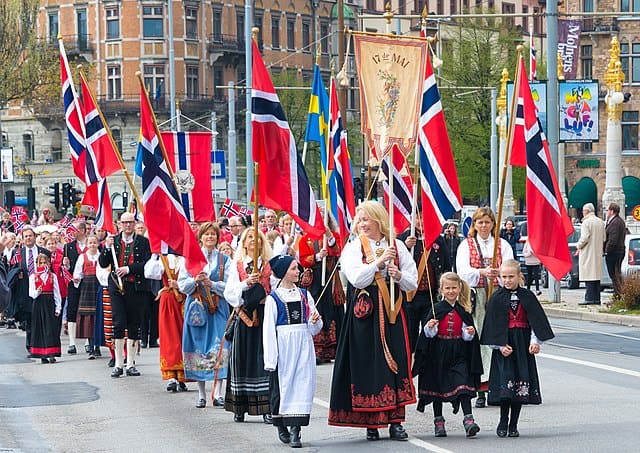
Closely related is the concept of dugnad. Traditionally, dugnad refers to communal, unpaid work performed to benefit a community, such as cleaning a local park or maintaining a neighborhood playground. This spirit of collective effort extends into the private social sphere. When guests bring their own drinks or contribute a dish to a communal meal, they are participating in a micro-version of dugnad. They are contributing to the success of the event rather than merely consuming the efforts of others.
Practical Tips for Navigating Your First Norwegian Gathering
For those new to the country, the following checklist can help ensure you navigate your first few social invitations with confidence and grace:
- Read the invitation carefully: Norwegians are often quite direct. If the invitation mentions “ta med eget drikke” (bring your own drink), take it literally.
- When in doubt, ask: A simple, “Would you like me to bring anything specific, such as a side dish or drinks?” is always appreciated. It is far better to ask and be told “nothing is needed” than to show up empty-handed or with an unnecessary amount of food.
- Observe the “Gift vs. Contribution” rule: If it’s a sit-down dinner, bring a gift (flowers/chocolate). If it’s a party or a communal meal, bring a contribution (drinks/food).
- Respect the timing: Punctuality is highly valued in Norway. Arriving exactly at the stated time—or perhaps five minutes after—is considered respectful. Arriving significantly late can be seen as a disruption to the planned flow of the evening.
- Embrace the “Kos”: The ultimate goal of most Norwegian social gatherings is to create kos (or hygge in Danish)—a sense of warmth, coziness, and togetherness. Following the etiquette is simply a way to ensure that the atmosphere remains relaxed and inclusive for everyone.
While the learning curve for Norwegian social norms may feel steep, the effort to understand and respect these unwritten rules is a powerful way to demonstrate your commitment to the community. By embracing the spirit of shared responsibility, you move from being a mere observer of Norwegian culture to an active participant in its social life.
Key Takeaways for Expats
- BYOB is standard: For casual parties, always assume Make sure to bring your own alcoholic beverages.
- Know your event type: Distinguish between a formal “middag” (bring a gift) and a communal “spleiselag” (bring a contribution).
- The “Equality” principle: Etiquette in Norway is designed to maintain social balance and prevent hierarchy.
- Ask, don’t guess: When an invitation is unclear, a polite inquiry about what to bring is the most respectful course of action.
As you continue to build your social network in Norway, remember that these norms are evolving, especially in larger, more international cities like Oslo or Bergen. However, the underlying principles of equality and community contribution remain the bedrock of Norwegian social interaction.
Have you experienced the nuances of Norwegian social etiquette firsthand? We invite you to share your stories and tips for newcomers in the comments below.
Related reading
- Who Killed Elisabeth Jane Ross? New Details Emerge in Greece Murder Inquiry
- Arizona Schools: Tackling Extreme Heat for Back-to-School
- Honduras Court Rules Former President Juan Orlando Hernández Be Tried While Free (world-today-news.com)
- Paris Court Rules on Economic Substance in Intra-Group Royalties (newsdirectory3.com)