Beyond Ice: New Research Challenges Our Understanding of Uranus and Neptune’s Composition
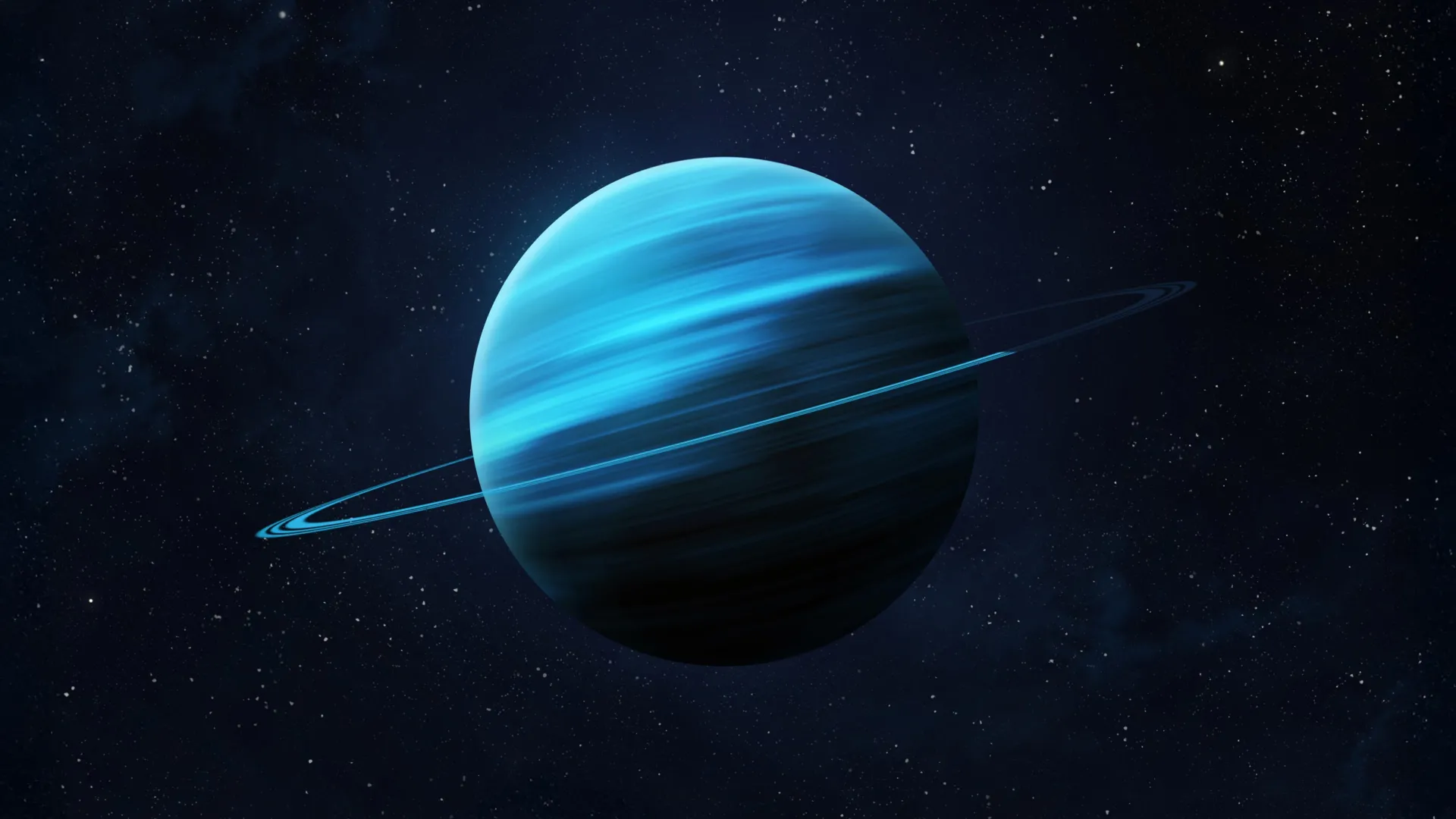
For decades, the solar System’s planetary lineup has been neatly categorized: the rocky inner planets (Mercury, Venus, Earth, and Mars), the gas giants (Jupiter and Saturn), and the ice giants (Uranus and Neptune). But a groundbreaking new study from the University of Zurich (UZH) is prompting a re-evaluation of that final category, suggesting that Uranus and Neptune may harbor significantly more rock within their interiors than previously believed. This isn’t about declaring them “rock giants” outright, but about dismantling the long-held assumption that an ice-rich interior is the only explanation consistent wiht existing data.This revised outlook also finds resonance with the composition of Pluto, the well-known dwarf planet, which is demonstrably rock-dominated.
This research isn’t merely an academic exercise; it fundamentally alters our understanding of planetary formation and evolution,and underscores the critical need for dedicated missions to these distant worlds.
The Limitations of existing Models
Understanding what lies beneath the swirling atmospheres of Uranus and Neptune has always been a challenge. Traditional models have fallen into two camps: those heavily reliant on physical assumptions, and those based on simpler, empirical observations. The former can be overly restrictive, while the latter often lack the nuance to accurately represent the complex conditions within these planets.
“The ice giant classification is oversimplified as Uranus and Neptune are still poorly understood,” explains Luca morf, PhD student at UZH and lead author of the study. “Models based on physics were too assumption-heavy, while empirical models are too simplistic. We combined both approaches to get interior models that are both ‘agnostic’ or unbiased and yet, are physically consistent.”
A Novel Simulation Technique: Bridging Physics and Observation
The UZH team developed a complex simulation technique that bridges this gap. The process begins with generating a random density profile representing the potential interior structure of each planet. This profile is than tested against observational data – specifically, the planets’ gravitational fields – to determine if it’s a plausible match.The simulation iteratively refines the density profile, constantly adjusting it until it aligns with all available data.This method allows for a far more objective exploration of possible interior compositions, free from pre-conceived notions.
Essentially, the team isn’t telling the model what the planets are made of; they’re letting the data reveal the possibilities.
Expanding the Realm of Possibilities: Rockier Interiors on the Table
The results are striking. Using this unbiased, physics-grounded approach, the researchers discovered that the interior makeup of Uranus and Neptune isn’t limited to the expected icy components (primarily water).
“It is something that we first suggested nearly 15 years ago, and now we have the numerical framework to demonstrate it,” says Ravit Helled, Professor at UZH and initiator of the project. the simulations demonstrate that both planets could plausibly be dominated by water-rich layers or by a significantly rockier structure.This challenges the conventional wisdom and opens up a wider range of potential formation scenarios.
Unlocking the Mystery of Unusual magnetic Fields
The implications extend beyond composition. Uranus and Neptune possess highly unusual magnetic fields, drastically different from Earth’s well-defined dipolar field. Their fields are irregular, with multiple poles, posing a long-standing puzzle for planetary scientists.
Helled explains, “Our models have so-called ‘ionic water’ layers which generate magnetic dynamos in locations that explain the observed non-dipolar magnetic fields. We also found that Uranus’ magnetic field originates deeper than Neptune’s.” This suggests a direct link between the internal structure – specifically the presence and depth of ionic water - and the generation of these peculiar magnetic fields.
The Urgent Need for Dedicated Missions
Despite these promising findings, significant uncertainties remain. The extreme pressures and temperatures at the heart of these planets create conditions that are difficult to replicate in a laboratory, hindering our understanding of material behavior.
“One of the main issues is that physicists still barely understand how materials behave under the exotic conditions of pressure and temperature found at the heart of a planet, this could impact our results,” acknowledges Morf, who plans to further refine the modeling work.
Though, even with these unknowns, the study’s results are transformative. “Both Uranus and Neptune could be rock giants or ice giants depending on the model assumptions. Current data are currently insufficient to distinguish the two, and we therefore need dedicated missions to Uranus and Neptune that can reveal their true nature,” concludes Helled.
Ready to delve deeper into the mysteries of our Solar System? Share this article with fellow space enthusiasts and let us know your thoughts in the comments - do you think uranus and Neptune are hiding a rocky secret?
evergreen Insights: The Ongoing Quest to Understand Planetary Interiors
The study of planetary interiors is a cornerstone of our understanding of
Worth a look