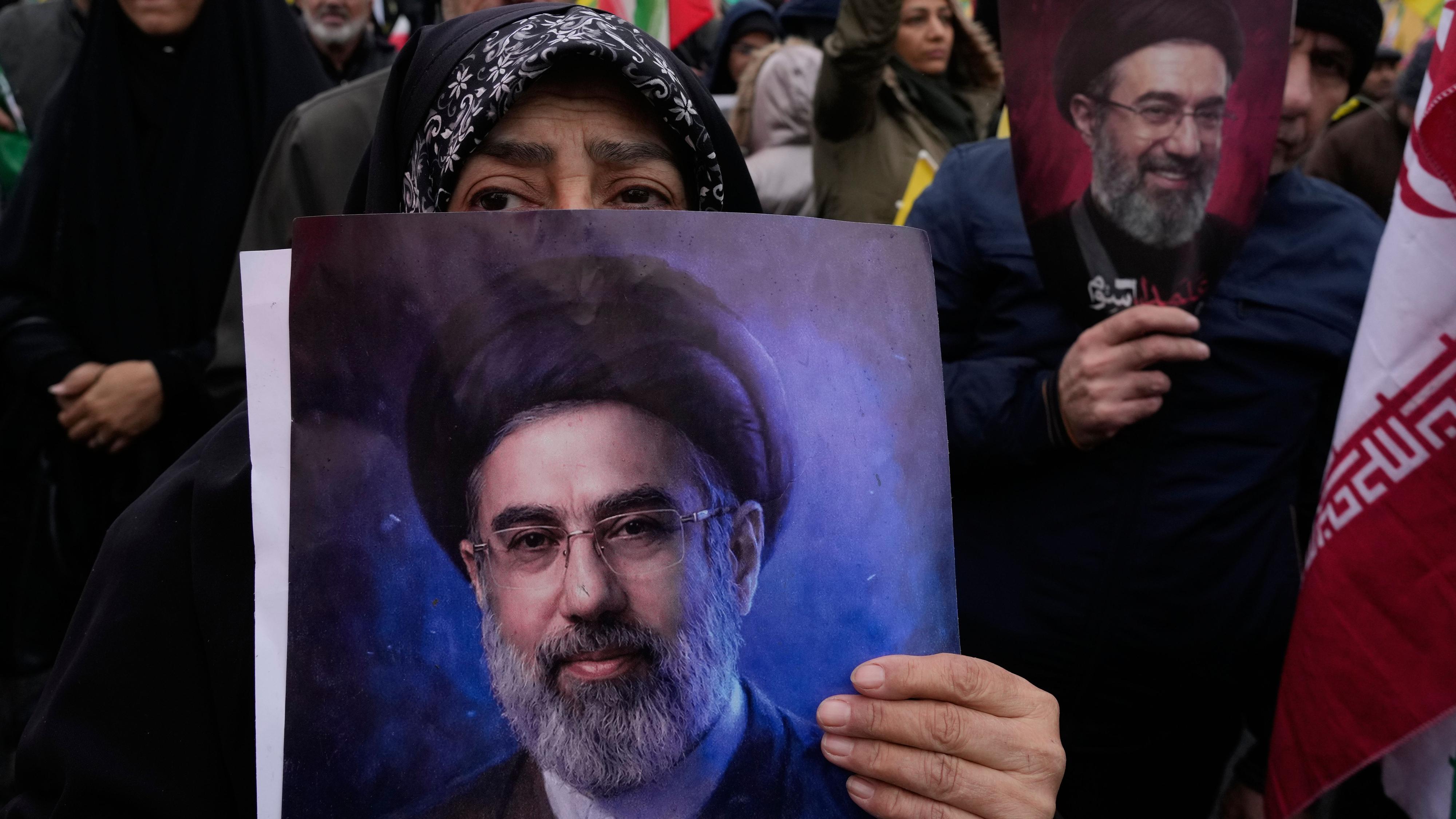
The evolving conflict in the Middle East took a latest turn Friday as U.S. Defense Secretary Pete Hegseth publicly stated that Iran’s newly appointed Supreme Leader, Mojtaba Khamenei, is believed to be wounded and potentially disfigured. This assertion, made during a Pentagon briefing, raises serious questions about the stability of Iranian leadership amidst ongoing military strikes by the United States and Israel. The claim comes as tensions remain exceptionally high following the recent death of Ayatollah Ali Khamenei and the subsequent appointment of his son, Mojtaba, to the highest office in Iran.
Hegseth’s remarks, reported by multiple news outlets including the Associated Press and Reuters, were prompted by the manner of Khamenei’s first public statement as Supreme Leader. Rather than a traditional video or audio address, the statement was released in written form only. “Iran has many cameras and voice recorders, so why a written statement?” Hegseth questioned, suggesting the absence of a visual or auditory component indicates a deliberate attempt to conceal Khamenei’s condition. This assessment fuels speculation about the extent of any injuries sustained by the new Supreme Leader and the potential impact on Iran’s decision-making processes during this critical period. The situation is further complicated by reports, initially surfacing earlier this week, that Mojtaba Khamenei was critically wounded in an airstrike and may even be in a coma.
Claims of Injury and Leadership Void
The U.S. Defense Secretary did not provide specific evidence to support his claims regarding Khamenei’s injuries, but indicated that intelligence suggests he is “wounded and likely disfigured.” This assessment aligns with Israeli suspicions that Khamenei was injured at the outset of the current conflict. The lack of public appearances by the new Supreme Leader since assuming the role has only intensified these concerns. Hegseth further questioned the legitimacy of Khamenei’s leadership, suggesting a lack of authority stemming from his alleged condition. The Pentagon’s statements paint a picture of a leadership in disarray, potentially struggling to maintain control amidst escalating military pressure.
According to reports from Moneycontrol, Hegseth suggested that Iranian leaders are “desperate” and have been forced into hiding, characterizing their actions as akin to “rats” fleeing a sinking ship. The U.S. Has reportedly conducted over 6,000 strikes against targets within Iran, a number that rises above 15,000 when combined with Israeli military actions. Friday is anticipated to observe “the largest volume of attacks to date,” according to officials. This escalation in military activity underscores the intensity of the conflict and the potential for further instability in the region. The U.S. And Israel have not publicly detailed the specific targets of these strikes, but have indicated they are focused on degrading Iran’s military capabilities.
Impact of Military Losses and Regional Tensions
The situation was further complicated Friday by the reported death of at least four U.S. Military personnel in Iraq following the crash of a U.S. Tanker aircraft, as reported by RTVE. The circumstances surrounding the crash remain unclear, and an investigation is underway. Both Hegseth and Chairman of the Joint Chiefs of Staff, Dan Caine, expressed condolences to the families of the fallen service members. This incident adds another layer of complexity to the already volatile situation, potentially escalating tensions further and prompting a reevaluation of U.S. Military strategy in the region.
Adding to the concerns, the U.S. Is closely monitoring Iran’s attempts to disrupt shipping lanes through the Strait of Hormuz, a critical waterway for global energy supplies. Hegseth characterized this as a desperate move by a regime facing overwhelming military pressure. The U.S. Is considering options to respond to this blockade, with a focus on ensuring the continued flow of energy and preventing a surge in oil prices. In a controversial move, the Trump administration has temporarily eased sanctions on Russian crude oil in transit, a decision reportedly aimed at stabilizing global energy markets but drawing criticism from European allies. Reuters reported on this development Friday.
Escalation and Potential for Wider Conflict
The U.S. Is reportedly considering escorting commercial vessels through the Strait of Hormuz to counter Iran’s attempts to disrupt shipping. Hegseth stated that the goal is to adopt a strategy that “makes the most sense” and sends “the right signals to the world.” He also claimed that a significant portion of Iran’s naval fleet is now “at the bottom of the Gulf,” suggesting a substantial degradation of Iran’s maritime capabilities. These claims, however, have not been independently verified. Hegseth further asserted that Iran lacks functional air and missile defense systems and has lost the ability to rebuild its destroyed weaponry, claiming its industry will soon be “annihilated.”
The U.S. Maintains that its military operations are focused on “decimating” Iran’s capabilities and are not targeting civilians. However, Iranian authorities have accused the U.S. Of destroying a school for girls in Minab, resulting in the deaths of over one hundred people. The U.S. Central Command has launched an investigation into these allegations, promising a thorough review of the incident. The investigation is expected to capture an undetermined amount of time, according to Hegseth. The conflicting narratives surrounding civilian casualties underscore the challenges of verifying information in a conflict zone and the potential for miscalculation and escalation.
The Role of President Trump and Future Outlook
Hegseth emphasized that President Donald Trump is currently making all key decisions regarding the conflict, setting “the pace and duration” of military operations. He characterized Iran as being in a losing position and predicted that its attempts to disrupt global shipping would ultimately fail. The administration’s strategy appears to be focused on maximizing pressure on Iran to compel a change in its behavior. The long-term implications of this strategy remain uncertain, but the potential for a prolonged and destabilizing conflict is significant.
The situation remains highly fluid and unpredictable. The reported injuries to Supreme Leader Khamenei, if confirmed, could have a profound impact on Iran’s internal dynamics and its ability to respond to external pressures. The ongoing military operations, coupled with the escalating tensions in the Strait of Hormuz, create a volatile environment with the potential for miscalculation and unintended consequences. The international community is closely monitoring the situation, urging restraint and a diplomatic resolution to the conflict. The coming days and weeks will be critical in determining the trajectory of this crisis and its impact on regional and global stability.
The U.S. State Department is expected to provide an updated briefing on the situation in Iran next week, and further details regarding the investigation into the alleged school bombing in Minab are anticipated. The international community awaits these developments with considerable concern, hoping for a de-escalation of tensions and a return to diplomatic efforts.
What are your thoughts on the evolving situation in Iran? Share your perspectives in the comments below, and please share this article with your networks to keep the conversation going.
Related reading