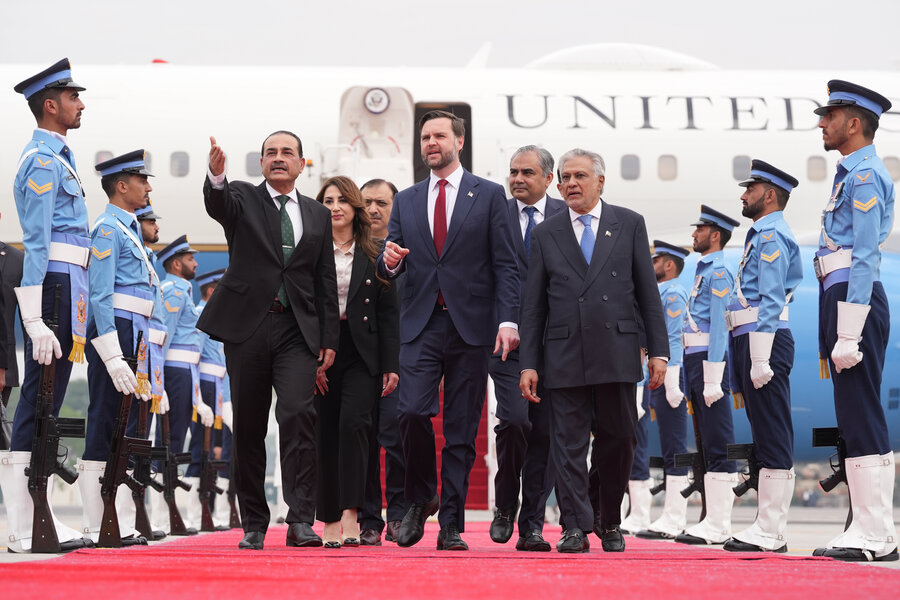
In a diplomatic development that marks a rare departure from years of indirect communication, the United States and Iran have convened for high-stakes, face-to-face negotiations in Pakistan. The talks, which took place on Saturday, April 11, 2026, are aimed at establishing a permanent end to the war in the Middle East following a period of intense escalation and a subsequent, precarious truce.
A United States delegation, led by Vice President JD Vance, met directly with Iranian officials in Islamabad. This direct engagement is significant given that the two nations have traditionally relied on intermediaries to conduct high-level diplomatic exchanges. According to Iranian media, the first phase of these negotiations has already concluded, with officials from both sides exchanging written outlines regarding the key issues at stake via CNN.
The US-Iran talks in Pakistan occur against the backdrop of a fragile, two-week ceasefire that was announced just days prior. This ceasefire follows nearly six weeks of bombing and a period of extreme tension that had brought the two powers to the brink of an even wider confrontation. While the current negotiations represent a glimmer of hope for regional stability, the atmosphere remains fraught, with military movements in the Persian Gulf and warnings from regional allies underscoring the volatility of the situation.
As the diplomatic process unfolds in Pakistan, the maritime security of the region remains a primary concern. The United States military has confirmed that two US Navy ships have begun clearing mines from the Strait of Hormuz. This operation marks the first known transit of US vessels through this critical shipping lane since the onset of the war via CNN.
The Road to the Ceasefire: Pakistan’s Mediatory Role
The path to the current negotiations in Islamabad was paved by an intensive diplomatic effort led by Pakistan. The groundwork for this mediation began as early as September 2025, when Pakistani Prime Minister Shehbaz Sharif and military chief Asim Munir visited the White House to meet with US President Donald Trump, Vice President JD Vance and Secretary of State Marco Rubio via Al Jazeera.

The urgency of these diplomatic efforts peaked recently when President Trump had set a deadline to destroy Iran’s “civilisation.” With just under 90 minutes remaining before that deadline on a Tuesday in Washington, DC, President Trump announced via his social media platform, Truth Social, that he had agreed to a two-week ceasefire with Iran via Al Jazeera. This announcement was shortly followed by confirmation from Iranian Foreign Minister Abbas Araghchi on X, providing a temporary reprieve for a global community on edge.
Despite the agreement to stop hostilities, significant discrepancies remain regarding the terms of the ceasefire, particularly concerning the Strait of Hormuz. President Trump claimed that Iran would allow unimpeded transit through the waterway. Conversely, Foreign Minister Araghchi stated that passage through the Strait would need to be conducted under the auspices of the Iranian armed forces via Al Jazeera.
Maritime Navigation and Regional Security
The Strait of Hormuz, the world’s most critical maritime chokepoint, remains a central point of contention and a barometer for the success of the peace talks. While the US Navy works to clear mines, other regional players are attempting to restore commercial normalcy.
Qatar’s Ministry of Transport announced that maritime navigation for all types of vessels and ships in the Persian Gulf will fully resume starting Sunday, April 12, 2026. Yet, this resumption is subject to specific restrictions: sailing is permitted only from 6 a.m. To 6 p.m. For most vessels, although fishing vessels are permitted to sail throughout the day via CNN.
Crucially, Qatar noted that this announcement does not equate to full freedom of navigation in the Strait of Hormuz. Because Iran controls the Strait, any full restoration of transit requires coordination with Tehran. As of Saturday, Iran has made no official statement regarding coordination with Qatar’s navigation directives via CNN.
Key Maritime Constraints and Updates
| Entity/Region | Action/Status | Details/Restrictions |
|---|---|---|
| US Navy | Mine-clearing | Two ships clearing mines in the Strait of Hormuz. |
| Qatar | Resuming Navigation | Permitted 6 a.m. To 6 p.m. Starting Sunday, April 12. |
| Fishing Vessels | Full Access | Permitted to sail throughout the day in Qatar-managed areas. |
| Iran | Control of Strait | No official statement on coordination with Qatar. |
Israeli Response and the Fragility of Peace
While the United States and Iran engage in talks in Pakistan, the regional security architecture remains unstable, particularly regarding Israel’s role in the conflict. As the negotiations continued late into Saturday night, Israeli Prime Minister Benjamin Netanyahu addressed his nation, signaling that Israel does not yet view the conflict as resolved.
Netanyahu explicitly stated that Israel’s campaign against Tehran is “not yet over” via CNN. This statement highlights a critical complication for the US-Iran talks in Pakistan: the US must navigate not only the demands of Tehran but also the security concerns and strategic goals of its closest regional ally.
The tension between the desire for a diplomatic exit and the insistence on completing military objectives creates a precarious environment. The “fragile” nature of the two-week ceasefire mentioned by officials suggests that any miscalculation—whether a maritime incident in the Strait of Hormuz or a renewed strike—could collapse the current diplomatic momentum via US News.
What This Means for Global Stability
The decision to hold these talks in Pakistan underscores the country’s growing role as a backchannel between rival global powers. By providing a neutral ground for Vice President JD Vance and Iranian officials, Pakistan has attempted to prevent a total collapse of diplomacy that could have led to the “destruction” of Iranian civilization, as previously threatened by the US administration.
For the global economy, the primary focus remains the Strait of Hormuz. Any permanent agreement that ensures “unimpeded transit”—the goal stated by President Trump—would stabilize global energy markets. However, the insistence by Iran that such transit occur under the “auspices of the Iranian armed forces” indicates that Tehran seeks to maintain its sovereign control and leverage over the waterway via Al Jazeera.
The conclusion of the first phase of negotiations and the exchange of written outlines suggest that both parties are at least willing to define their requirements for a lasting peace. The next stages of the talks will likely focus on these written outlines, attempting to reconcile the differing views on maritime access, security guarantees, and the cessation of hostilities across the wider Middle East.
The international community now awaits further updates from Islamabad. The immediate checkpoint for observers will be the implementation of Qatar’s maritime navigation schedule on Sunday and whether Iran officially coordinates these movements or maintains its restrictive stance on the Strait of Hormuz.
World Today Journal will continue to monitor these developments. We invite our readers to share their perspectives on the viability of this ceasefire in the comments below.
Worth a look
- Golf Course Housing Development: Fast-Track Application Status Unclear
- Severe Storms Hit Salzburg: Floods and Downbursts Cripple Trolleybus Fleet
- Thousands of American Historic Landmarks Face Severe Wildfire Threat (newsdirectory3.com)
- Monique Akoa Makani and Phoenix Mercury Face New York Liberty (news-usa.today)