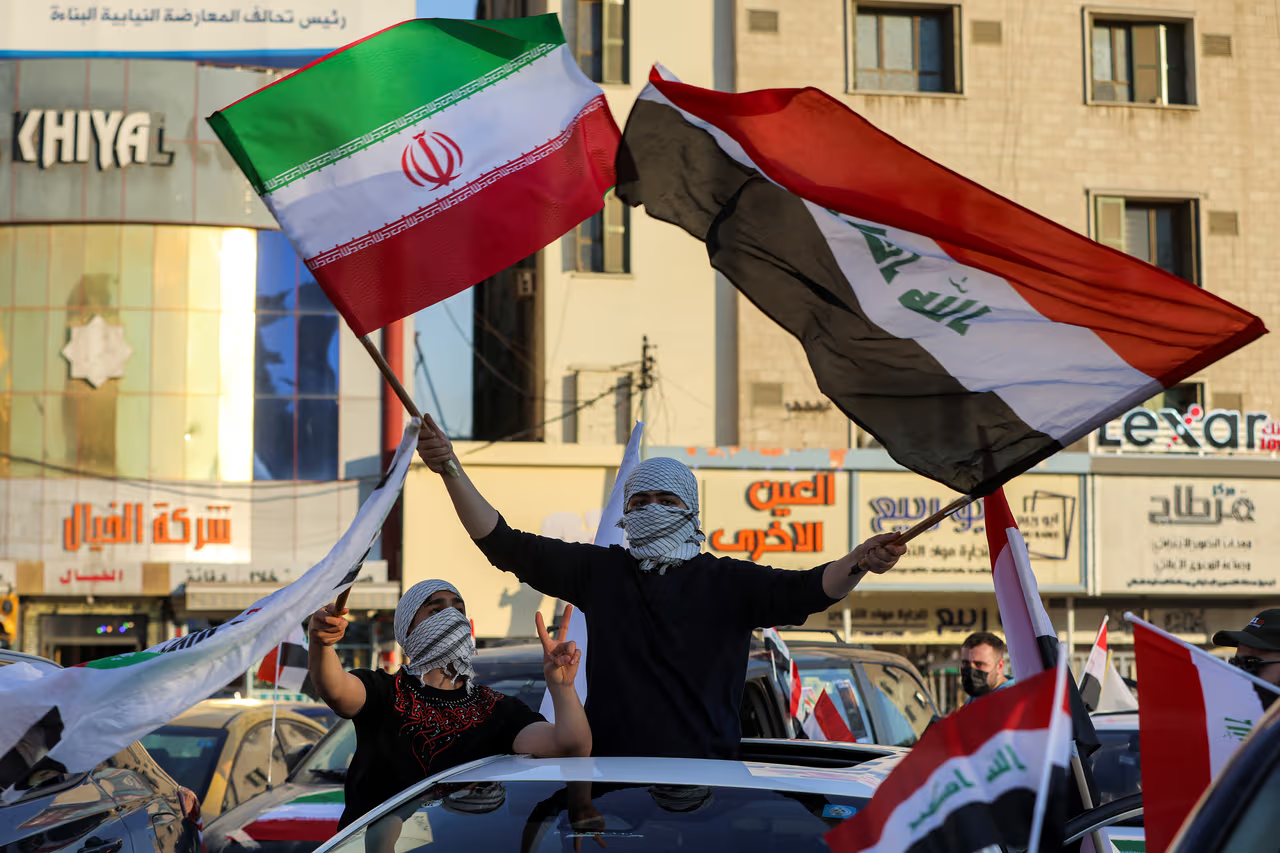
The United States government has asserted a decisive shift in the strategic landscape of the Middle East, with President Donald Trump declaring that Iran will not be permitted to enrich uranium or acquire nuclear weapons. This stance follows a series of intense military engagements that U.S. Officials have characterized as a historic victory, aimed at dismantling the operational capacity of the Iranian military infrastructure.
The administration’s confidence stems from a high-intensity offensive that targeted critical defense and manufacturing hubs. U.S. Officials claim to have destroyed 90% of Iran’s weapons factories and 80% of its air defense systems, effectively neutralizing the country’s ability to project power or protect its airspace from further incursions.
Despite the declared success of these strikes, the operational environment remains volatile. The Pentagon is currently preparing for weeks of ground operations in Iran via The Washington Post, indicating that while the air campaign may have achieved its primary objectives, the stabilization of the region requires a sustained physical presence.
The current strategy involves a complex balance of military pressure and diplomatic leverage. While the U.S. Maintains a significant troop presence in the Middle East to ensure Iran adheres to a ceasefire, there are reports that President Trump is evaluating the possibility of reducing the scale of the operation as the immediate threats are addressed via WPLG Local 10.
Dismantling Iran’s Military and Nuclear Ambitions
The core of the U.S. Strategy has been the systematic degradation of Iran’s conventional military capabilities to ensure it cannot support a nuclear program. By targeting the industrial base, the U.S. Intends to create a reality where the technical and material requirements for uranium enrichment are unattainable.

The scale of the destruction reported by U.S. Sources is significant. The claim that 90% of weapons factories and 80% of air defense systems have been eliminated suggests a goal of total operational paralysis. This level of attrition is designed to abandon the Iranian government with little choice but to accept the terms set by the United States regarding its nuclear aspirations.
Still, the narrative of a “historic victory” has been met with some skepticism by international observers. Some analysts suggest that the U.S. Is attempting to project a level of success and anticipation on a mission that may have evolved unpredictably on the ground via France 24.
The Role of Ground Operations and Troop Deployment
While the air campaign focused on infrastructure, the Pentagon is shifting toward a more prolonged engagement. The preparation for weeks of ground operations indicates that the U.S. Does not believe the air strikes alone are sufficient to guarantee a permanent end to Iran’s nuclear ambitions.
To support this transition, the Pentagon has deployed additional Marines to the Middle East. This surge in manpower serves two purposes: providing a deterrent against any Iranian attempts to rebuild prohibited facilities and ensuring that the ceasefire is strictly monitored and enforced.
The presence of these troops is viewed by the administration as a necessary insurance policy. Without a “boots on the ground” capability, the U.S. Risks a scenario where Iran utilizes the lull in hostilities to clandestinely resume uranium enrichment activities.
Strategic Implications of the Ceasefire
The transition from active combat to a monitored ceasefire marks a critical juncture in U.S.-Iran relations. The administration’s primary objective is to maintain a state of “maximum pressure” even during a cessation of active hostilities.
The ceasefire is not viewed as a return to diplomacy in the traditional sense, but rather as a conditional pause. The U.S. Has made it clear that the continuation of the ceasefire depends entirely on Iran’s compliance with the mandate that it will not seek nuclear weapons.
For the global community, this development represents a precarious stability. The ability of the U.S. To maintain this balance—between the threat of renewed ground operations and the hope for a lasting nuclear freeze—will determine the security outlook for the region for years to come.
Key Takeaways of the U.S. Offensive
- Nuclear Mandate: President Trump has explicitly stated that Iran will not enrich uranium or possess nuclear weapons.
- Infrastructure Damage: U.S. Claims include the destruction of 90% of Iranian weapons factories and 80% of air defense systems.
- Military Posture: The Pentagon is preparing for extended ground operations and has deployed additional Marines to the region.
- Operational Status: While the offensive is termed a “historic victory,” the U.S. Is currently monitoring a ceasefire through a continued military presence.
What Happens Next?
The immediate future of the conflict depends on the results of the upcoming ground operations and the continued deployment of U.S. Forces. The administration is currently weighing whether the objective of neutralizing the nuclear threat has been sufficiently met to allow for a reduction in military operations.
The next critical checkpoint will be the official assessment of the ceasefire’s effectiveness and the reports emerging from the ground operations currently being planned by the Pentagon. These developments will determine if the U.S. Maintains its current troop levels or begins a phased withdrawal from the region.
We invite our readers to share their perspectives on the stability of the Middle East in the comments below and share this report with others following global security developments.