U.S. Bolsters Health Security Partnerships in Africa with $1.3 Billion Investment
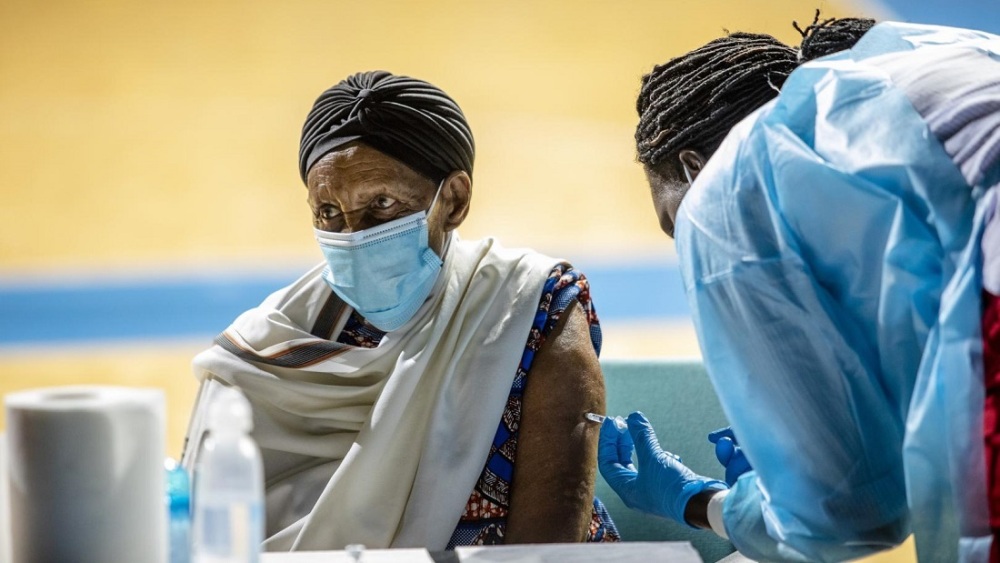
The United States is significantly expanding its health security collaboration with several African nations, committing $1.3 billion over five years through a series of health agreements. Burkina Faso, Niger, and the Democratic Republic of Congo (DRC) are the initial beneficiaries of this substantial investment, receiving $147 million, $179 million, and $900 million respectively. This initiative, falling under the umbrella of the “America First Global Health Strategy,” aims to strengthen the capacity of these countries to prevent, detect, and respond to infectious disease threats – a strategy that officials say is vital not only for global health security but also for protecting U.S. Interests. The funding will focus on bolstering infrastructure, improving disease surveillance, and enhancing treatment capabilities, with a particular emphasis on HIV/AIDS, malaria, and other infectious diseases.
The move comes as the U.S. Seeks to forge stronger diplomatic and economic ties with the Sahel region and address growing concerns about health security vulnerabilities. The agreements, finalized in late February 2026, represent a shift towards a more pragmatic approach to engagement, prioritizing measurable results and accountability. The “America First Global Health Strategy,” unveiled in September 2025, emphasizes performance-based funding, meaning that continued financial support will be contingent upon achieving specific health outcomes and demonstrating effective program management. This approach, according to U.S. State Department officials, is designed to ensure that American taxpayer dollars are used efficiently and effectively to maximize impact.
The timing of these agreements is noteworthy, occurring amidst a complex geopolitical landscape in Africa. Several nations in the Sahel region have experienced political instability and increasing security challenges, creating an environment conducive to the spread of infectious diseases. The U.S. Government views strengthening health systems in these countries as a critical component of broader efforts to promote stability and prevent humanitarian crises. The investment is also seen as a way to counter the influence of other global actors in the region, including Russia and China, who have been increasing their engagement in Africa through economic and security partnerships.
Addressing Critical Health Challenges
The funding will be directed towards a range of critical health priorities. In Burkina Faso, where the HIV prevalence rate has fallen from 7.17% in 1997 to 0.6% in 2023, according to UNAIDS data UNAIDS, resources will be allocated to maintaining this progress and preventing a resurgence of the epidemic. The DRC, however, faces a more challenging situation, with approximately 520,000 people living with HIV in 2023, including 300,000 women and 50,000 children. The number of new HIV infections in the DRC nearly doubled the number of deaths related to the disease in the same year, with around 21,000 new infections – including 7,000 among children – compared to 11,000 deaths. The U.S. Funding will support efforts to expand access to HIV testing, treatment, and prevention services, as well as to reduce stigma and discrimination.
Malaria remains a significant public health concern in both Burkina Faso and the DRC. Burkina Faso has seen notable improvements in malaria control, with the total number of cases decreasing from 10,805,020 in 2024 to 7,329,278 in 2025 – a reduction of 32.17%. Deaths from malaria also declined significantly, falling from 3,523 in 2024 to 1,979 in 2025, representing a 43.83% decrease. In the DRC, however, malaria cases increased from 27,676,634 in 2023 to 29,123,262 in 2024, a rise of 5.23%, although deaths decreased slightly from 22,330 to 21,695 during the same period. The new funding will support ongoing malaria control programs, including insecticide-treated bed nets, indoor residual spraying, and access to effective antimalarial drugs.
Strengthening Health Systems and Maternal Care
Beyond HIV/AIDS and malaria, the U.S. Investment will also address other critical health needs in Niger, with a particular focus on improving maternal and child health. Niger has made significant strides in reducing maternal mortality, decreasing by over 200 points between 1992 and 2020 to reach 441 deaths per 100,000 live births in 2020, according to United Nations estimates. The new funding will support programs aimed at improving access to quality antenatal care, skilled birth attendance, and postnatal care, as well as strengthening the capacity of healthcare workers to provide essential maternal and child health services.
A key component of the agreements involves bolstering laboratory capacity and disease surveillance systems. In Burkina Faso, approximately $12 million will be dedicated to strengthening international health security, with a focus on improving data collection, analysis, and transmission, as well as enhancing the ability of laboratories to detect and identify potential pathogens. Similar investments will be made in the DRC and Niger, with the goal of creating resilient national health systems that are capable of responding effectively to public health emergencies. The U.S. Aims to support the integration of frontline healthcare workers into the national health systems of these countries, ensuring that they have the resources and training they need to provide quality care.
A Conditional Partnership: Increasing Domestic Health Spending
The agreements are not simply about providing financial assistance; they also require recipient countries to demonstrate a commitment to increasing their own domestic health spending. Burkina Faso, the DRC, and Niger have pledged to increase their national health expenditures by $107 million, $300 million, and $71.9 million respectively during the period covered by the agreements. This commitment reflects a broader U.S. Policy of encouraging African nations to take greater ownership of their own health security and reduce their reliance on external aid. The expectation is that increased domestic investment will lead to more sustainable and equitable health systems.
The “America First Global Health Strategy” has now secured commitments from 19 African nations: Botswana, Burkina Faso, Burundi, Cameroon, Côte d’Ivoire, Eswatini, Ethiopia, Kenya, Lesotho, Liberia, Madagascar, Malawi, Mozambique, Niger, Nigeria, Uganda, the Democratic Republic of Congo, Rwanda, and Sierra Leone. This growing coalition of partners underscores the increasing recognition of the importance of investing in global health security. However, the strategy has also faced criticism, particularly regarding data sharing and access to technologies.
Concerns Over Data Sovereignty and Equitable Access
The Africa Centres for Disease Control and Prevention (Africa CDC), affiliated with the African Union, has recently expressed concerns about the terms of data and pathogen sharing within these agreements. The Africa CDC fears that the U.S. May gain access to valuable biological samples and epidemiological data without guaranteeing reciprocal access to technologies and treatments developed from that data. This concern highlights a broader debate about data sovereignty and the need for equitable partnerships between African nations and external actors. Some countries, including Zambia and Zimbabwe, have already rejected similar agreements, citing concerns about protecting their data and ensuring that they benefit from any resulting innovations.
This situation underscores the challenges of forging a unified African approach to negotiations with major global powers. The diverse realities and priorities of individual countries often lead to fragmented responses, with some nations willing to accept terms that others deem unfavorable. The debate over data sharing and access to technologies is likely to continue as more African nations consider joining the “America First Global Health Strategy,” and as the continent seeks to strengthen its collective bargaining power in the realm of global health security.
The success of this new wave of U.S. Health investments will depend not only on the financial resources provided but also on the commitment of recipient countries to implement effective programs, increase domestic health spending, and address concerns about data sovereignty and equitable access. The next key checkpoint will be the release of the first progress reports on these agreements, expected in early 2027, which will provide a crucial assessment of their impact and identify any challenges that need to be addressed.
What are your thoughts on the U.S. Strategy for health security in Africa? Share your comments below and facilitate us continue the conversation.