
The geography of the US data center market is undergoing a seismic shift. For years, the industry’s center of gravity remained firmly anchored in the Mid-Atlantic, but a new era of energy demand is pushing infrastructure toward the West and South. As the industry enters what experts call the “GW age”—where power requirements are measured in gigawatts—the priority for developers has shifted from proximity to fiber hubs to the raw availability of cheap, scalable energy.
This transition is driven by the exponential growth of artificial intelligence and high-performance computing, which require significantly more power and cooling than traditional cloud storage. States that can offer massive energy loads without destabilizing the local grid are becoming the new frontiers for tech giants. While some regions are struggling under the weight of these requirements, others are positioning themselves as the next global hubs for digital infrastructure.
Texas has emerged as the primary beneficiary of this trend. With its independent power grid and vast energy resources, the Lone Star State is no longer just a secondary player; it is now a direct challenger to the established order. Current industry trajectories suggest that Texas could pass Virginia as the world’s top data center market, fundamentally altering the landscape of global compute power.
The Rise of the Texas Powerhouse
The shift toward Texas is not accidental. The state’s ability to provide the massive energy loads required for the “GW age” makes it an ideal destination for hyperscale providers. Unlike many other regions, Texas offers a combination of land availability and energy infrastructure that can support the immense power draw of AI-driven data centers.
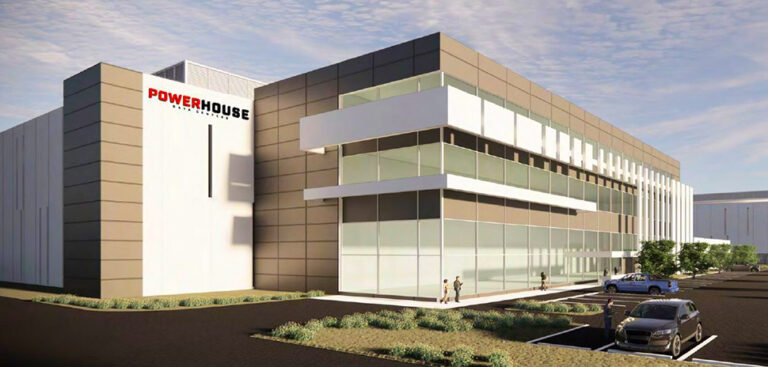
Industry analysts are now projecting a timeline for this transition, noting that Texas could become the new data center capital of the world by 2030. This potential ascent is rooted in the state’s capacity to scale energy production rapidly, a necessity as data centers move from megawatts to gigawatts of capacity.
The competitive advantage of Texas lies in its energy availability. For operators, the cost of power is one of the most significant operational expenditures. By moving toward regions where energy is cheaper and more abundant, companies can reduce overhead while ensuring that their AI clusters have the consistent power they need to operate without interruption.
Virginia and the Battle for ‘Datacentre Alley’
For over a decade, Northern Virginia has been the undisputed heart of the internet, earning the nickname “datacentre alley.” Its dominance was built on a dense concentration of fiber optic cables and a business-friendly environment that attracted the world’s largest cloud providers. However, the sheer scale of current growth is testing the limits of Virginia’s infrastructure.
Despite the surge of competition from the West and South, Virginia is expected to hold its status as a primary hub for the foreseeable future. The existing ecosystem of connectivity and the deep integration of service providers make it tricky to displace entirely. However, the “datacentre alley” now faces a critical challenge: power constraints. As the demand for electricity grows, the ability of the local grid to support new, massive-scale projects is becoming a bottleneck.
The struggle in Virginia highlights a broader industry trend. While connectivity was once the primary driver of location choice, energy availability has now become the dominant factor. Virginia remains a titan in the US data center market, but its growth may be capped by the physical limits of its power grid, leaving the door open for Texas to seize the top spot.
West Coast Constraints and Market Decline
While Texas and Virginia battle for supremacy, the US West Coast is facing a different reality. Historically a hub for tech innovation and the headquarters of many hyperscalers, states on the West Coast are seeing a decline in their relative market share for new data center construction.
The primary driver of this decline is energy constraint. High electricity costs and stringent environmental regulations have made it more difficult and expensive to build and power new facilities. In regions where the grid is already strained, bringing new gigawatt-scale projects online is often a leisurely and costly process.
This has led to a strategic migration. Companies are increasingly looking toward the interior of the country, where land is cheaper and energy is more accessible. The trend indicates a clear preference for regions that can guarantee long-term power stability over those that offer proximity to traditional tech hubs.
Comparative Market Outlook
| Region | Current Status | Primary Driver/Constraint | Projected Trend |
|---|---|---|---|
| Texas | Rapidly Expanding | High energy availability/Low cost | Potential world leader by 2030 |
| Virginia | Established Leader | Dense connectivity / Power constraints | Maintaining status, but slowing growth |
| West Coast | Legacy Hub | High energy costs / Grid constraints | Market share decline |
What This Means for the Future of Compute
The transition to the “GW age” represents more than just a change in location; it is a fundamental shift in how digital infrastructure is planned. The move toward energy-rich regions suggests that the next generation of the internet will be built where the power is, rather than where the people or the fiber are.
For the global audience, this shift ensures that the capacity for AI and cloud computing will continue to expand, but it also raises questions about grid stability and energy sustainability. The states that can successfully balance the massive power needs of data centers with the needs of their residential populations will be the winners of this industrial race.
As more companies evaluate their footprints, the rankings of states building the most infrastructure continue to evolve. Data from Visual Capitalist underscores the competitive nature of this build-out, as states compete to attract the investment and jobs that come with these massive facilities.
Industry watchers are now focusing on the 2030 horizon as a key benchmark to see if Texas successfully completes its ascent to the top of the global market. As the power requirements of AI continue to climb, the migration toward available and cheap energy is likely to accelerate.
Do you think the shift toward energy-rich states will impact the speed of AI development, or is the grid the only real bottleneck? Share your thoughts in the comments below.
Keep reading