The U.S. government is tightening regulations on military suppliers under an executive order signed on July 20 by President Donald Trump, as reported by the South China Morning Post. The directive requires major arms manufacturers to trace their multi-tier supply chains and actively phase out Chinese rare earth components. According to the South China Morning Post, the executive order significantly tightens the conditions under which the Department of Defense can issue waivers for defense-critical imports from adversary states including China, Russia, Iran, and North Korea.
Executive Order Imposes Strict Rare Earth Rules on Defense Contractors
Defense procurement rules strictly prohibit sourcing certain covered materials from adversary states, ranging from rare earth magnets to newly added inputs like gallium and germanium. While industry observers view the directive as a long-overdue enforcement crackdown designed to secure long-term national security gains, contractors face immediate hurdles in requalifying suppliers and finding non-Chinese alternatives, as detailed by the South China Morning Post. Analysts noted that market adjustments are expected to be manageable, though delivery timetables for future military hardware could slightly stretch.
Domestic Refineries Scale Up Production to Meet Regulatory Deadlines
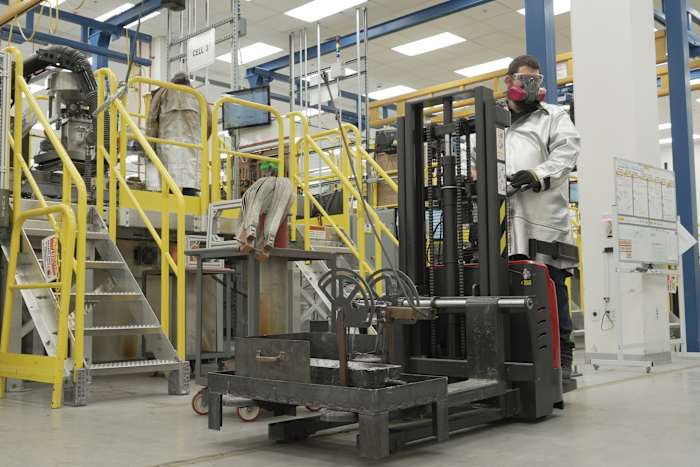
To comply with an upcoming federal procurement ban scheduled for January 1, 2027, on Chinese rare earth materials used in American defense systems, domestic processing operations are expanding rapidly, according to reporting by Oilprice.com. The U.S. Army selected REalloys to build and operate the first-ever commercial critical mineral processing operation on a U.S. military installation, establishing a facility at the Tooele Army Depot in Utah capable of refining dysprosium and terbium. Commercial development at the Tooele platform is targeted to begin in 2027, with initial operating capability expected no later than 2028, matching the urgent timeframe of the procurement restrictions outlined by Oilprice.com.

Additional domestic capabilities are taking shape in New Hampshire, where Phoenix Tailings operates a small refinery in Exeter. Anthony Balladon, the chief commercial officer and a co-founder, described the task ahead in an interview covered by the Apnews: It will be a tall order and a challenge to replenish these stocks and scale up in the time frame needed to meet defense demand and regulations.
The company plans to build a facility named the Freedom facility to extract and produce critical metals such as neodymium, praseodymium, terbium, dysprosium, samarium, and yttrium for the defense, aerospace, and automotive industries. Balladon stated that the purpose is to ensure that the entire Western Hemisphere, the United States, and its allies are free of Chinese influence within the rare-earth space, as noted by the Apnews.
Alternative Supply Chains and Recycling Milestones
Industry suppliers are looking beyond China by turning to historical stockpiles and advanced recycling initiatives. For years, U.S. magnet maker Arnold Magnetic Technologies relied on China for samarium to produce permanent magnets for precision-guided missiles such as Tomahawks, but the company has shifted to using abandoned mined dirt in La Rochelle, France, processed by the chemical company Solvay, according to the Apnews. This shift followed April 2025, when China restricted the outflow of processed critical materials during trade tensions.
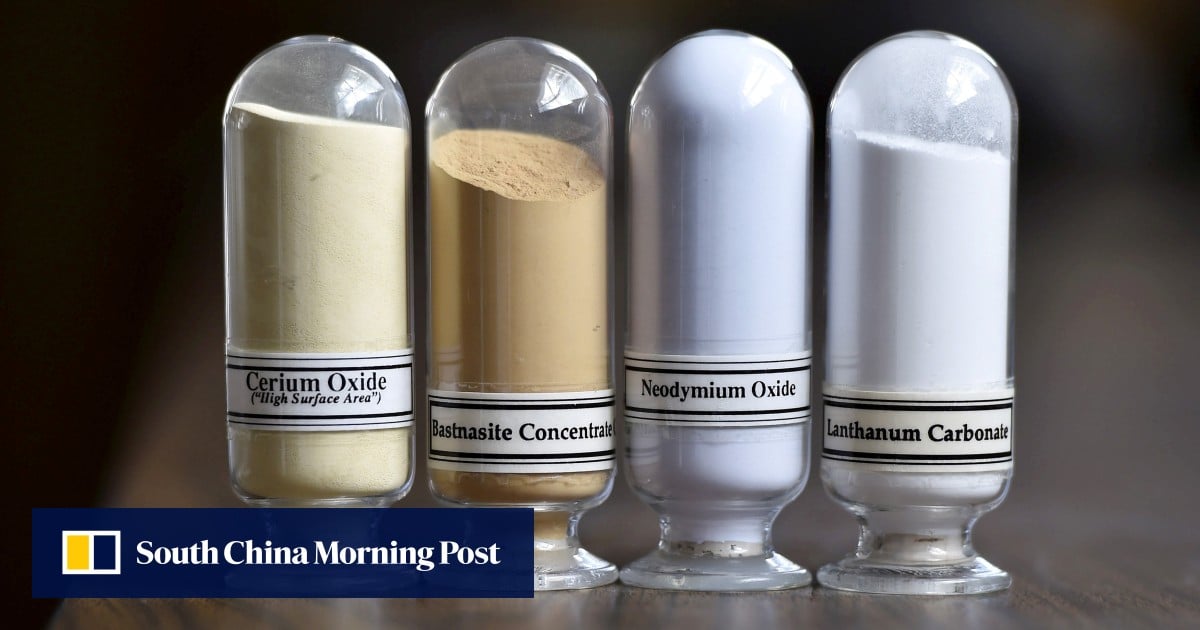
Meanwhile, USA Rare Earth announced that its hydrometallurgical facility in Wheat Ridge, Colorado, successfully produced commercial-grade dysprosium oxide and neodymium-praseodymium oxide samples from recycled rare earth magnet scrap, known as swarf, sourced from its magnet manufacturing facility in Stillwater, Oklahoma, according to markets.businessinsider.com. These oxides are expected to be sent to Less Common Metals in the United Kingdom for qualification and conversion into rare earth metals, supporting advanced manufacturing and defense requirements as Western companies race to establish independent supply chains.
Keep reading