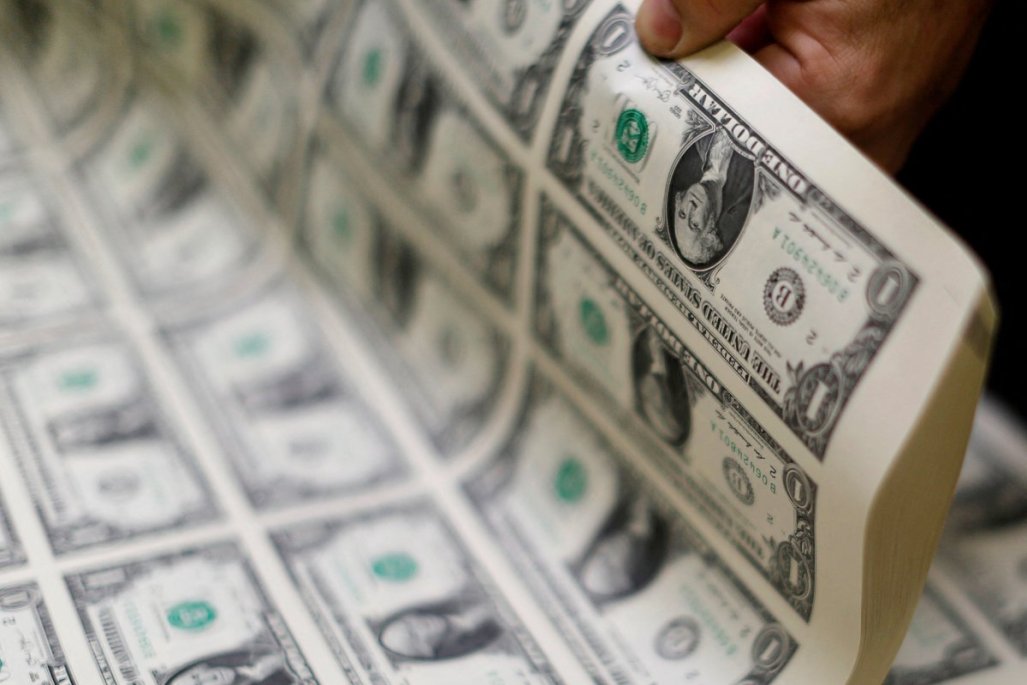
The Chilean peso has seen a significant surge in strength as the dollar in Chile plummeted on Wednesday, April 8, 2026, breaking below the critical $900 threshold. This sharp correction comes as global markets react to a sudden shift in geopolitical tensions, specifically a reported truce between the United States and Iran, which has drastically reduced the demand for safe-haven assets.
The U.S. Currency opened the trading session with a substantial drop, reaching $889.35, marking a retreat of $20.65 from the previous close . This represents the lowest level for the dollar since early March and the most significant single-day decline in nearly a year, signaling a profound shift in investor sentiment.
This downward trend is the result of a “perfect storm” of external factors: a decrease in global risk, a rally in copper prices, and a broader weakening of the U.S. Dollar index. Even local economic pressures, such as a higher-than-expected Consumer Price Index (IPC), failed to offset the momentum of these international drivers.
Geopolitical De-escalation and the “Safe-Haven” Shift
The primary catalyst for the currency’s collapse is the announced truce between the United States and Iran. In times of geopolitical instability, investors typically flock to the U.S. Dollar as a “safe haven,” driving up its value. Though, the reduction in uncertainty regarding the Middle East has triggered a reversal, leading to a sharp drop in the dollar index as investors regain their appetite for riskier assets.
The impact was felt immediately in the Chilean market. According to reports, the currency opened at $895.12 and quickly dipped further, with some trades moving below the $890 mark shortly after 9:30 a.m. . This “strong bearish gap” reflects how quickly the market integrated the news of the ceasefire.
Rodrigo Castillo, Director General of BeFx, noted that outside of the war context, the dollar had previously been circulating in a range between $850 and $870 . This comparison serves as a benchmark for analysts trying to determine how much of the current drop is a temporary reaction to the truce versus a return to more permanent economic fundamentals.
Copper Rally Bolsters the Chilean Peso
Whereas the geopolitical truce weakened the dollar globally, the Chilean peso received an additional boost from a surge in copper prices. As the world’s leading producer of the red metal, Chile’s currency is highly sensitive to copper fluctuations. The metal’s price climbed significantly, with Comex futures trading around US$5.74 to US$5.75 per pound.
The combination of a weaker global dollar and stronger copper prices created a powerful tailwind for the peso. This dynamic mirrors previous historical peaks where high copper prices and a falling dollar pushed the exchange rate below the $900 mark . The dollar index itself saw a decline of approximately 1.1% during the session, further accelerating the slide.
The Role of Local Inflation (IPC)
Interestingly, the dollar in Chile plummeted despite domestic data that would typically support a stronger currency. Chile’s monthly Consumer Price Index (IPC) surprised the market with an increase of 1% . Usually, higher inflation can influence monetary policy and exchange rates, but in this instance, the external geopolitical relief and the copper rally completely overshadowed local inflation concerns.

Market Implications and What Happens Next
The current movement is part of a larger adjustment that has been unfolding for two weeks, with the currency completing three consecutive days of declines . For businesses and investors, this shift reduces the cost of imports but may impact exporters who receive payments in dollars.
The sustainability of this trend now depends heavily on the stability of the negotiations in the Middle East. If the truce holds and the “risk-off” sentiment continues to dissipate, the peso may discover a new, lower equilibrium. Conversely, any flare-up in tensions could quickly restore the dollar’s status as a primary refuge.
Key Takeaways for Investors
- Geopolitical Trigger: A truce between the U.S. And Iran has reduced global uncertainty and weakened the dollar index.
- Commodity Support: Copper prices rising to approximately US$5.75 per pound have provided critical support to the Chilean peso.
- Technical Milestone: The dollar has dropped below $890, its lowest point since early March 2026.
- Local Context: External factors are currently dominating the market, overriding a surprise 1% increase in local monthly inflation.
Investors and market participants are now closely monitoring the evolution of Middle East negotiations to determine if this “breathing room” will evolve into a stable long-term trend .
We invite our readers to share their perspectives on how these geopolitical shifts are impacting their portfolios in the comments below.