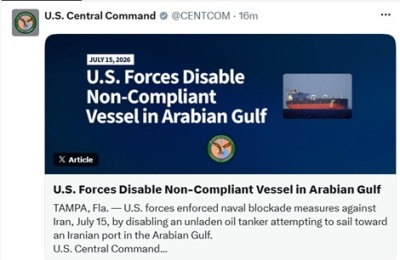
United States Central Command (CENTCOM) forces have conducted a series of maritime interdiction operations in the Strait of Hormuz, successfully neutralizing a vessel identified as being bound for Iran. This action follows a period of escalating tensions in the region, characterized by repeated military engagements over the past five days. The situation remains fluid as international maritime authorities monitor the security of this critical energy transit corridor.
The U.S. military’s involvement in these recent operations reflects a broader strategy to deter Iranian influence in the Persian Gulf. According to official statements from U.S. Central Command, military assets have been deployed to intercept vessels suspected of violating maritime security protocols. These actions have included both daytime and nighttime aerial surveillance and tactical strikes, marking a distinct increase in operational tempo compared to previous months.
Operational Context in the Strait of Hormuz
The Strait of Hormuz serves as one of the world’s most significant “choke points,” through which a substantial portion of global oil production flows. Recent reports indicate that the U.S. Navy and affiliated coalition forces have increased their presence to ensure the freedom of navigation. On the first day of the current security initiative, U.S. forces successfully intercepted and deterred two vessels, preventing them from completing their transit toward Iranian ports.

These interdictions are part of a multi-day series of operations. Military officials have confirmed that engagements have persisted for five consecutive days. The intensity of these operations has fluctuated, with the Pentagon reporting multiple air sorties conducted within a 24-hour cycle to maintain regional stability. The strategic objective, as outlined by the U.S.
Diplomatic and Military Pressure
The military pressure is occurring alongside high-stakes diplomatic rhetoric. Donald Trump, commenting on the broader regional standoff, has publicly stated that he desires a formal agreement with Tehran. However, he has also issued warnings regarding the potential for expanded strikes on critical Iranian infrastructure, including power plants and bridges, should a diplomatic consensus not be reached by next week.
The uncertainty surrounding these negotiations has created a volatile environment for international markets.
Monitoring Regional Stability
For stakeholders and the global shipping industry, the next phase of this standoff depends on whether the current military friction leads to a de-escalation or further entrenchment. The U.S. military maintains that its operations are defensive and intended to prevent the escalation of conflict in the maritime domain.
Observers are currently tracking official updates from the U.S. The upcoming week serves as a critical checkpoint, as the deadline mentioned in recent political commentary approaches. Whether this results in a shift toward formal talks or a continuation of the current tactical strikes remains to be seen. Readers are encouraged to monitor official maritime advisories issued by the International Maritime Organization (IMO) for real-time safety updates regarding transit through the Strait of Hormuz.
Keep reading