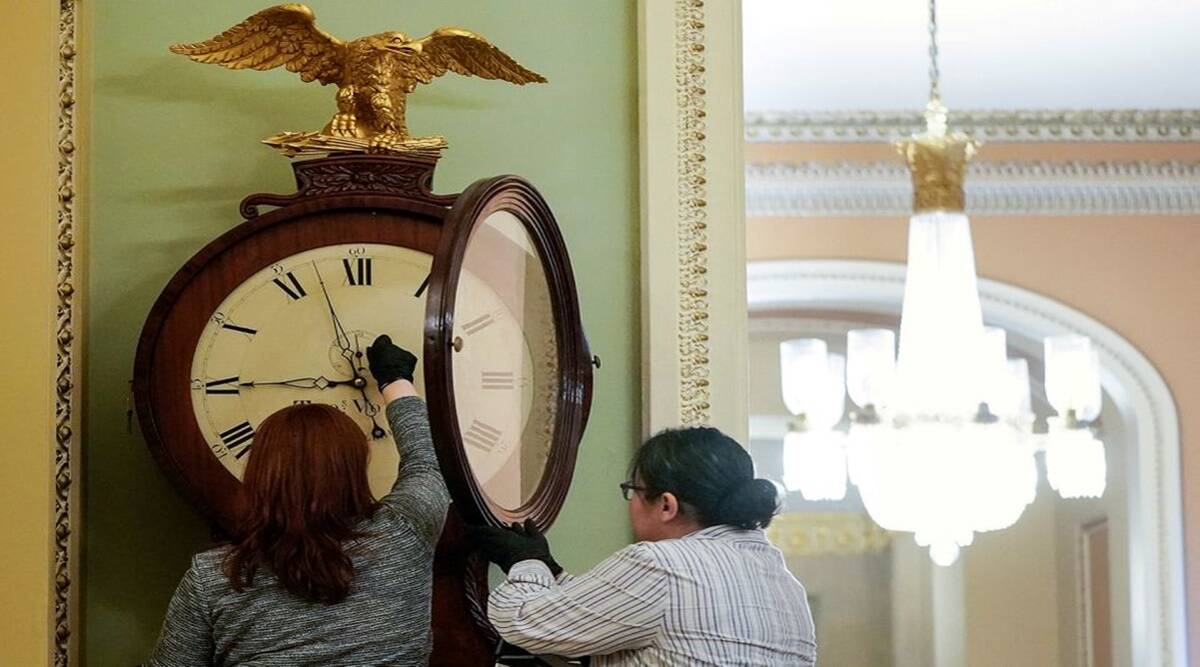
The U.S. House of Representatives has passed legislation to make daylight saving time permanent, aiming to eliminate the biannual clock shifts. The measure requires Senate approval and a presidential signature to become law.
The proposal to adopt a permanent permanent daylight saving time seeks to end the tradition of “springing forward” in March and “falling back” in November. The Sunshine Protection Act would lock the United States into the daylight saving time offset.
Proponents of the bill argue that eliminating the time change reduces traffic accidents and improves public safety. However, the legislation has faced significant hurdles in the Senate, where some lawmakers and medical professionals express concern that permanent daylight saving time could lead to darker mornings, potentially increasing risks for children walking to school and disrupting human circadian rhythms.
The Legislative Path of the Sunshine Protection Act
The effort to end the time change is not new. The House of Representatives passed the Sunshine Protection Act, which intended to make daylight saving time the permanent standard across the country, effectively stopping the clock shifts that occur twice a year.
Despite the House’s approval, the bill has struggled to gain traction in the Senate. Senate leadership has cited the need for more comprehensive research into the biological effects of permanent daylight saving time. Unlike the House, which focused on the convenience and economic benefits of more evening light, Senate discussions have leaned toward the potential health risks associated with later sunrises in the winter.
The tension within the legislative process highlights a divide between those prioritizing economic activity and crime reduction—which often correlate with evening light—and those prioritizing sleep hygiene and morning safety. This deadlock has left the U.S. continuing its current cycle of time changes.
Health and Safety Arguments Against Permanent DST
While the House version of the bill emphasizes the “protection” of sunlight, the American Academy of Sleep Medicine (AASM) has historically cautioned against permanent daylight saving time. The AASM argues that permanent standard time is actually more aligned with the human biological clock, as it allows for more natural wake-up times in coordination with the sun.
Critics of the permanent DST shift point to the “winter darkness” problem. In northern states, a permanent daylight saving time shift would mean the sun might not rise until 8:30 AM or 9:00 AM during December and January. This creates a scenario where millions of students and commuters travel in total darkness, which some lawmakers argue increases the risk of pedestrian accidents.
Conversely, supporters of the bill cite data suggesting that the actual act of shifting clocks twice a year causes a spike in heart attacks and workplace injuries due to sleep disruption. By removing the transition entirely, they argue the net gain in public health outweighs the risk of darker winter mornings.
Economic Impact and Regional Differences
The economic argument for permanent daylight saving time centers on the “outdoor economy.” According to industry reports from tourism and recreation sectors, longer evening light encourages consumers to shop, eat at restaurants, and participate in outdoor activities after work, which boosts local business revenue.
However, the impact varies by geography. In the Southwestern U.S., where summer heat is extreme, permanent daylight saving time could push the hottest part of the evening later, potentially increasing energy costs for air conditioning. In contrast, the Northeast and Midwest generally see a benefit from the extended evening light during the shorter days of autumn and winter.
The complexity of these regional impacts is why the bill has not yet reached the President’s desk. Lawmakers must balance the desires of the retail and tourism industries against the concerns of public health experts and residents in extreme climate zones.
Comparison of Time Standards
To understand the debate, it is necessary to distinguish between the two options for a permanent time standard:
| Feature | Permanent Daylight Saving Time (DST) | Permanent Standard Time (ST) |
|---|---|---|
| Winter Mornings | Later sunrise (Darker) | Earlier sunrise (Brighter) |
| Winter Evenings | Later sunset (Brighter) | Earlier sunset (Darker) |
| Biological Alignment | Often conflicts with circadian rhythm | Generally aligns with natural sleep cycles |
| Economic Driver | Boosts evening retail/tourism | Less impact on evening commerce |
What Happens Next for U.S. Timekeeping
The future of the U.S. time clock depends on whether the Senate decides to take up the Sunshine Protection Act or a modified version of the bill. Currently, there is no scheduled date for a final vote in the Senate, and the U.S. will continue to observe the traditional spring and autumn time changes until a federal law is signed and implemented.
Citizens can track the progress of time-related legislation through the Congress.gov portal, where all introduced bills and committee hearing schedules are listed publicly.
Do you believe the U.S. should move to permanent daylight saving time, or is the risk of darker winter mornings too high? Share your thoughts in the comments below.
Worth a look