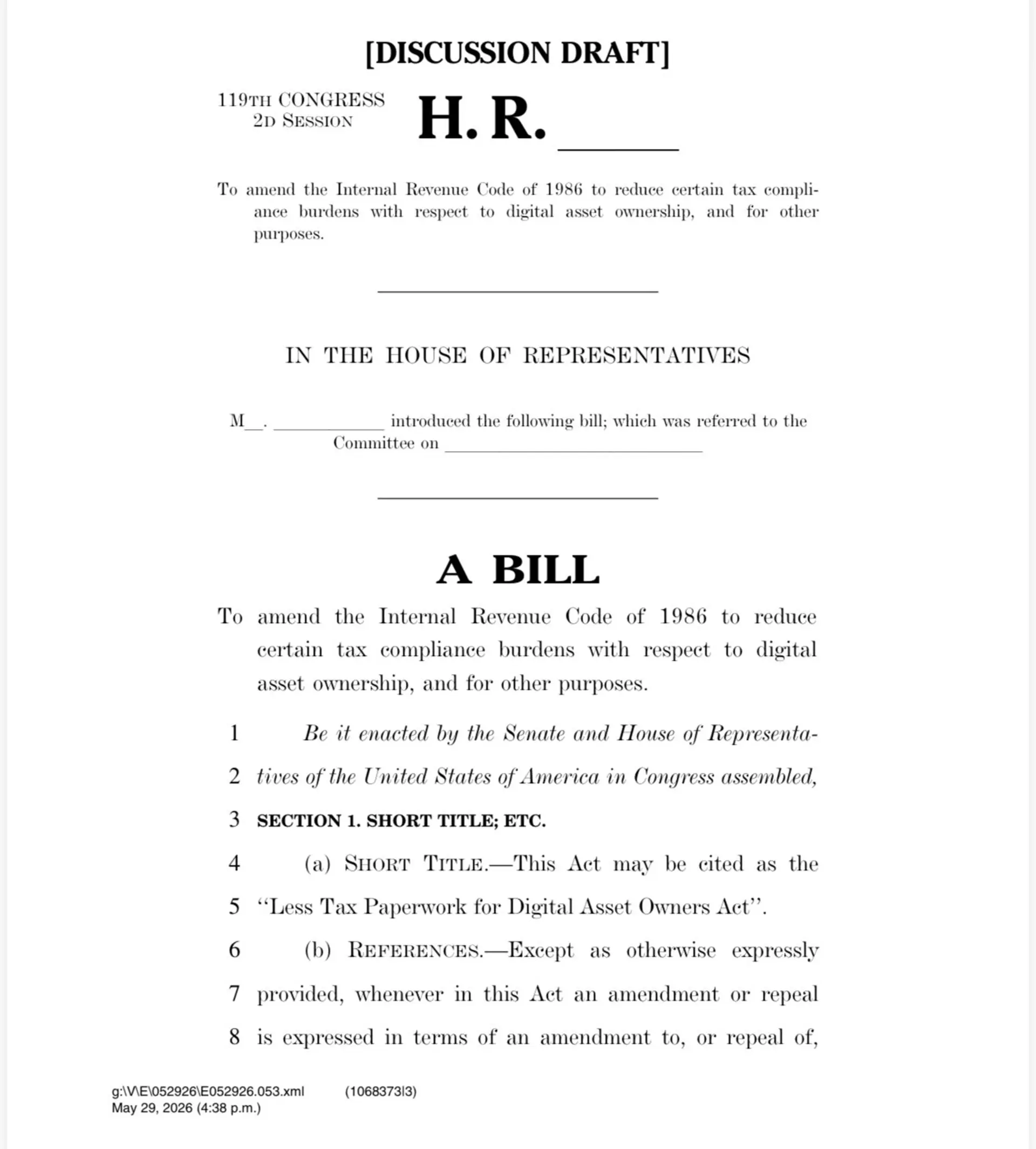
As the digital asset sector continues to mature, U.S. Lawmakers are moving to establish a more rigorous regulatory framework for cryptocurrency taxation. In a significant development for market participants and institutional investors, members of the House Ways and Means Committee have introduced new legislation aimed at standardizing the tax treatment of digital assets to align them more closely with traditional financial instruments.
The proposed legislation, often referred to by proponents as the PARITY Act, represents a coordinated effort to address long-standing ambiguities in how crypto transactions, staking rewards, and stablecoin holdings are reported to the Internal Revenue Service (IRS). By seeking to harmonize these rules, the bill aims to provide a clearer path for compliance while maintaining the integrity of the broader tax system.
Establishing Regulatory Parity for Digital Assets
The push for legislative clarity comes after months of deliberation and a series of bipartisan roundtables focused on the complexities of digital asset taxation. Representative Steven Horsford (D-Nev.) and Representative Max Miller (R-Ohio), both members of the House Ways and Means Committee, have led the effort to fine-tune the proposal. Their primary objective is to eliminate the perception that digital assets require a unique, preferential tax structure, instead advocating for rules that mirror the treatment of conventional financial assets.
“We’re not creating special treatment for digital assets,” Representative Horsford noted in a recent interview regarding the legislative process. “We are creating clear, enforceable rules that bring parity between digital assets and traditional finance.” This sentiment reflects the broader goal of integrating cryptocurrency into the established economic landscape, ensuring that taxpayers and businesses have a predictable framework for reporting gains, and losses.
Key Provisions and the De Minimis Exemption
A central point of discussion surrounding the proposed legislation is the treatment of small-scale transactions. While various stakeholders had lobbied for a broad “de minimis” exemption—which would exclude small crypto purchases from immediate capital gains reporting—the current version of the bill takes a more cautious approach. Rather than codifying a broad exemption, the legislation mandates that the Treasury Department conduct a formal study on the matter.
This study is intended to provide data-driven insights into how such an exemption might impact tax revenue and compliance. The bill requires the Treasury to provide interim guidance within 180 days of enactment, specifically identifying areas where the department may already possess the regulatory authority to grant relief for minor transactions. This phased approach highlights the legislative intent to balance consumer convenience with the necessity of preventing tax evasion.
Impact on Staking and Stablecoins
The evolving tax framework also addresses the unique mechanics of decentralized finance, including staking and the use of stablecoins. As these assets become increasingly integrated into both retail and institutional portfolios, the lack of explicit tax guidance has remained a significant hurdle for widespread adoption. By formalizing the tax treatment of staking rewards—typically treated as income upon receipt—and defining the parameters for stablecoin transactions, the bill aims to reduce the legal uncertainty that has previously deterred some institutional players.

Market analysts suggest that this regulatory clarity could be a catalyst for further institutional participation. When firms have a clear understanding of their tax liabilities, they are better positioned to allocate capital into digital asset strategies without the fear of retroactive enforcement or unpredictable accounting requirements.
Looking Ahead: The Legislative Path
The release of the bill follows a discussion draft introduced earlier this year, signaling that the House Ways and Means Committee is prioritizing this issue before the end of the current Congress. The process remains fluid, with lawmakers actively seeking input from industry leaders and tax experts to ensure that the final legislation is both effective and enforceable.
As the committee continues its work, market participants are encouraged to monitor upcoming hearings and official updates from the House Ways and Means Committee. These proceedings will be critical in determining the final scope of the legislation and its potential impact on the digital asset economy. For taxpayers and businesses operating in the cryptocurrency space, maintaining awareness of these potential shifts is essential for long-term fiscal planning.
We welcome your thoughts on the evolving landscape of digital asset regulation. Please share your insights or questions in the comments section below.