On April 22, 2026, the United States Navy formally declared that Australia is ready to initiate hosting nuclear-powered submarines, marking a significant milestone in the AUKUS security partnership. This announcement, made by senior U.S. Defense officials, confirms that the necessary infrastructure, personnel training, and regulatory frameworks are now in place to support the rotational deployment of U.S. And UK nuclear-powered submarines to Australian bases.
The declaration follows years of coordinated planning under the AUKUS pact, a trilateral defense agreement between Australia, the United Kingdom, and the United States established in 2021. Under the agreement, Australia is set to acquire a fleet of nuclear-powered attack submarines to replace its aging Collins-class fleet, with the first vessels expected to be delivered in the early 2030s. In the interim, the U.S. And UK will rotate their submarines through Australian ports to enhance interoperability and support crew training.
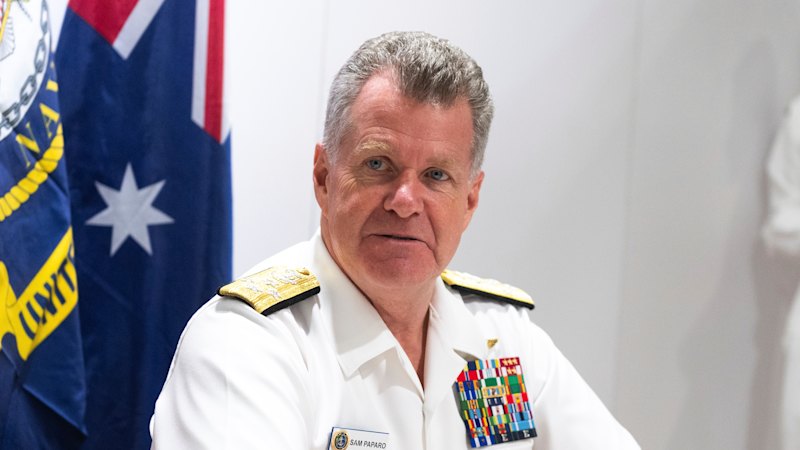
U.S. Indo-Pacific Command Commander Admiral Samuel Paparo played a key role in advancing preparations during a visit to Australia in November 2023, where he met with Australian defense officials to assess progress on infrastructure upgrades at sites such as HMAS Stirling in Western Australia and Fleet Base East in New South Wales. These visits were part of a broader effort to ensure that Australian facilities could safely and securely accommodate nuclear-powered vessels, including specialized maintenance capabilities, radiation protection protocols, and port security enhancements.
The U.S. Navy’s confirmation that Australia is “ready today” reflects the completion of critical milestones, including the establishment of the Australian Nuclear Powered Submarine Task Force, the passage of enabling legislation through the Australian Parliament, and the completion of initial port upgrades. Officials emphasized that all host-nation responsibilities under international nuclear safety standards have been met, paving the way for the first rotational deployments to begin later in 2026.
This development strengthens Australia’s strategic autonomy and deepens its integration into the U.S.-led security architecture in the Indo-Pacific. Analysts note that the ability to host nuclear-powered submarines enhances Australia’s deterrence posture and provides the Royal Australian Navy with invaluable operational experience ahead of the arrival of its own domestically built vessels under the AUKUS program.
Infrastructure and Training Preparations
To host nuclear-powered submarines, Australia undertook extensive upgrades at its naval bases, particularly HMAS Stirling near Perth, which is slated to be the primary site for U.S. And UK submarine visits. These upgrades included the construction of specialized berths, enhanced radiation monitoring systems, secure weapons handling facilities, and expanded maintenance workshops capable of supporting nuclear propulsion systems.
In parallel, the Royal Australian Navy began training its personnel in nuclear propulsion safety and emergency procedures through exchange programs with the U.S. Navy and Royal Navy. Australian sailors have participated in embedded training aboard U.S. And UK submarines, gaining hands-on experience in reactor operations, radiation safety, and emergency drills. These efforts are designed to ensure that Australian personnel can safely support visiting vessels and eventually operate their own nuclear-powered fleet.
The Australian government has also established a dedicated regulatory framework through the Australian Radiation Protection and Nuclear Safety Agency (ARPANSA), which oversees compliance with international atomic energy standards. ARPANSA has conducted rigorous assessments of the proposed submarine maintenance and port operations to ensure they meet safety benchmarks for nuclear-powered vessels.
Strategic Implications for the Indo-Pacific
The U.S. Navy’s declaration underscores the growing importance of the Indo-Pacific region in global strategic competition, particularly in response to China’s expanding naval capabilities. By enabling the rotational deployment of nuclear-powered submarines to Australia, the AUKUS partners aim to enhance persistent undersea presence in key maritime corridors, including the South China Sea, the Indian Ocean, and the approaches to the Malacca and Lombok straits.
Defense analysts suggest that this arrangement complicates adversarial planning by increasing the unpredictability of submarine deployments while reducing transit times from home ports in the United States and the United Kingdom. The forward deployment also strengthens alliance cohesion, signaling a long-term commitment to regional stability and shared security interests.
For Australia, hosting nuclear-powered submarines represents a shift in its defense posture, moving from reliance on conventional diesel-electric submarines to embracing a nuclear-capable future. While the decision has sparked domestic debate over nuclear proliferation risks and strategic autonomy, successive Australian governments have maintained that the AUKUS pathway adheres strictly to non-proliferation obligations, as the submarines will be powered by nuclear reactors but will not carry nuclear weapons.
Next Steps and Timeline
The first rotational deployments of U.S. And UK nuclear-powered submarines to Australian ports are expected to commence in the second half of 2026, with initial visits likely to occur at HMAS Stirling. These deployments will be conducted under strict operational protocols, with advance notice provided to Australian authorities and adherence to agreed-upon safety and environmental safeguards.
Looking ahead, the AUKUS program will progress toward the delivery of Australia’s first domestically built nuclear-powered submarine, projected for the early 2030s. This vessel, based on a modified UK Astute-class design with U.S. Combat systems, will be constructed in Adelaide under a sovereign capability program designed to build Australian industrial capacity in advanced naval manufacturing.
Officials from the U.S. Navy, UK Ministry of Defence, and Australian Department of Defence have stated that they will continue to assess readiness through regular bilateral and trilateral reviews, with the next major checkpoint scheduled for the AUKUS defense ministers’ meeting later in 2026.
As this historic defense collaboration moves forward, the ability to host nuclear-powered submarines marks a tangible step toward realizing the full scope of the AUKUS agreement — one that promises to reshape undersea warfare dynamics in the Indo-Pacific for decades to arrive.
Stay informed about developments in the AUKUS partnership and Indo-Pacific security by following official updates from the U.S. Department of Defence, UK Ministry of Defence, and Australian Department of Defence. Share your thoughts on this pivotal development in the comments below.