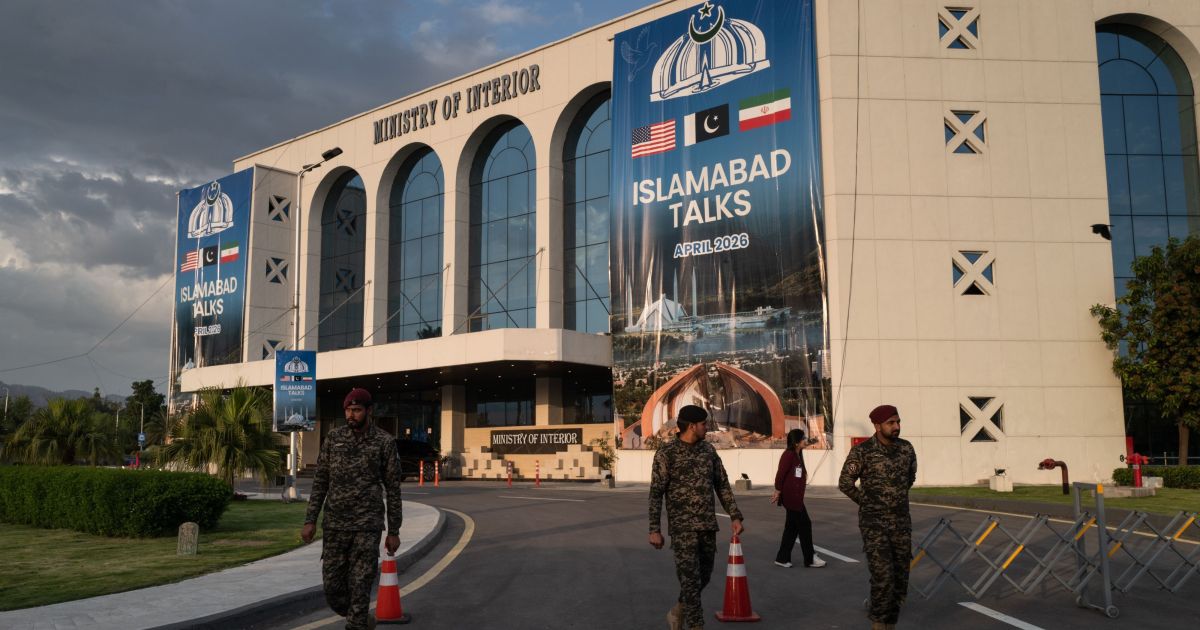
The geopolitical landscape of the Middle East remains precarious as the US-Iran negotiations in Pakistan attempt to identify a diplomatic exit to a conflict that has already entered its sixth week. Even as a high-level American delegation is currently on the ground in Islamabad, the rhetoric emanating from the White House suggests a stark divide between the diplomatic efforts in Asia and the military posture in the Persian Gulf.
Vice President JD Vance arrived in the Pakistani capital on the morning of Saturday, April 11, 2026, to lead critical discussions with Iranian authorities R7. These talks come at a moment of extreme volatility, following a period of intense military escalation and a failed ultimatum that threatened to plunge the region into further chaos.
The current standoff is the culmination of a six-week war—a timeframe that President Donald Trump had previously suggested as the maximum duration for the initial offensive G1. As the U.S. Seeks concrete guarantees regarding Iran’s nuclear ambitions and missile capabilities, the conflict has spilled over into global economic stability, primarily through the strategic manipulation of maritime trade routes.
The Islamabad Mission and Diplomatic Deadlock
The diplomatic mission led by JD Vance in Islamabad is tasked with resolving several core points of contention. The United States has maintained a firm demand that Iran formally commit to never seeking a nuclear weapon and agree to strict limits on the number and range of its missiles G1. These requirements remain the primary hurdles in reaching a formal peace agreement.
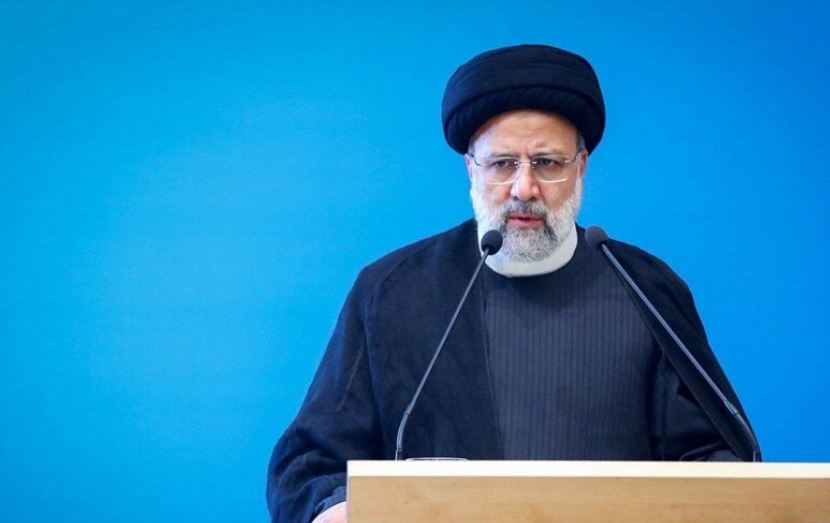
Despite the presence of the Vice President in Pakistan, the tone from Washington has shifted toward indifference. Speaking to journalists in front of the White House on Saturday, April 11, President Trump stated that he is indifferent to whether the negotiations result in a formal agreement R7. The President asserted that the United States has already achieved a military victory, regardless of the diplomatic outcome.
This “victory” narrative is based on the U.S. Claim of having destroyed a significant portion of the Iranian Armed Forces, specifically targeting missile launchers and other critical military infrastructure G1. However, the administration acknowledges that “finishing the job” is necessary to ensure Iran cannot threaten U.S. Allies in the future.
The Strait of Hormuz and Global Economic Pressure
While diplomats meet in Pakistan, the most immediate flashpoint remains the Strait of Hormuz. Iran has leveraged its geography to pressure the global economy by closing parts of this strategic maritime route, which has led to a spike in fuel prices across multiple countries G1.
In response, the U.S. Navy has initiated active operations within the Strait. On April 11, U.S. Warships crossed the waterway to conduct mine-removal operations to clear Iranian mines R7. President Trump has stated that the U.S. Intends to open the Strait for the benefit of other nations, even if the U.S. Itself does not utilize it for all its needs.
The maritime tension is compounded by Iran’s continued military activity. Teheran has maintained frequent attacks against Israeli cities, including Tel Aviv and Haifa, while as well targeting U.S. Military bases and American-linked energy companies throughout the Middle East G1.
From Ultimatum to Indifference: Trump’s Strategy
The current state of affairs follows a high-stakes ultimatum issued by the U.S. Presidency. President Trump had set a deadline of 9:00 PM Brasília time on Tuesday, April 7, 2026, for Iran to reach an agreement G1. At the time, the President warned that Iranians would “live in hell” if negotiations did not advance, promising bombings of bridges and power plants.
The shift from this aggressive ultimatum to the current stance of “indifference” may be linked to domestic political pressures. The economic fallout from the Strait of Hormuz closures and the ongoing conflict are occurring just months before the U.S. Midterm elections, which will determine a significant portion of the composition of the U.S. Congress G1.
By claiming a military victory regardless of a signed treaty, the administration may be attempting to project strength to domestic voters while still allowing JD Vance to pursue a diplomatic resolution that could stabilize global oil markets.
Summary of Conflict Status (as of April 12, 2026)
| Metric/Event | Details | Status/Date |
|---|---|---|
| Conflict Duration | 6 weeks | Ongoing |
| U.S. Ultimatum | Deadline for agreement | Expired April 7, 2026 |
| Diplomatic Lead | Vice President JD Vance | In Islamabad, Pakistan |
| Maritime Action | Mine removal in Strait of Hormuz | Active (April 11) |
| U.S. Primary Goals | Nuclear renunciation & missile limits | Pending |
The global community now looks to Islamabad to see if the US-Iran negotiations in Pakistan can produce a breakthrough. While the U.S. Navy continues to secure the Strait of Hormuz, the lack of a formal agreement leaves the region in a state of fragile suspension, where military victory claims clash with the reality of ongoing hostilities in Israel and the Middle East.
The next critical checkpoint will be the outcome of the current delegation’s meetings in Islamabad and any official response from Teheran regarding the U.S. Demands on nuclear and missile restrictions.
World Today Journal encourages readers to share this report and provide their perspectives on the impact of Middle East stability on global energy prices in the comments below.
Worth a look