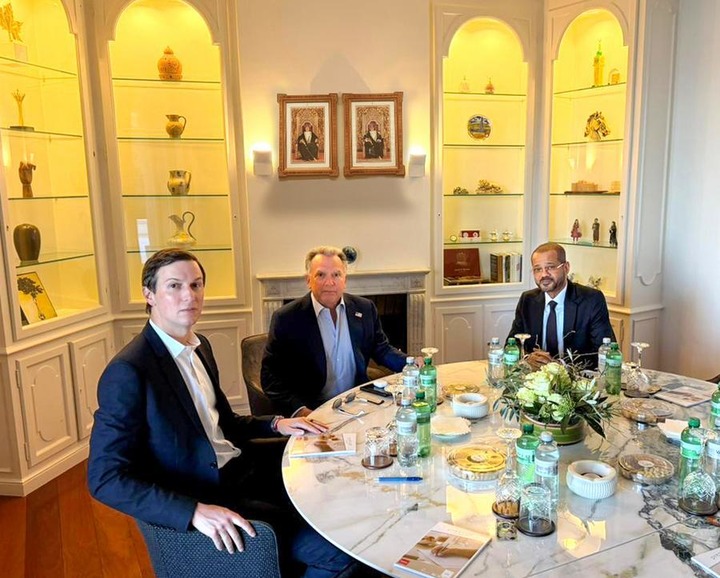
Geneva, Switzerland – Hopes for a renewed agreement on Iran’s nuclear program received a cautious boost this week as diplomatic efforts intensified in Geneva, despite expressions of discontent from former U.S. President Donald Trump. Talks involving Oman’s Foreign Minister Sayyid Badr bin Hamad Al Busaidi, U.S. Envoy Steve Witkoff, and Jared Kushner, Trump’s son-in-law, focused on bridging the gap between Iranian proposals and U.S. Responses, amid growing regional tensions and a visible U.S. Military presence in the Middle East. The core issue remains establishing sustainable guarantees for a potential agreement, a challenge that has plagued negotiations for years.
The meetings, held on Thursday, February 26th, 2026, represent a significant, though delicate, moment in the ongoing efforts to prevent Iran from developing nuclear weapons. Even as details remain closely guarded, Oman’s Foreign Minister Al Busaidi publicly expressed optimism, stating that a deal is “within reach.” This assessment comes even as Trump himself voiced dissatisfaction with the progress of the negotiations, a sentiment that underscores the political complexities surrounding the issue. The situation is further complicated by concerns regarding Iran’s ballistic missile program, which U.S. Officials insist must be addressed alongside its nuclear ambitions.
Progress and Persistent Concerns
According to statements from the Omani Foreign Ministry, the discussions centered on Tehran’s proposals and the U.S. Team’s responses regarding key aspects of Iran’s nuclear program. A key point of contention, and potential breakthrough, appears to be Iran’s willingness to commit to never possessing the materials necessary to build a nuclear bomb. Al Busaidi described this as a “great achievement,” suggesting a significant concession from the Iranian side. He further indicated that Iran is prepared to reduce its current stockpile of enriched uranium to the “lowest possible level” and convert it into fuel, a process designed to be irreversible.
However, the path to a final agreement is far from certain. U.S. Secretary of State Marco Rubio has consistently emphasized concerns about Iran’s ballistic missile capabilities, arguing that any deal must address both nuclear and conventional weapons programs. As reported by Yahoo News, Rubio stressed the need to address Iran’s expanding missile arsenal, viewing it as a major obstacle to a comprehensive agreement. This insistence on addressing ballistic missiles reflects a broader U.S. Strategy to limit Iran’s regional influence and deter potential aggression.
Regional Tensions and Military Posturing
The diplomatic push is unfolding against a backdrop of heightened regional tensions and a significant U.S. Military buildup in the Middle East. According to WFMD, the USS Abraham Lincoln aircraft carrier and multiple guided-missile destroyers are currently operating in the Arabian Sea, with additional destroyers stationed in the Mediterranean and Red Seas. Several combat ships are also positioned in the Persian Gulf, near Iran’s southern coastline. This deployment signals a clear message of deterrence and preparedness, reflecting U.S. Concerns about potential Iranian escalation.
Adding to the complexity, Iran recently announced the test of a latest naval air defense missile in the Strait of Hormuz, a strategically vital waterway. This move, while presented by Iranian officials as a demonstration of defensive capabilities, is likely to be viewed with concern by the U.S. And its allies. The Strait of Hormuz is a critical chokepoint for global oil supplies, and any disruption could have significant economic consequences. The timing of the missile test, coinciding with the Geneva talks and the U.S. Military buildup, underscores the delicate balance between diplomacy and military posturing.
The Role of Oman as Mediator
Oman has long played a crucial role as a mediator between Iran and the West, maintaining relatively good relations with both sides. The country’s neutral stance and discreet diplomacy have made it a trusted interlocutor in sensitive negotiations. The involvement of Foreign Minister Al Busaidi in the Geneva talks highlights Oman’s continued commitment to facilitating a peaceful resolution to the Iranian nuclear issue. Oman’s ability to maintain open channels of communication with both Tehran and Washington is seen as essential to overcoming the obstacles that have hindered progress in the past.
Trump’s Discontent and Domestic Political Considerations
Former President Trump’s public expression of dissatisfaction with the negotiations introduces a significant domestic political dimension to the process. While the specifics of his concerns remain unclear, his skepticism raises questions about the potential for a future U.S. Administration to withdraw from any agreement reached. This uncertainty could undermine the credibility of the negotiations and produce it more difficult for Iran to accept concessions. Trump’s previous withdrawal from the Joint Comprehensive Plan of Action (JCPOA) in 2018, often referred to as the Iran nuclear deal, demonstrated his willingness to abandon international agreements he deems unfavorable to U.S. Interests.
The dynamics of U.S. Domestic politics are likely to play a significant role in shaping the outcome of the negotiations. Any agreement reached will need to be politically sustainable in Washington, facing potential opposition from Republicans who advocate for a tougher stance on Iran. The Biden administration will need to navigate these political challenges while also addressing the concerns of allies who are anxious to prevent Iran from acquiring nuclear weapons. The delicate balance between domestic political considerations and international security concerns will be a key factor in determining the success or failure of the current diplomatic efforts.
Key Takeaways
- Negotiations between the U.S. And Iran regarding Iran’s nuclear program are ongoing in Geneva, with Oman playing a key mediating role.
- Oman’s Foreign Minister Al Busaidi expressed optimism that a deal is “within reach,” citing Iran’s willingness to limit its nuclear capabilities.
- Former U.S. President Donald Trump has voiced dissatisfaction with the negotiations, raising concerns about the potential for future U.S. Withdrawal from any agreement.
- Heightened regional tensions and a significant U.S. Military buildup in the Middle East add to the complexity of the situation.
- Addressing Iran’s ballistic missile program remains a key sticking point in the negotiations.
The next critical step will be to observe if negotiators can translate the current momentum into a concrete agreement that addresses the concerns of all parties involved. The coming weeks will be crucial in determining whether a diplomatic solution can be reached, or whether the region will face a further escalation of tensions. The international community will be closely watching developments, hoping for a peaceful resolution to this complex and dangerous situation. Further updates on the negotiations are expected from the U.S. State Department and the Omani Foreign Ministry in the coming days.
What are your thoughts on the ongoing negotiations? Share your comments below and let us grasp what you think the future holds for the Iran nuclear deal.
Related reading