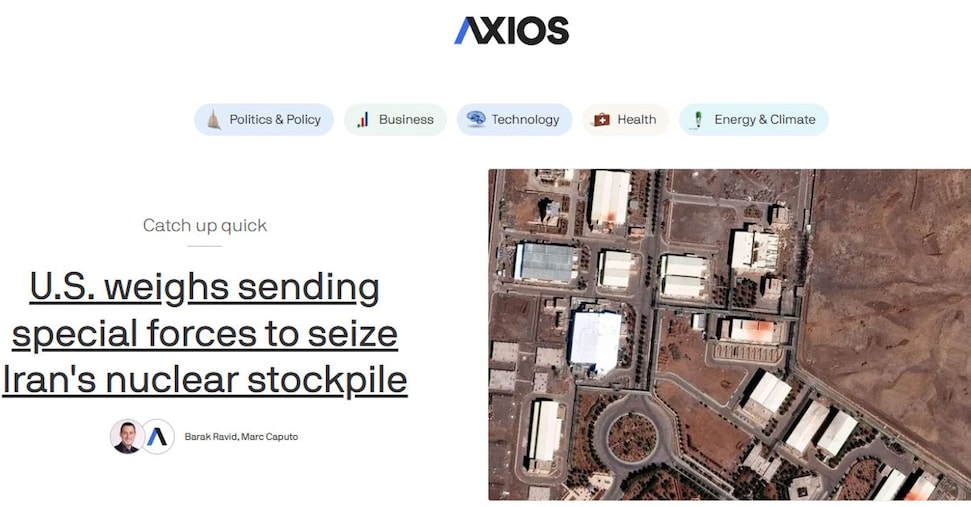
US and Israel Consider Military Action Against Iran’s Nuclear Program
Washington and Jerusalem are actively discussing potential military options, including the deployment of special forces, to secure Iran’s enriched uranium stockpiles, escalating tensions in an already volatile region. The discussions approach amid growing concerns over Tehran’s accelerating nuclear program and its destabilizing influence in the Middle East. While a diplomatic solution remains the preferred outcome, officials are preparing for the possibility that military intervention may be necessary to prevent Iran from developing nuclear weapons. This situation unfolds against a backdrop of heightened conflict in the region, including the ongoing repercussions of the October 7th attacks by Hamas and Israel’s subsequent military operations, and a history of strained relations between Iran, the United States, and Israel dating back to the 1979 Iranian Revolution.
The possibility of a military operation is being seriously considered by the administration of President Donald Trump, according to sources familiar with the deliberations. The core question, as articulated by an American official, centers on the logistics of securing the nuclear material: “Where is it? How can we access it and how can we get physical control of it?” The decision to physically transport the uranium or dilute it on-site would ultimately rest with the President and the Departments of Defense and the Central Intelligence Agency. This assessment reflects a shift towards more assertive measures as diplomatic efforts to curb Iran’s nuclear ambitions have stalled. The United States has long maintained that Iran’s pursuit of nuclear weapons poses a significant threat to regional and global security.
President Trump, while acknowledging the possibility of military action, has emphasized that any such deployment would require a compelling justification. Speaking aboard Air Force One on March 7th, he stated that sending troops “is possible, but only for a very good reason.” When specifically questioned about intervening to secure nuclear material, Trump did not rule it out, adding, “At some point maybe we will. We haven’t done it yet. We wouldn’t do it now. Maybe down the road.” This cautious tone underscores the high stakes involved and the potential for unintended consequences. The situation is further complicated by Iran’s network of regional proxies, including Hezbollah in Lebanon and the Houthi rebels in Yemen, who could potentially escalate the conflict in response to a military strike.
Historical Roots of the Conflict
The current tensions between Iran, the United States, and Israel are deeply rooted in historical events. The 1979 Iranian Revolution, which overthrew the U.S.-backed Shah, fundamentally altered Iran’s foreign policy, leading to the designation of the United States and Israel as adversaries. As Sky TG24 reports, this shift initiated decades of intermittent incidents and escalating tensions, though never culminating in full-scale war until recently. The relationship has been marked by mutual distrust and conflicting interests, particularly regarding Iran’s nuclear program and its support for regional militant groups.
The regional landscape was dramatically reshaped by the October 7, 2023, attack by Hamas against Israel, triggering a large-scale military response. This conflict has drawn in Iran’s allies, such as Hezbollah and the Houthis, who have engaged in attacks against Israel and shipping in the Red Sea. According to Sky TG24, Israel initiated military operations against Iran on June 13, 2025, marking the beginning of what became known as the ‘Guerra dei 12 giorni’ (War of 12 Days). This escalation underscores the interconnectedness of regional conflicts and the potential for a wider war.
The Nuclear Program and International Concerns
At the heart of the current crisis lies Iran’s nuclear program. Tehran maintains that its nuclear activities are solely for peaceful purposes, such as energy production and medical research. However, the international community, led by the United States and Israel, fears that Iran is seeking to develop nuclear weapons. Money.it reports that the primary objective of the potential military action is to dismantle Iran’s nuclear capabilities and prevent the development of nuclear weapons.
Previous attempts to negotiate a resolution, such as the 2015 Joint Comprehensive Plan of Action (JCPOA), have faltered. The JCPOA, which limited Iran’s nuclear program in exchange for sanctions relief, was abandoned by the Trump administration in 2018. Since then, Iran has gradually rolled back its commitments under the agreement, increasing its uranium enrichment levels and expanding its nuclear infrastructure. The current administration has expressed a willingness to re-engage in negotiations, but only if Iran demonstrates a commitment to curbing its nuclear ambitions. The possibility of a military strike is seen as a way to compel Iran to return to the negotiating table and accept more stringent limitations on its nuclear program.
Potential Responses and Regional Implications
A military strike against Iran would likely trigger a range of responses, both from Iran and its allies. Tehran has repeatedly warned that it would retaliate against any attack on its territory, potentially targeting U.S. Forces and allies in the region, as well as disrupting oil supplies. The Houthis in Yemen, backed by Iran, have already launched numerous attacks against shipping in the Red Sea, and could escalate their activities in response to a military strike. Hezbollah in Lebanon could also launch attacks against Israel, potentially opening a second front in the conflict.
European nations have largely signaled their reluctance to intervene directly in the conflict, emphasizing that it is primarily a matter for the United States, Israel, and Iran. As Money.it notes, potential allies of Iran, such as North Korea, could offer support, particularly in the realm of missile technology, given their existing collaborative history. The potential for escalation and the involvement of multiple actors raise serious concerns about the stability of the Middle East and the broader global security landscape. The disruption of oil supplies could also have significant economic consequences, potentially leading to higher energy prices and a global recession.
The United States has deployed a significant military presence in the region, including aircraft carriers and other warships, signaling its readiness to respond to any Iranian aggression. However, a military strike against Iran would be a complex and risky undertaking, with the potential for unintended consequences. The success of any military operation would depend on a number of factors, including the accuracy of intelligence, the effectiveness of the strikes, and the response from Iran and its allies. The international community is urging all parties to exercise restraint and to pursue a diplomatic solution to the crisis.
Key Takeaways
- The United States and Israel are considering military options, including special forces deployments, to secure Iran’s enriched uranium.
- The decision stems from concerns over Iran’s nuclear program and its regional influence, rooted in decades of strained relations.
- A military strike could trigger retaliation from Iran and its allies, potentially escalating the conflict and disrupting regional stability.
- Diplomatic efforts to curb Iran’s nuclear ambitions have stalled, leading to a reassessment of strategies.
- European nations are hesitant to intervene directly, viewing the conflict as primarily involving the US, Israel, and Iran.
The situation remains fluid and highly sensitive. Further developments are expected in the coming days as the United States and Israel continue to assess their options and engage in consultations with their allies. The international community will be closely monitoring the situation, hoping to avert a wider conflict and to identify a peaceful resolution to the crisis. The next key checkpoint will be the outcome of ongoing diplomatic discussions and any potential statements from the White House regarding a final decision on military action.
What are your thoughts on the escalating tensions in the Middle East? Share your comments below and let us know how you think this situation will unfold. Don’t forget to share this article with your network to preserve the conversation going.
Keep reading