Tensions Rise in Pakistan After U.S. Marines Shoot Protesters in Karachi
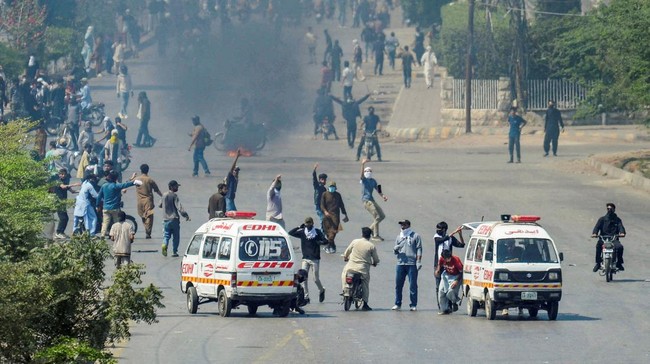
Karachi, Pakistan – A volatile situation is unfolding in Pakistan following a deadly confrontation between U.S. Marines and demonstrators outside the U.S. Consulate in Karachi on Sunday, March 1, 2026. At least ten people were killed when protesters attempted to breach the consulate grounds, prompting a response from the Marines that has sparked outrage and raised concerns about escalating tensions in the region. The incident occurred against a backdrop of widespread protests following reports of an attack in Iran and the death of Ayatollah Ali Khamenei, Iran’s Supreme Leader, fueling anti-American sentiment.
The situation remains fluid and fraught with uncertainty, as conflicting reports emerge regarding the sequence of events and the responsibility for the deadly gunfire. According to officials, the protests were initially sparked by anger over the reported attack in Iran, but quickly escalated as demonstrators, many chanting slogans such as “Death to America!” and “Death to Israel,” attempted to overwhelm security at the consulate. The involvement of U.S. Marines in directly engaging the protesters is a rare occurrence, and officials acknowledge it could further exacerbate an already delicate situation.
Protest Turns Violent, Marines Respond
Details surrounding the shooting remain contested. Two U.S. Officials, speaking on condition of anonymity, confirmed to Reuters that the use of force by Marines at a diplomatic location is unusual and carries the potential to worsen the already tense environment. The officials stated that it was currently unclear whether the gunfire from the Marines directly resulted in any fatalities. They also indicated they were unaware of any other parties – including private security personnel or local police – who may have discharged firearms during the incident.
Sukhdev Assardas Hemnani, a spokesperson for the provincial government, stated that “security personnel” opened fire, but did not specify their affiliation. This lack of clarity has contributed to confusion and speculation regarding who was responsible for the deadly shots. The security arrangements at U.S. Diplomatic missions often involve a combination of private contractors and local law enforcement, but the direct involvement of the Marines suggests a heightened level of perceived threat.
Pakistan is home to the second-largest Shia Muslim population in the world, after Iran, and the events in Iran have resonated deeply within the country. The Pakistani government responded to the escalating protests by imposing a nationwide ban on public gatherings, a measure that has itself drawn criticism from some quarters. Reports indicate that at least 26 people have died across Pakistan as a result of protests related to the situation in Iran.
Conflicting Accounts and Ongoing Investigation
Witness accounts and video footage circulating on social media depict a chaotic scene, with protesters attempting to scale the walls of the consulate and engage in confrontations with security forces. Some videos appear to show at least one protester firing a weapon towards the consulate, while others show demonstrators suffering severe injuries and fleeing the area as gunfire erupted. A Karachi police official reported that the shots originated from within the consulate grounds, but this claim has not been independently verified.
The U.S. Marines referred inquiries to the U.S. Military, which then directed them to the Department of State. As of Tuesday, March 3, 2026, the Department of State had not issued a formal statement regarding the incident. This silence has fueled criticism and demands for a transparent investigation.
Leaders within the Shia community have called for further protests in Lahore and Karachi, despite the government’s ban on public assemblies. Security has been significantly increased around the U.S. Consulate in Karachi, with roads blocked and a heavy police presence deployed. Similar security measures have been implemented at other U.S. Missions in Lahore and Islamabad.
Regional Implications and Potential for Escalation
The incident in Karachi occurs at a sensitive time for regional stability. The underlying tensions between the United States and Iran, coupled with the volatile political landscape in Pakistan, create a dangerous mix. The protests in Pakistan are a clear indication of the strong emotional response to events in Iran, and the involvement of U.S. Forces in a deadly confrontation risks further inflaming anti-American sentiment.
The Pakistani government faces a difficult balancing act: maintaining order and protecting its citizens while also navigating its complex relationship with both the United States and Iran. The ban on public gatherings, while intended to prevent further violence, could also be seen as a suppression of legitimate expression of grief and anger.
The lack of clear information and the conflicting accounts surrounding the shooting raise serious questions about accountability and transparency. A thorough and impartial investigation is crucial to determine the facts of the case and to prevent similar incidents from occurring in the future. The international community is watching closely, and the outcome of this situation could have significant implications for regional security and U.S. Foreign policy.
The situation remains highly sensitive, and further developments are expected in the coming days. Authorities are expected to provide further updates as the investigation progresses. The U.S. State Department is under increasing pressure to release a statement addressing the incident and outlining its position on the use of force by the Marines. The coming days will be critical in determining whether this incident will escalate into a wider crisis or whether a path towards de-escalation can be found.
What are your thoughts on this developing situation? Share your comments below and let us know what you feel should happen next.
Related reading