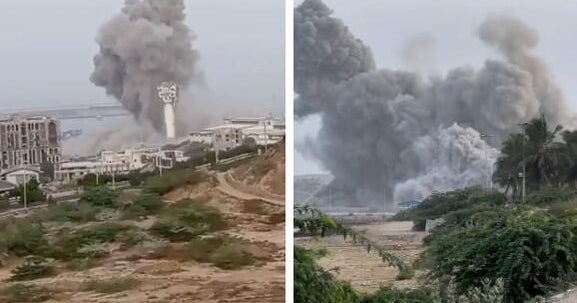
The U.S. military has confirmed it disabled a vessel in the Persian Gulf region, citing a breach of maritime protocols following the reinstatement of economic sanctions on Iranian energy infrastructure. The incident, which occurred near the Strait of Hormuz, marks a significant escalation in the enforcement of U.S. policies aimed at restricting Iranian oil transit. While details regarding the specific identity of the vessel remain under official review, the action underscores a hardening of U.S. naval posture in one of the world’s most critical maritime corridors.
According to reports from the U.S. Fifth Fleet, which oversees naval operations in the region, the vessel was intercepted after allegedly attempting to bypass established maritime restrictions while heading toward Kharg Island. Kharg Island serves as the primary export terminal for Iranian crude oil, making it a focal point for international monitoring and U.S. enforcement efforts. The U.S. Department of the Treasury has previously designated the terminal as a critical node in the financing of operations that the U.S. government links to regional instability, as outlined in the official Iran Sanctions program guidelines.
Maritime Enforcement and Strait of Hormuz Tensions
The Strait of Hormuz remains a central theater for geopolitical friction, as approximately one-fifth of the world’s total oil consumption passes through this narrow waterway daily. The U.S. military’s decision to disable the ship follows a series of warnings issued by the International Maritime Security Construct (IMSC), a coalition focused on maintaining freedom of navigation in the Middle East. According to the IMSC mission statement, the coalition monitors the region to prevent state-sponsored interference with commercial shipping, specifically targeting vessels suspected of violating international sanctions.
The deployment of naval assets to intercept and disable vessels is a high-stakes tactical decision. Military analysts note that such actions are designed to signal resolve to regional actors while attempting to avoid a broader kinetic conflict. The legal basis for these operations typically rests on the Executive Orders signed by the U.S. President, which authorize the seizure or disabling of vessels found to be facilitating the illicit transport of Iranian petroleum products. These regulations mandate that shipping companies verify the origin of their cargo to avoid being caught in the crosshairs of secondary sanctions.
Economic Impact on Kharg Island Operations
Kharg Island is the lynchpin of the Iranian oil industry, handling the vast majority of the nation’s crude exports. By targeting vessels attempting to dock at or transit from this location, the U.S. aims to exert maximum pressure on the revenue streams that fund Iranian state activities. The U.S. Energy Information Administration reports that Iran’s ability to export crude oil is heavily dependent on these terminal facilities, which have faced consistent operational challenges since the re-imposition of broad-based energy sanctions.

The incident has prompted reactions from regional shipping insurance providers, who are now recalibrating risk assessments for vessels operating near the Strait. Insurance premiums for tankers traversing the Persian Gulf have historically spiked during periods of heightened military activity, directly impacting the cost of oil on the global market. For international shipping firms, the current mandate remains clear: adherence to U.S. Department of the Treasury Office of Foreign Assets Control (OFAC) advisories is essential to avoid being blacklisted from the U.S. financial system.
Legal and Diplomatic Ramifications
The disabling of the vessel presents complex legal questions regarding freedom of navigation versus the enforcement of unilateral sanctions. While the U.S. maintains that its actions are consistent with international law and the protection of global trade, observers note that these interventions often prompt counter-measures from the Iranian Revolutionary Guard Corps (IRGC) Navy. Historically, such encounters have led to increased patrols and, in some cases, the temporary detention of foreign-flagged ships by Iranian forces in retaliation.

Diplomatic efforts to resolve these maritime disputes remain stalled. The current U.S. administration has not signaled a shift in its “maximum pressure” strategy, maintaining that the enforcement of sanctions is necessary to address concerns regarding nuclear proliferation and regional security. The next scheduled update from the U.S. Central Command (CENTCOM) regarding regional maritime security is expected later this month, as the military continues to monitor traffic patterns near the Strait of Hormuz.
This situation remains fluid. Readers are encouraged to monitor updates from official sources, including the U.S. Fifth Fleet press office and the U.S. Department of the Treasury’s sanctions compliance portal, for the most recent developments. We invite our readers to contribute to the ongoing discussion regarding maritime security and international energy policy in the comments section below.