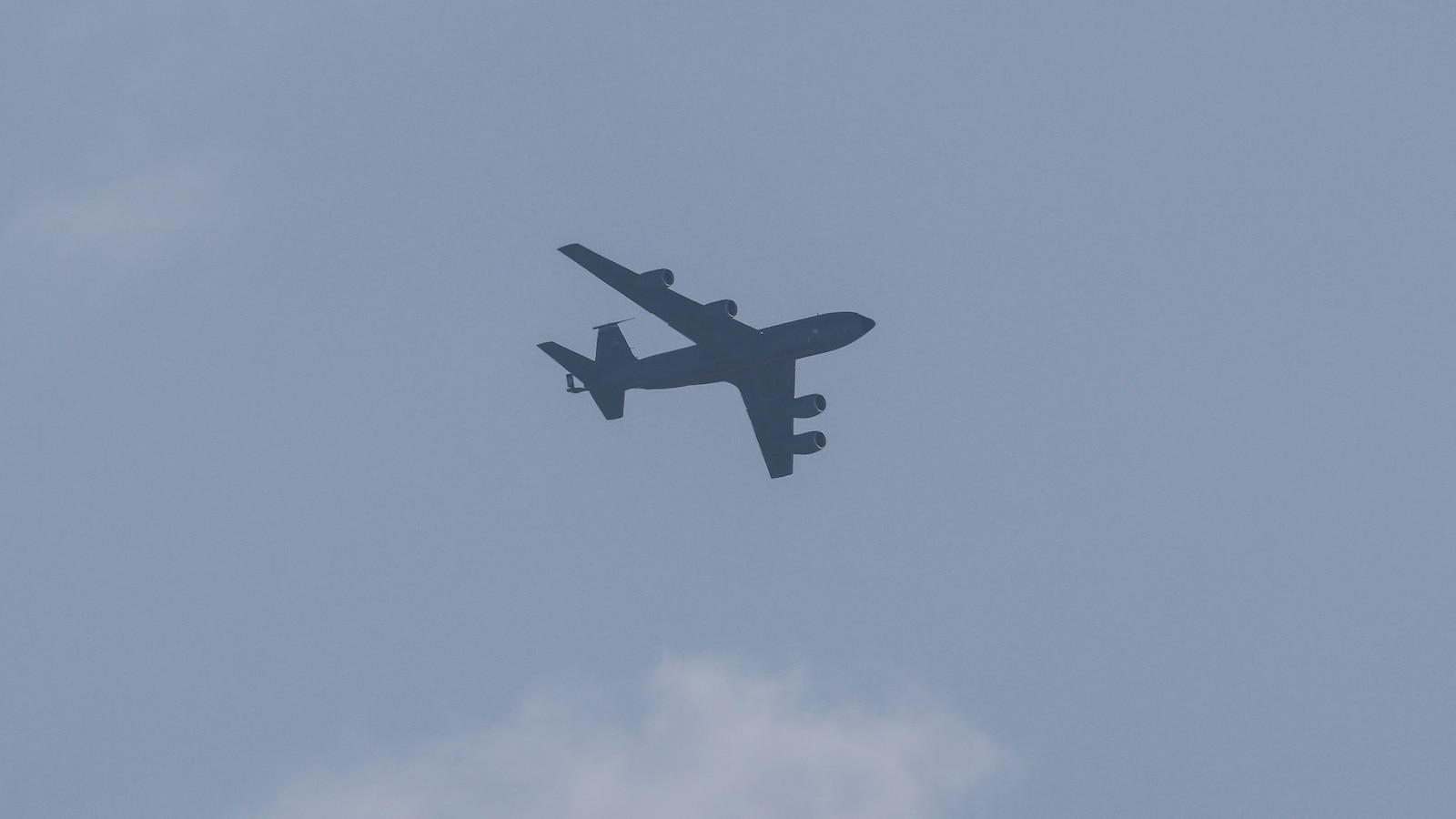
BAGHDAD, Iraq – A U.S. KC-135 Stratotanker refueling aircraft crashed in western Iraq on Thursday, resulting in the confirmed deaths of four crew members, U.S. Central Command (CENTCOM) announced Friday. The incident occurred as the aircraft was supporting ongoing military operations in the region, a particularly sensitive area given escalating tensions and the presence of pro-Iranian militias. While CENTCOM stated the crash was not caused by hostile fire, the loss underscores the inherent risks of operating in a complex and volatile environment. This incident brings the total U.S. Military deaths related to the ongoing conflict to eleven.
The KC-135, a cornerstone of U.S. Aerial refueling capabilities, was one of two aircraft involved in the incident. According to CENTCOM, the second aircraft landed safely. Rescue efforts were immediately initiated following the crash, but were ultimately unsuccessful in saving all those on board. The identities of the deceased service members are being withheld for 24 hours to allow for notification of next of kin, a standard protocol in such circumstances. The loss of this aircraft and its crew raises questions about the safety of aerial operations in the region and the potential for escalation amidst heightened geopolitical instability.
The crash took place in a region of Iraq where pro-Iranian militias are known to operate, adding a layer of complexity to the investigation. While CENTCOM has ruled out hostile fire, Iran’s military, through state television, claimed that an allied group had targeted the plane with a missile. This claim has not been independently verified and CENTCOM maintains its assessment that the crash was not the result of enemy action. The discrepancy highlights the challenges in gathering accurate information in a conflict zone and the potential for conflicting narratives. The incident is occurring against a backdrop of increased military activity following recent strikes by Israel against Iran and Lebanon, and Iran’s subsequent response.
KC-135 Stratotanker: A Vital Asset in Global Operations
The Boeing KC-135 Stratotanker is a long-range aerial refueling aircraft that has been a critical component of the U.S. Air Force’s capabilities for decades. First introduced in 1956, the KC-135 extends the range and operational endurance of a wide range of military aircraft, including fighters, bombers, and transport planes. Its ability to refuel aircraft mid-air is essential for long-duration missions and allows the U.S. Military to project power globally. The aircraft is capable of transferring large quantities of fuel, enabling sustained air operations over vast distances. According to the U.S. Air Force, the KC-135 has been involved in nearly every major U.S. Military operation since the Vietnam War.
Investigation Underway: Determining the Cause of the Crash
The circumstances surrounding the crash are currently under investigation by U.S. Military officials. CENTCOM has stated that the investigation will focus on determining the cause of the incident and identifying any contributing factors. While initial reports indicate that hostile fire was not involved, investigators will thoroughly examine all possibilities, including mechanical failure, human error, and environmental conditions. The investigation is expected to be complex, given the sensitive location of the crash and the potential for political ramifications. The KC-135 typically has a crew of at least a pilot, a co-pilot, and a boom operator responsible for controlling the refueling arm of the aircraft. The full crew complement on the downed aircraft was six personnel.
According to a 2008 Air Force profile, KC-135 tankers are not equipped with ejection seats or parachutes, a design choice based on the aircraft’s role and the relatively low incidence of mishaps. The rationale, as outlined in the Air Force report, is that tankers “seldom have mishaps, and the likelihood a KC-135 crew member would ever need to use a parachute is extremely low.” Instead, crew members are trained on emergency exit procedures for both land and water landings. This lack of individual escape systems underscores the importance of preventative maintenance and safe operating procedures. The investigation will likely review these procedures to ensure they are adequate and effective.
Safety Record of the KC-135
Despite its long service record, the KC-135 has been involved in a number of accidents over the years. While the aircraft is generally considered safe, its age and the demanding nature of its missions contribute to the risk of incidents. According to data compiled by the Aviation Safety Network, there have been over 70 hull-loss accidents involving KC-135 aircraft since 1954. These accidents have resulted in the loss of hundreds of lives. The U.S. Air Force has implemented numerous safety upgrades and maintenance programs over the years to improve the reliability and safety of the KC-135 fleet. Still, the recent crash serves as a stark reminder of the inherent risks associated with military aviation.
Geopolitical Context: Rising Tensions in the Middle East
The crash of the KC-135 occurred against a backdrop of escalating tensions in the Middle East, particularly between the United States, Israel, and Iran. Recent Israeli strikes against Iranian targets, coupled with Iran’s retaliatory actions, have raised concerns about a wider regional conflict. The United States has been actively involved in the region, providing military support to Israel and maintaining a significant military presence in Iraq and Syria. The KC-135 was reportedly involved in operations against Iran, though the specific nature of those operations has not been disclosed. The incident adds another layer of complexity to an already volatile situation and could potentially exacerbate tensions further. The U.S. Military has now lost at least four aircraft during the current conflict.
The presence of pro-Iranian militias in western Iraq further complicates the situation. These militias have been responsible for numerous attacks against U.S. Forces in the region in recent years. While CENTCOM has ruled out hostile fire in this instance, the possibility of future attacks remains a significant concern. The U.S. Military is working with Iraqi security forces to counter the threat posed by these militias, but the situation remains challenging. The crash of the KC-135 underscores the risks of operating in a region where U.S. Forces are facing multiple threats.
Key Takeaways
- Four U.S. Service members were killed when a KC-135 Stratotanker crashed in western Iraq on Thursday.
- U.S. Central Command has stated that the crash was not caused by hostile fire, but an investigation is underway.
- The KC-135 is a vital asset for U.S. Military operations, providing aerial refueling capabilities.
- The incident occurred against a backdrop of rising tensions in the Middle East between the United States, Israel, and Iran.
- The loss of the aircraft and its crew highlights the inherent risks of operating in a complex and volatile environment.
CENTCOM has indicated that updates on the investigation will be provided as they become available. The focus remains on determining the cause of the crash and ensuring the safety of future operations. The families of the deceased service members have been notified, and the Department of Defense is providing support to them during this demanding time. The incident serves as a somber reminder of the sacrifices made by U.S. Military personnel in the defense of national interests. We will continue to monitor the situation closely and provide updates as they emerge.
Please share your thoughts and condolences in the comments below. Your engagement helps us to continue providing accurate and timely reporting on this important story.
Worth a look
- McDonald’s Plans Expansion in Czech Republic: New Non-Traditional Locations and Increased Investment
- CAFPI: New Mortgage Demand Trends and Fiber Coverage Insights
- National Weather Service Issues Alert After Swimmers Face Danger in Wilmington (news-usa.today)
- Saxon to Turn Around Kinnevik After Market Crash (world-today-news.com)