Tensions in the Persian Gulf reached a volatile peak this week as the United States launched a series of military strikes against Iranian targets, an escalation President Donald Trump characterized as “just a love tap.” The strikes, concentrated near the strategically vital Strait of Hormuz, follow a chaotic series of exchanges that have threatened to dismantle a fragile peace agreement established earlier this spring.
The military action comes amid conflicting reports of who fired first. While the White House maintains the strikes were a measured response to aggression, Tehran has accused Washington of blatant ceasefire violations, claiming the U.S. Targeted civilian infrastructure and oil tankers within Iranian territorial waters. The rhetoric from Washington has remained sharply divided between attempts to maintain a diplomatic facade and explicit threats of intensified violence.
In a phone call with ABC News, President Trump insisted that the April 7 ceasefire remains technically in effect, despite the kinetic activity. However, the President shifted tone shortly after, utilizing Truth Social to warn Tehran that the U.S. Would strike “a lot harder and a lot more violently” if a new deal is not signed “fast.” This duality—framing the current strikes as minor while promising severe escalation—underscores the high-stakes brinkmanship currently defining U.S.-Iran relations.
CENTCOM Cites ‘Self-Defense’ in Naval Strikes
U.S. Central Command (CENTCOM) has defended the wave of strikes as a necessary act of “self-defense.” According to military officials, the operation was triggered by an “unprovoked” attack involving missiles, drones, and compact boats targeting three U.S. Warships: the USS Truxtun, the USS Rafael Peralta, and the USS Mason.
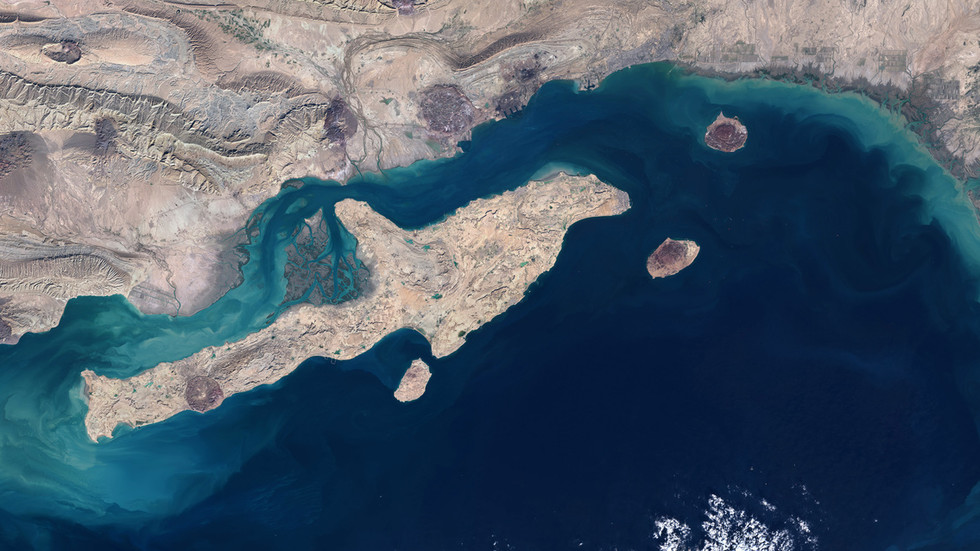
In response to these incursions, CENTCOM reported that it targeted several high-value Iranian assets. The strikes focused on launch sites, command-and-control locations, and surveillance nodes designed to monitor maritime traffic in the Strait of Hormuz. A senior U.S. Official, speaking to Fox News, specified that the operations hit the Qeshm port and Bandar Abbas, as well as the Bandar Kargan naval checkpoint located in Minab.
Despite the intensity of the exchanges, both CENTCOM and the White House have denied that any U.S. Assets suffered significant damage during the encounter, contradicting claims made by Iranian military sources.
Tehran Alleges Ceasefire Violations and Civilian Targets
The Iranian government has presented a starkly different account of the events. Tehran alleges that the United States violated the existing ceasefire by targeting an Iranian oil tanker operating within its own territorial waters. This claim suggests a shift in U.S. Targeting from purely military assets to economic and commercial shipping.

Further accusations were leveled by Iran’s Central Headquarters of Hazrat Khatam al-Anbiya, which claimed that Washington coordinated with “some regional countries” to strike civilian areas. The headquarters specifically identified the coasts of Bandar Khamir, Sirik, and Qeshm Island as targets of these coordinated attacks.
The Islamic Revolutionary Guard Corps (IRGC) Navy countered U.S. Claims of a successful operation, asserting that three U.S. Warships were forced to flee the Strait of Hormuz at high speed after sustaining “significant damage.” These reports remain unverified by independent international observers.
Air Defenses Activated in Tehran
While much of the fighting remained concentrated in the south near the coast, the ripples of the conflict reached the capital. Iranian state media reported that air defense systems were activated in western Tehran to intercept “hostile targets.”
The volatility of the situation was captured in footage from an RT news crew on the ground in Tehran, who reported hearing air-defense activity and filmed flashes of light in the night sky, suggesting that the conflict may have extended beyond the immediate vicinity of the Strait of Hormuz.
Strategic Stakes in the Strait of Hormuz
The focus on the Strait of Hormuz is no coincidence. As one of the world’s most critical maritime chokepoints, the strait is the primary artery for global oil exports from the Persian Gulf. Any prolonged military engagement in these waters risks a spike in global energy prices and a disruption of international trade.
The current escalation represents a critical test of the April 7 ceasefire. The transition from diplomatic negotiations to “love taps” and threats of “violent” strikes suggests that the window for a negotiated settlement is narrowing. For the global community, the primary concern remains whether these skirmishes are isolated incidents of “self-defense” or the opening salvos of a broader regional conflict.
The international community now awaits a formal response from Tehran regarding the President’s demand for a fast-tracked deal, as well as any further guidance from CENTCOM regarding the status of U.S. Naval assets in the region.
Next Update: The White House is expected to provide a formal briefing on the status of the April 7 ceasefire and the current posture of U.S. Forces in the Persian Gulf later this week.
We invite our readers to share their perspectives on this developing story in the comments below. Please share this report to keep others informed on the evolving geopolitical situation in the Middle East.
Keep reading