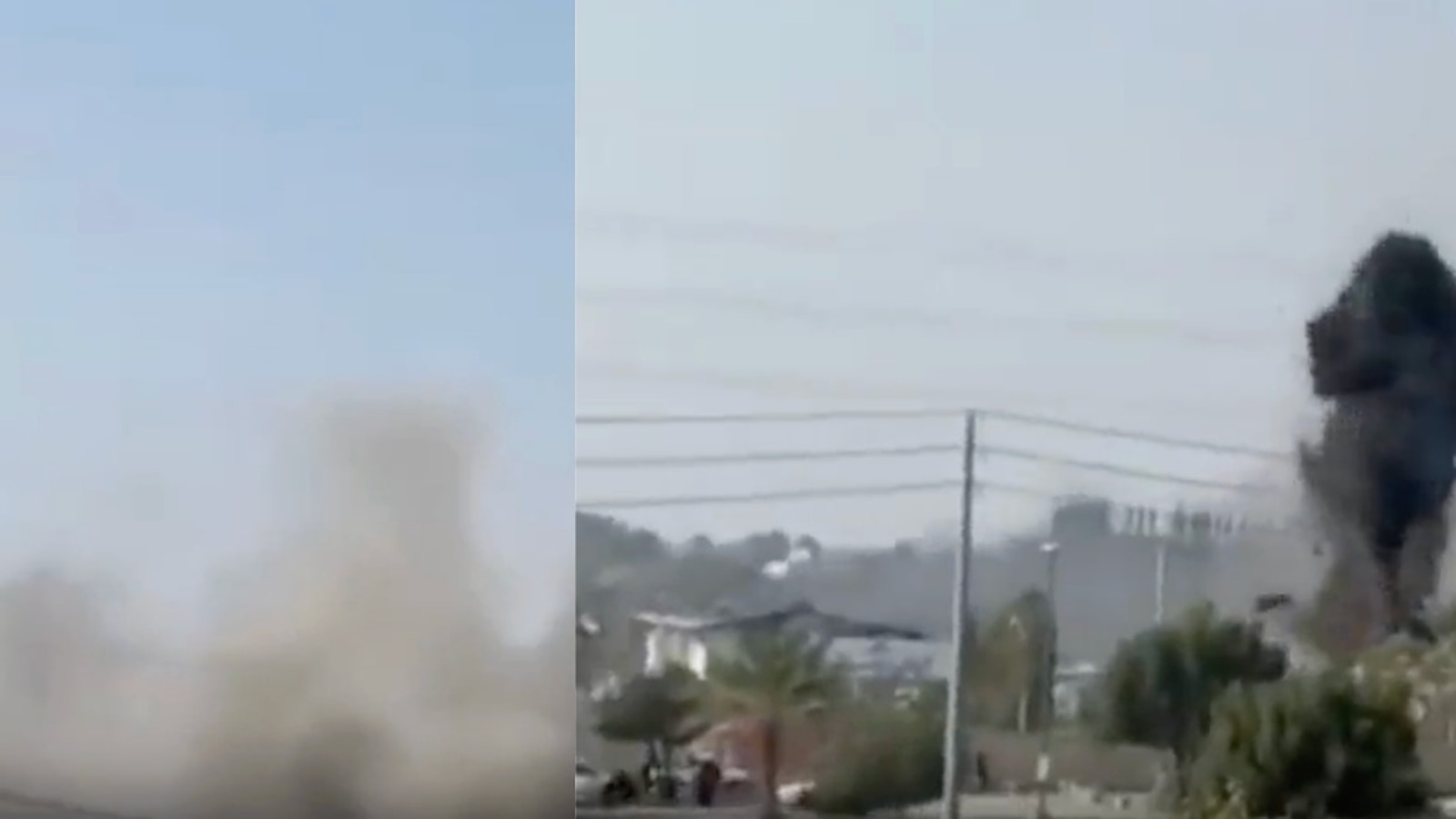
Recent video footage has emerged appearing to show a U.S.-made Tomahawk missile impacting a building in Iran, close to a school for girls. The incident, which occurred during a February 28th strike targeting facilities linked to Iran’s Islamic Revolutionary Guard Corps (IRGC), has sparked international scrutiny and raised questions about potential civilian casualties. Although initial reports from Iranian officials claimed 168 people were killed, the extent of the damage and the precise number of casualties remain contested. The video, first shared by Iranian state media and analyzed by weapons experts, adds a novel layer of complexity to the already tense geopolitical situation in the Middle East.
The emergence of this video comes amid heightened tensions between the United States and Iran, fueled by regional conflicts and concerns over Iran’s nuclear program. The February 28th strike, which the U.S. Has acknowledged responsibility for, was reportedly in response to attacks by Iran-backed militias on U.S. Forces in the region. Although, the proximity of the strike to a civilian school has drawn criticism from international observers, who are calling for a thorough investigation into the incident. Understanding the specifics of the strike, including the intended target and the measures taken to avoid civilian harm, is crucial for assessing accountability and preventing future tragedies.
The video, initially posted by Iran’s Mehr News Agency and subsequently shared by Trevor Ball, a former U.S. Army Explosive Ordnance Disposal technician and researcher with the investigative group Bellingcat, has been geolocated to the site of the strike. Experts analyzing the footage, including Sam Lair of the James Martin Center for Nonproliferation Studies and N.R. Jenzen-Jones of Armament Research Services, have identified characteristics consistent with a U.S.-made Tomahawk cruise missile. While the missile’s impact point is confirmed to be a building within the IRGC complex and not the school itself, the close proximity raises serious concerns about the potential for collateral damage and civilian harm. The analysis of the video provides a crucial piece of evidence in understanding the events of February 28th, but further investigation is needed to determine the full extent of the impact and the circumstances surrounding the strike.
Analyzing the Video Evidence: A Tomahawk Missile Strike
The video footage, which has been widely circulated online, shows a missile descending and impacting a building. Experts examining the video have pointed to several key features that suggest it is a Tomahawk missile. According to Sam Lair, a research associate at the James Martin Center for Nonproliferation Studies, the size and shape of the munition in the video closely resemble those of a Tomahawk cruise missile. ABC News reported on these expert assessments. N.R. Jenzen-Jones, director of Armament Research Services, further corroborated this assessment, stating that the munition observed in the video “indicates it is a U.S. Strike.”
However, both experts cautioned against drawing definitive conclusions about the strike on the nearby school based solely on the video evidence. Jenzen-Jones emphasized that attributing responsibility for damage to the school would require access to munition fragments for forensic analysis. “We can only be definitive about the one in the video,” he stated, adding that while the video increases the likelihood that surrounding targets were hit by the U.S., it does not provide absolute certainty. This highlights the challenges of investigating incidents in conflict zones and the importance of relying on comprehensive evidence before assigning blame.
The February 28th Strike: Context and Targets
The February 28th strike, carried out by the United States, targeted facilities in Syria and Iraq allegedly linked to Iran’s Islamic Revolutionary Guard Corps (IRGC). The Pentagon stated that the strikes were in response to a series of attacks by Iran-backed militias on U.S. Personnel and facilities in the region. These attacks, which included rocket and drone strikes, had resulted in casualties and prompted calls for a strong response from Washington. The U.S. Government has consistently accused Iran of supporting and arming these militias and the strikes were intended to disrupt their operations and deter future attacks.
The specific targets of the strikes included weapons storage facilities, command and control centers, and logistics infrastructure used by the IRGC and its affiliated militias. While the U.S. Military asserted that it took precautions to minimize civilian casualties, the proximity of some of the targeted facilities to civilian areas raised concerns about the potential for collateral damage. The incident involving the school near the IRGC complex has further amplified these concerns, prompting calls for greater transparency and accountability in future military operations. The IRGC, designated as a terrorist organization by the U.S. Government, has been a key player in regional conflicts and has been accused of supporting destabilizing activities throughout the Middle East.
International Reaction and Calls for Investigation
The video footage and reports of potential civilian casualties have drawn condemnation from international organizations and governments. Several countries have called for a thorough and impartial investigation into the incident, urging all parties involved to cooperate fully with the investigation. Human rights groups have also expressed concern about the potential violation of international humanitarian law and have called for accountability for any wrongdoing. The incident has further strained relations between the United States and Iran, and has raised questions about the effectiveness of current strategies for de-escalating tensions in the region.
The United Nations has also weighed in on the matter, with a spokesperson calling for restraint and urging all parties to avoid actions that could further escalate the conflict. The UN has repeatedly emphasized the importance of protecting civilians in armed conflict and has called for adherence to international humanitarian law. Several European countries have also expressed concern about the incident and have called for a diplomatic solution to the ongoing tensions between the United States and Iran. The international community’s response underscores the gravity of the situation and the need for a peaceful resolution to the conflict.
The Pentagon’s Response and Ongoing Scrutiny
As of March 9, 2026, the Pentagon has acknowledged receiving inquiries regarding the video footage and the February 28th strike. Bellingcat reported that ABC News reached out to the Pentagon for comment, but a detailed response has not yet been publicly released. The lack of a comprehensive statement from the U.S. Government has fueled speculation and criticism, with some observers accusing the Pentagon of being evasive.
The incident continues to be scrutinized by weapons experts, journalists, and human rights organizations. Further analysis of the video footage, as well as on-the-ground investigations, are needed to determine the full extent of the damage and the circumstances surrounding the strike. The outcome of these investigations will be crucial for establishing accountability and preventing similar incidents from occurring in the future. The situation remains fluid, and ongoing monitoring of developments is essential for understanding the evolving dynamics in the region.
Key Takeaways:
- Video evidence suggests a U.S. Tomahawk missile struck a building near a school in Iran during a February 28th strike.
- Experts have identified characteristics consistent with a Tomahawk missile, but caution against definitively attributing damage to the school without further investigation.
- The strike targeted facilities linked to Iran’s Islamic Revolutionary Guard Corps (IRGC) in response to attacks on U.S. Forces.
- International organizations and governments have called for a thorough investigation into the incident and accountability for any wrongdoing.
As investigations continue and further information emerges, World Today Journal will provide ongoing coverage of this developing story. We encourage readers to share their thoughts and perspectives in the comments section below.
Related reading