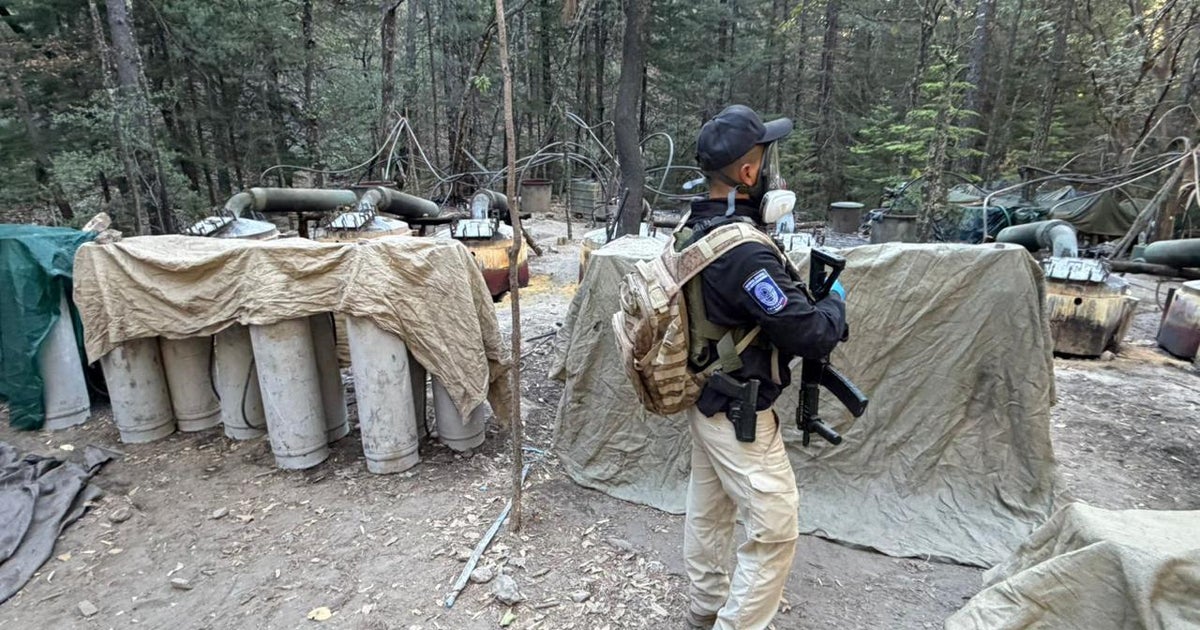
Two U.S. Embassy officials were killed in a car crash in northern Mexico following a law enforcement operation targeting suspected drug laboratories, according to Mexican authorities and U.S. Diplomatic sources. The incident occurred on the afternoon of March 12, 2024, along a rural highway near the city of Chihuahua, when the vehicle carrying the two American officials collided with another vehicle. Both occupants were pronounced dead at the scene, while no injuries were reported among Mexican law enforcement personnel present at the time.
The deaths prompted immediate responses from both the U.S. Department of State and the Mexican government, with officials emphasizing cooperation in the ongoing investigation. Initial reports from Chihuahua state authorities suggested the officials had been returning from a joint operation targeting illicit drug labs in the region. Though, subsequent statements from the Chihuahua State Prosecutor’s Office clarified that the two Americans were not directly involved in the raid and were not part of any official law enforcement mission at the time of the crash.
U.S. Embassy personnel in Mexico confirmed the identities of the deceased as diplomatic security officers assigned to the Embassy in Mexico City, though their names have not been publicly released pending notification of next of kin. The State Department issued a brief statement expressing condolences and affirming that the incident is under active investigation by both Mexican authorities and the Diplomatic Security Service (DSS), the law enforcement arm of the U.S. Department of State responsible for protecting diplomatic personnel and facilities worldwide.
The crash site, located on Federal Highway 45 approximately 30 kilometers south of Chihuahua City, was secured by Mexican federal and state police shortly after the incident. Forensic teams from the Chihuahua Attorney General’s Office conducted an on-site examination, collecting vehicle debris, interviewing witnesses, and reviewing available surveillance footage from nearby traffic cameras. Toxicology reports for the drivers involved are pending, as standard procedure in fatal traffic investigations in Mexico.
Conflicting Narratives Surround Officials’ Presence in the Area
Early accounts from local police officials indicated that the U.S. Embassy vehicle had been participating in a coordinated operation with Mexican security forces targeting suspected methamphetamine production sites in the Sierra Madre Occidental region. These initial reports were echoed by several regional news outlets citing unnamed security sources. However, within 24 hours, the Chihuahua State Prosecutor’s Office issued a correction stating that the two American officials were not part of any active law enforcement operation and had not been involved in the drug lab raids conducted earlier that day.
According to a verified statement released by the prosecutor’s office on March 13, 2024, the Americans were traveling in an official U.S. Embassy vehicle but were not engaged in any joint mission with Mexican authorities at the time of the accident. The statement emphasized that while cooperation between U.S. And Mexican security agencies continues in the fight against transnational organized crime, the officials’ presence in the area was unrelated to the specific operations targeting illicit laboratories.
The discrepancy in official narratives has prompted calls for greater transparency from both governments regarding the protocols governing diplomatic security personnel movements in high-risk regions. Analysts note that while DSS agents routinely conduct threat assessments and security coordination visits, their participation in direct law enforcement operations is highly restricted and requires explicit authorization under bilateral agreements between the United States and Mexico.
The U.S. Embassy in Mexico City has not commented on the specific nature of the officials’ activities prior to the crash, citing ongoing investigations and privacy considerations. However, diplomatic sources familiar with standard procedures indicated that Embassy personnel may travel to border regions for routine security briefings, infrastructure assessments, or coordination meetings with local authorities — activities that do not constitute direct involvement in operational law enforcement actions.
Investigation Underway as Both Governments Await Findings
Mexican federal authorities have assumed oversight of the crash investigation due to the involvement of foreign nationals and the potential implications for bilateral security cooperation. The Chihuahua State Attorney General’s Office is working in coordination with the Federal Attorney General’s Office (FGR) and Mexico’s National Guard to reconstruct the events leading up to the collision. Investigators are examining vehicle telemetry data, driver histories, road conditions, and potential contributing factors such as speed, weather, or mechanical failure.
The Diplomatic Security Service has deployed a team of investigators to Mexico to assist in the fact-finding process, operating under the framework of the U.S.-Mexico Mutual Legal Assistance Treaty (MLAT). DSS investigators are entitled to observe Mexican investigative procedures and request access to evidence, though final determinations regarding cause and liability remain the responsibility of Mexican judicial authorities under domestic law.
As of March 15, 2024, no arrests have been made in connection with the crash, and no charges have been filed against either driver. Authorities have not indicated whether impairment, distraction, or mechanical failure is suspected. The U.S. National Highway Traffic Safety Administration (NHTSA) does not have jurisdiction over incidents occurring outside U.S. Territory, but the agency may provide technical consultation if requested through official channels.
Officials from both governments have urged caution against speculation, emphasizing that premature conclusions could undermine the integrity of the investigation. The U.S. Embassy has reiterated its commitment to supporting Mexican authorities in determining the facts surrounding the incident while maintaining respect for the sovereignty of the investigative process.
Broader Context: U.S.-Mexico Security Cooperation in Northern Mexico
The incident occurred amid heightened security operations in Chihuahua, a state long affected by violent crime linked to rival factions of the Sinaloa Cartel and other organized crime groups. In recent months, Mexican security forces have intensified efforts to dismantle clandestine drug laboratories in the region, particularly those involved in the production of fentanyl and methamphetamine destined for U.S. Markets. According to data from Mexico’s Secretariat of Security and Citizen Protection (SSPC), over 120 clandestine labs were dismantled in Chihuahua during 2023, a 30% increase from the previous year.
U.S. Support for these efforts includes intelligence sharing, training programs, and equipment provision through initiatives such as the Mérida Initiative and its successor, the Bicentennial Framework for Security, Public Health, and Safe Communities. Under this framework, the United States and Mexico collaborate on combating transnational crime while addressing root causes such as poverty, corruption, and arms trafficking.
Despite the close coordination, direct participation by U.S. Law enforcement or diplomatic personnel in Mexican-led operations remains limited and subject to strict procedural safeguards. The DSS, while authorized to protect U.S. Officials and facilities abroad, does not possess arrest powers in foreign countries and typically operates in an advisory or observational capacity during joint missions.
The tragic loss of two diplomatic security officers has drawn attention to the risks faced by personnel serving in high-threat environments, even when not engaged in direct operational roles. Security analysts note that Embassy vehicle movements in regions affected by organized crime inherently carry elevated risks due to the prevalence of armed confrontations, improvised explosive devices, and ambush tactics employed by criminal organizations.
In response to the incident, the U.S. Department of State is expected to review its travel security protocols for diplomatic personnel operating in Mexico, particularly in states with elevated threat levels. Any resulting changes would be implemented through the Bureau of Diplomatic Security’s Overseas Security Advisory Council (OSAC), which provides guidance to U.S. Government personnel and private sector organizations operating abroad.
As the investigation continues, both governments have affirmed their commitment to maintaining strong bilateral ties in the fight against organized crime. Officials emphasized that while this incident is under review, it does not reflect the broader trajectory of U.S.-Mexico security cooperation, which remains focused on disrupting criminal networks, strengthening judicial capacity, and protecting communities on both sides of the border.
The next official update on the investigation is expected from the Chihuahua State Attorney General’s Office within the coming weeks, pending completion of forensic analysis and witness interviews. No public hearings or formal proceedings have been scheduled at this time.
Readers are encouraged to follow official channels for verified updates, including the U.S. Embassy in Mexico City’s website and the Chihuahua State Government’s press releases. Share your thoughts on this developing story in the comments below, and help spread awareness by sharing this article with others interested in international affairs and security cooperation.
Keep reading